

The last place you want to get sick is on a plane. Airport food can feel like a game of chance when you have dietary restrictions, but with a bit of preparation, it becomes manageable. Whether you’re gluten free, dairy free, nut-free, or managing a combination, the process is largely the same. The options might look different, but the approach holds.
A quick note on expectations before we get into it: airports vary enormously. A large international hub like Singapore Changi or Hong Kong International will have genuine options across multiple terminals. A small regional airport might have a convenience store and a kiosk. Knowing which you’re dealing with, and planning accordingly, is half the battle.
Research before you get there
Don’t leave this to chance at the departure gate. A few minutes of research before you leave the house can save a lot of stress, especially if you’re travelling early morning, late at night, or through a smaller airport where options are limited.
Useful places to look:
- Find Me Gluten Free lists airports specifically, making it easy to search by terminal. It’s one of the better tools for this.
- Facebook groups and Reddit communities for your specific restriction often have recent, real-world reports from travellers who’ve been through that airport recently.
- Google Maps reviews can flag allergy-friendly cafes, though quality varies.
- The airport’s own website sometimes lists dining options by terminal, which at minimum tells you what’s there even if it doesn’t confirm what’s safe.
I learned this the hard way leaving Calgary a couple of years ago. I’d come from Banff and hadn’t thought to check in advance. When I got to the airport there was nothing suitable open. The bookshop sold snacks, which kept me going while I waited, but it wasn’t exactly a great start to a long-haul flight. A small amount of planning would have fixed it entirely.
One thing worth checking, especially at larger airports: whether the options you’ve found are actually in your terminal, look for a terminal map before you fly on the airport website or similar. Flying out of Japan for the first time, I got excited about a 7-Eleven that came up in my research. It was in a completely different terminal. By the time I’d worked that out, time was tight and I opted for vending machine onigiri that I had to throw away becuase it contained gluten.
What to look for on the day
Once you’re through security, a quick scan of what’s available is worth doing before you commit to anything. Here’s how I think about it;
Naturally safe options
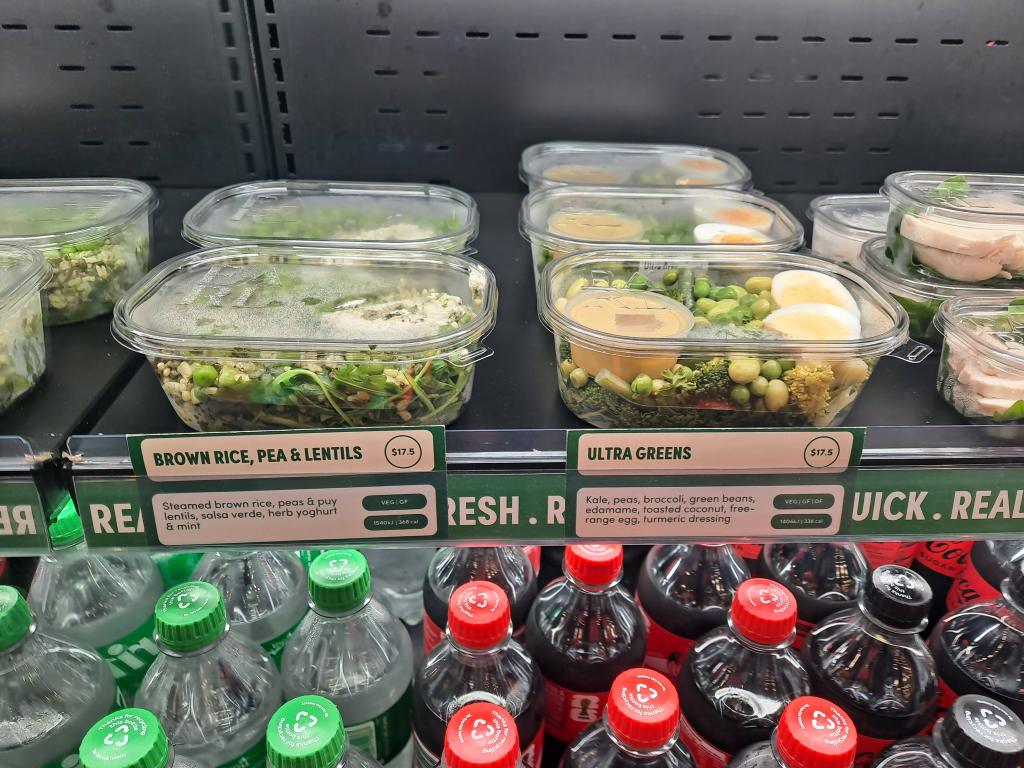
Depending on your restrictions, there are often safer bets hiding in plain sight. Nigiri sushi (check for soy sauce), fresh fruit, plain salads, and sealed pre-packaged snacks can all be worth a look. Not glamorous, but reliable
Transiting Hong Kong on a trip earlier this year, there were a couple of options that might have worked for me as someone who’s gluten and dairy free, but I was at the start of a long trip and really wasn’t confident. Fruit and chips at a kiosk to the rescue. Not exciting, but I landed feeling fine, which was all that mattered.
Fast food
Most major fast food chains publish allergen information online and operate with standardised processes, which makes them a reasonable option when you’re stuck. It’s worth a look before you rule them out entirely. Just keep in mind that practices can vary between countries, even within the same chain.

Sit-down restaurants
Airport restaurants can work, but they need more caution than you might apply at a dedicated restaurant at home. Cross-contamination is common in high-volume kitchens. If you do eat at one, be specific with staff: name your allergens clearly (say cashews, not tree nuts; say wheat, not just gluten), confirm what the dish contains, and check that safe prep can actually be guaranteed. If you’re coeliac or have a severe allergy, apply the same level of scrutiny you would anywhere else.
Before you eat
A couple of small habits that are worth building into your airport routine;
- Carry disinfecting wipes and use them before you eat. Wipe down your hands, the tray or table surface, and anything your food is going to come into contact with. It takes thirty seconds and it matters, especially if you’re managing a contact-sensitive allergy.
- If you’re eating at a food court or grab-and-go counter, keep your food away from shared surfaces where possible and watch for cross-contamination from neighbouring trays or tables.
Bring backup snacks
This is non-negotiable. You should already have snacks for the flight itself (see our guide to special meals and flying for full details on that), but the airport is a separate problem. The last thing you want is to eat your flight snacks before you’ve even boarded because there was nothing suitable in the terminal.
Small airports can have almost nothing for restricted travellers. And even if you’re departing a well-stocked international hub, things happen. Flights get delayed. Weather forces emergency stops. Connections go wrong.
My mum experienced this on a trip back from Fiji. The plane made an unscheduled stop in Tonga due to a mechanical issue. The airport was tiny, options were minimal even for regular travellers, and because of flight changes her special meal request hadn’t transferred. Without snacks, it was a very long few hours in the blazing heat waiting for the situation to resolve. Pack enough to cover unexpected delays, not just the flight itself.
One final note: if you’re carrying snacks through customs, know what you can and can’t declare at your destination. Australia and New Zealand in particular have strict biosecurity rules, and getting caught with undeclared food is not the kind of stress or cost you want at the end of a long trip. When in doubt, eat it before you land, throw it away before security or check the rules in advance.
The airport can surprise you too
It’s worth saying, because airport eating with dietary restrictions isn’t always a story of compromise and contingency plans. On a stopover in Vancouver flying back from Calgary to Auckland, I ended up in the Air Canada lounge as someone’s plus one after a random act of kindness from a fellow passenger. Four hours of waiting turned into wine and a gluten free, dairy free curry with rice. Sometimes the airport genuinely delivers. Plan for the worst, but stay open to the unexpected.
The short version
- Research your airport and terminal before you leave. Find Me Gluten Free, Facebook groups, and Google Maps are all useful.
- Check terminal maps carefully. Options in another terminal might as well not exist if you’re short on time.
- Look for naturally safe options first: fruit, pre-packaged snacks, nigiri, plain salads.
- Fast food chains publish allergens and can work in a pinch.
- Apply full restaurant caution if you’re eating at a sit-down place: be specific, name your allergens clearly.
- Wipe down surfaces before you eat.
- Pack backup snacks that cover delays, not just the flight.
- Know what you can carry through customs at your destination.
For everything about the flight itself, including special meal codes, what to do if your meal doesn’t make it on board, and what to pack in your carry-on, head to our guide to special meals and flying.

Jo is the founder of Globally Sauced, a travel platform for dietary restricted travellers and is gluten and dairy free. When not outdoors or travelling, she loves to empower people with dietary restrictions so they can explore the world safely.
Globally Sauced offers verified restaurant recommendations, country-specific guides, food label / menu translations, and more downloadable resources for gluten-free, dairy-free, allergy-conscious and other dietary restricted travellers. Learn more at globallysauced.com