Travelling with food allergies, coeliac disease, or intolerances means packing a little differently. Your passport matters, but so does your EpiPen. Your snacks matter as much as your itinerary.
I’ve fine-tuned this kit over years of gluten and dairy free travel, and for the severe allergy sections I’ve drawn on the expertise of Jess at Eat Safe, Live Big, who travels with multiple food allergies and knows this territory better than most. Her post on day-to-day essentials is well worth a read too.
Add or subtract based on your needs, and always check with a medical professional before you travel.
Category
Essential Item
Key Regulatory / Medical Tip
Emergency Meds
2x Auto-Injectors (EpiPen / Anapen) and Allergy Action Plan
EpiPens (Ideally 2) – Easily accessible, within the expiry date and within reach. Why two? In some cases it may be needed, also if you’re travelling away from home you may be exposed more than once.
⚠️ Severe allergy: Keep at least one on you at all times, not in checked luggage, not in the overhead locker.
Medication Kit – Anything you either take regularly or use as needed to feel better. This might include; Benadryl, Antihistamines, inhaler, and any prescription medications, always in the original packaging.
⚠️ Severe allergy: Pack medication in original packaging, customs officials may need to verify what you’re carrying, and original packaging keeps dosage information handy. Antihistamines are not a substitute for an EpiPen.
Copy of an Allergy Action Plan – This explains what to do in case of reaction, and is created by your doctor or medical professional. You can find more information out about standardised plans such as the ASCIA Travel Plan or EAACI (European Academy of Allergy and Clinical Immunology)
⚠️ Severe allergy: This isn’t optional. Carry a printed copy and a digital version, and make sure your travel companions have read it.
Medical ID Bracelet – If you have one and your not wearing it, make sure it’s somewhere accessible. It’s an important way to alert others to your allergies in an emergency.
Sanitation
Wipes & Hand Sanitiser – For wiping down trays, tables, surfaces or hands before eating.
⚠️ Severe allergy: Wipes are essential for cleaning tray tables, seat belts, and armrests before you sit down. Hand sanitiser does not remove allergens — wipes do.
Safe Food
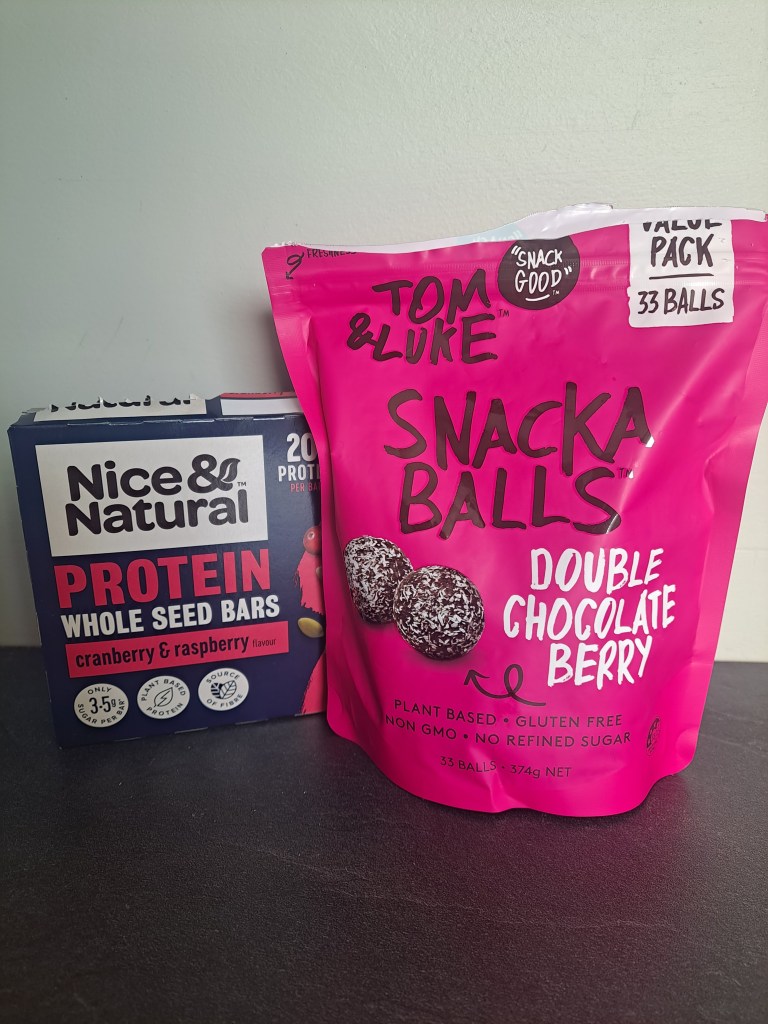
Safe Snacks – A few shelf-stable, allergy-safe snacks such as muesli / granola bars or bliss balls perfect for when you can’t find safe food and usually no problem with border security.
⚠️ Severe allergy: Check manufacturing labels carefully for shared facility warnings — what’s safe at home may be produced differently abroad.
Backpacker Meals – I always pack a couple, usually Radix, for when safe local options are scarce. Just make sure to check border restrictions.
⚠️ Severe allergy: These are worth checking ingredient lists on carefully before you travel, not at the destination.
Pro Tip: Use the ‘First Use’ Test Rule
When you buy packaged food abroad, open and try it at your accommodation, not mid-flight or halfway up a mountain. If there’s a reaction, you’re in a safer, more controlled environment
Water Bottle – Always an essential, plus, it’s useful for washing away accidental exposures. If you’re travelling by air make sure its empty when going through security, you can usually fill it up on the other side.
Reusable Cutlery & Small Container – Perfect for the backpacker meal but also if you’re eating breakfast in a hotel room or similar. Just make sure it will get through security or check it in.
Going on a roadtrip? If you’re going on a road trip you’ve got more options so pack a small chilly bin (cooler or esky) with snacks and treats to enjoy wherever you stop.
Travel Tips for Severe Allergies
If you have a severe allergy or intolerance, travelling can feel especially stressful. But with a few smart steps, you can reduce your risk and travel more confidently.
Pro Tip: Carry Your Own Condiments Sauces and dressings are common hiding spots for allergens and gluten. Single-serve sachets of safe sauces, oils, or seasonings can help you can make simple meals safe without guessing
Talk to staff clearly
Make sure you can be understood and can advocate for yourself just like you would at home. If you’re not confident check out our recent advocacy post, to build the skills you need. If you have severe allergies or don’t speak the language use allergy card and get verbal confirmation in the local language.
Know the emergency number
It’s not always what you use at home, know and save the local emergency number, the nearest hospital, and a translation of “I have a severe allergic reaction” in the local language in your phone and on a card in your wallet.
At the Airport & On the Plane
Identify airport dining options
Airport food can feel like a game of chance when you have dietary restrictions. Read up on How to Eat Safely at the Airport with Dietary Restrictions, read our article on how to research your terminal, find naturally safe options, and why backup snacks are your ultimate travel insurance.
Keep your medication close
Never store your medication, including antihistamines or an EpiPen in the overhead compartment, instead keep it within arm’s reach. Let your travel companions and the flight crew know if you have a severe allergy and where your medication is in case of an emergency.
Pre-boarding accommodations
Airline policies do vary regarding pre-boarding accommodation (e.g., buffer zones, flight crew notifications, pre-boarding) and nut-free buffer zones but it’s always worth asking and doing a little research so you know what to expect.
Let crew and nearby passengers know
Some airlines will, and some will not make an allergy-related announcement but its always worth asking. If they won’t make an allergy-related announcement to other passengers, you’re always within your rights to politely inform those seated around you of your allergies, especially on smaller or longer flights.
Request to pre-board
Ask gate staff if you can board early so you have time to wipe down your seat, tray table, seatbelt, window area, and any nearby surfaces. This small step can make a big difference in avoiding accidental contact with allergens. Top Tip: when travelling in a large group or with children, if you have multiple adults get one to pre-board and wipe surfaces down while the others stay with the group to speed things up
Bring your own food if you can
Special Meals are fantastic for many, myself included but if you have severe allergies or intolerances remember they are prepared in a shared kitchen and there is a risk of cross contamination. If this is you, we suggest bringing safe snacks or meals for longer flights. Many airlines such as Air New Zealand have information on this on their website about bringing you’re own food.
Heads up biosecurity and border rules do vary by country, always check in advance what you can or cannot bring into a country and declare it on entry if unsure e.g. MPI New Zealand, Australian Department of Agriculture, MAFF Japan) regarding importing animal products, seed mixes, or unsealed food Be sure to check airline and destination rules in advance, some countries restrict certain food items on entry.
If bringing your own food isn’t allowed or practical, ask airline staff about ingredients and preparation methods. For example, travellers with milk or egg allergies may find vegan meals safer, though it’s always best to double-check.
The Takeaway
Verify before you fly: Check destination import laws for pre-packaged meals and verify your carrier’s specific medical bag policy.
Keep meds within arm’s reach: Never stow auto-injectors or essential medications in overhead bins or checked luggage.
Wipes over sanitizer: Alcohol gels kill bacteria but leave food proteins behind—always use disinfectant wipes on trays and armrests.
Travelling with food allergies, coeliac disease, or intolerances can feel overwhelming, but with the right preparation, it becomes less about fear and more about freedom. Your survival kit isn’t just a bag of supplies; it’s a safety net that lets you focus on the fun parts of travel, not the stressful ones.
Every journey will be different, and your kit will evolve with each trip. But the goal is always the same: stay safe, eat well, and make incredible memories, because food shouldn’t be the hardest part of your trip.
If you’ve discovered an essential that’s saved you on the road, let me know on Instagram or Facebook and I’ll include it. You never know who you might help on their next trip
A practical guide for travellers managing coeliac disease, food allergies, intolerances, or any combination, across Australia and New Zealand.
Good news, both Australia and New Zealand have one of the most detailed allergen labelling systems in the world, substances that must be declared, a strict format for how they’re written, and separate, stricter standards for the words “gluten free.” Once you know how it works it’s honestly one of the easier places to eat safely, but its different enough from other places that it’s worth a proper explanation.
I’m a kiwi and I’ve eaten my way through Auckland, Coromandel, Rotorua, Queenstown, Adelaide and Melbourne since going gluten and dairy free, and while my own experience is with those two restrictions specifically, the labelling system underneath applies whatever you’re avoiding. Read on to learn how it works so you can travel and eat with confidence.
Supermarket Transparency vs. Kitchen Discretion
Navigating supermarket aisles in Australia and New Zealand is a dream compared to many parts of the world; The packaged food in Woolworths, Coles, or Pak’nSave is among the safest and most strictly audited in the world, However the legal definitions behind terms like ‘Gluten Free’ or ‘Tree Nuts’ can catch international travellers off guard.
Restaurants however are where advocacy is required. The FSANZ packaged food rules do not legally dictate raw kitchen prep in cafés and restaurants. Menu acronyms (GF, DF, V) are voluntary shorthand, meaning asking questions about shared fryers and noodle water is still essential. Staff are however legally required to provide accurate allergen information upon request (even if unlisted on the menu).
For packaged food Australia and New Zealand put the legal burden of absolute accuracy on the manufacturer, which frees up the consumer in the supermarket aisle, but in a restaurant setting, that burden shifts back to you to ask the right questions. We will look into each aspect in more detail below.
Quick reference guide
While both countries share a unified food code, how Australia and New Zealand handle allergens on packaging looks very different from what you might be used to at home. The strict zero-tolerance stance on gluten or mandatory plain-English nut naming might be a breath of fresh air depending on what you’re used to so before diving into the fine print, here is how ANZ labelling laws stack up against global standards.
Feature
Australia & New Zealand (FSANZ)
USA / Europe / UK
“Gluten Free” Claim
0 ppm (Zero detectable gluten)
< 20 ppm threshold
Oats in Gluten Free Food
Strictly prohibited from wearing “GF” label
Allowed if certified as uncontaminated
Tree Nut Labelling
Must name individual nuts (e.g., Cashew, Walnut)
Often grouped under generic “Tree Nuts”
Labelling Format
Mandatory Bold text & separate “Contains” box
Varies (often bolding or bottom summary)
Menu Labelling
Voluntary shorthand (GF, DF); laws apply to packaging only
EU/UK require 14 allergens declared on menus; US varies
Staff Knowledge
Legally required to supply ingredient info if asked
EU/UK legally mandatory; US relies on voluntary kitchen policy
The Allergens That Must Be Declared
Under Food Standards Australia New Zealand (FSANZ), packaged food must clearly declare a specific list of allergens whenever they’re present, regardless of how much or how little is used. The list includes:
Peanuts
Tree nuts, and each one has to be named individually, almond, Brazil nut, cashew, hazelnut, macadamia, pecan, pine nut, pistachio and walnut all have to be spelled out rather than grouped under “tree nuts”
Milk
Eggs
Fish
Crustaceans, such as prawns, crab and lobster
Molluscs, such as oysters, mussels, squid and scallops
Soy
Sesame
Lupin, a legume used in some flours and baked goods that isn’t widely known outside the region but is cross-reactive with peanut allergy for some people
Sulphites, when added at 10 milligrams per kilogram or more, common in dried fruit, wine and some processed foods
Wheat, along with barley, oats and rye specifically when they contain gluten
That’s a wider net than many countries so if you’re managing a nut, egg allergy, or something like lupin or sulphites, Australian and New Zealand labels might be some of the easiest to navigate.
Plain English Labelling: What “Bold” and “Contains” Actually Mean
Recent updates to the legislation has introduced PEAL (Plain English Allergen Labelling) in Australia and New Zealand which requires manufacturers to use plain names. So no hiding milk behind “casein” or “whey,” no grouping nuts together as one word. Each allergen appears in bold, every time it shows up in the ingredient list, including if it’s inside something like a stock or a sauce.
As well as this most products carry a separate bolded summary statement starting with the word “Contains,” for example “Contains: milk, soy, sulphites.” You can see this on the Tom & Luke’s packaging to the left. It sits near the ingredient list, it’s designed to be easy to check.
Gluten Free Zero Tolerance
Gluten sits inside the same regulations but “gluten free” as a claim on a label has much stricter rules than you might be used to. Under Australian and New Zealand food law, a product can only be labelled “gluten free” if it contains no detectable gluten whatsoever. There’s no allowable trace threshold the way there is in Europe or the US, where gluten free typically means under 20 parts per million. Here, if a lab can detect it, the product can’t wear the label.
In practice this means a “gluten free” sticker on a supermarket shelf or a menu is doing more work than the same words might overseas, 20 ppm allows trace amounts of gluten, whereas FSANZ tests down to zero. So for people who are coeliac or gluten free this is one of the reasons both countries are considered easier than average for coeliac travellers.
What About the Oats?
Internationally, the gluten free status of oats can be controversial. Some countries allow oats to be labelled gluten free provided they’re grown, harvested and processed to avoid contamination with wheat. Others treat oats as a contamination risk by default, since oat crops are very often grown alongside or rotated with wheat.
Australia and New Zealand fall into the second camp. Neither country currently allows oats to be labelled gluten free, full stop, regardless of how the oats were grown or processed. Coeliac Australia has more details on the reasoning, its worth a read.
What this means in practice: oat milk in your coffee isn’t a gluten free swap here the way it might be at home. If you’re coeliac or highly sensitive, ask for cow, soy, almond, or especially in Australia order a lactose-free option instead. It’s a small adjustment, but it’s the one detail that catches out even experienced travellers who’ve done this in a dozen other countries.
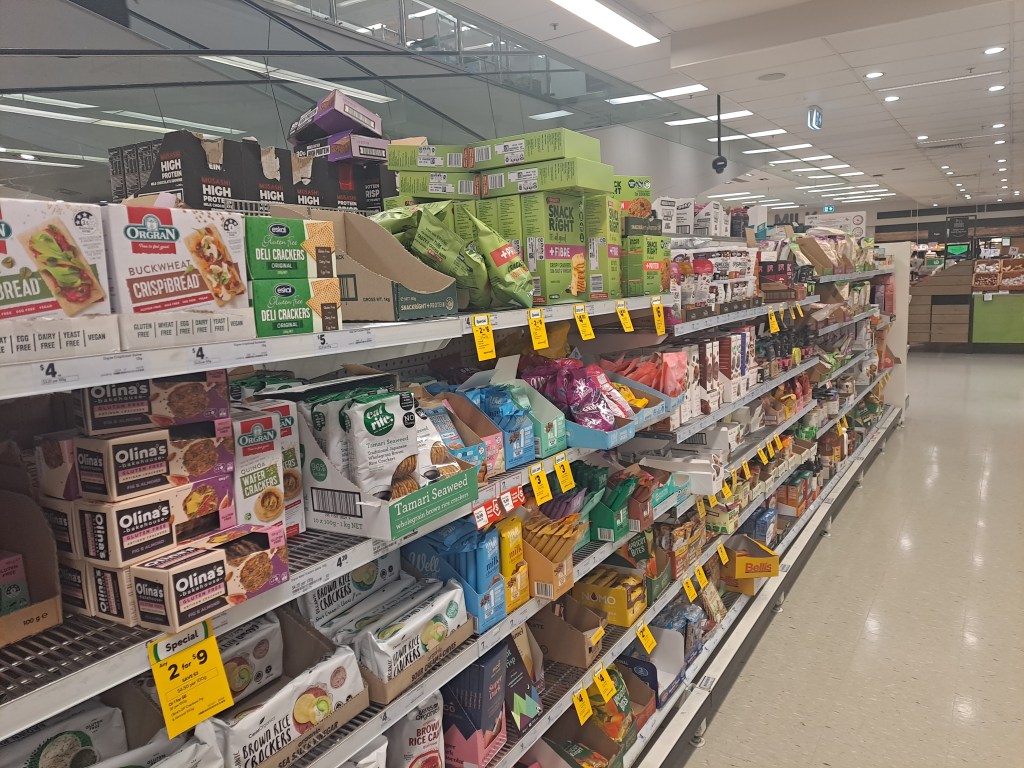
You may also find your favourite snacks unavailable as often these contain oat flour, never fear check out the free from or snack aisles in the supermarket there’s plenty of delicious local options.
What does “May Contain” really mean?
You’ll also see “may contain traces of,” or “may be present,” on packaging for any of the allergens on the list above, not just gluten. This is a voluntary statement, also called precautionary allergen labelling, and it exists because manufacturers have identified a genuine cross-contact risk they couldn’t fully eliminate through cleaning or scheduling.
The important part to consider though, it is voluntary so its absence doesn’t mean the product is safer. A manufacturer might not have added the statement, but the risk is still there. Treat it as one input, not the whole picture, and if you’re highly sensitive to a particular allergen, the product’s own website or customer service line can be a valuable source of advice regarding the manufacturing process. For example Whittaker’s Chocolate FAQ contains some valuable information you won’t find on the packaging.
Menus, Restaurants, and Where the Packaging Rules Stop
All of the above applies to packaged retail food. It doesn’t extend to what comes out of a restaurant kitchen. Once you’re eating out, you’re back to asking the same questions you’d ask anywhere in the world, regardless of what you’re managing, how is this prepared, is there a dedicated fryer or board, what’s in the sauce.
Menus increasingly use shorthand like GF, DF, V, VG, or a specific allergy icon, and halal and kosher options are marked at some venues, but none of that shorthand carries the same legal weight as the packaging declarations above. It’s a helpful pointer, not a guarantee, and staff knowledge does vary from one venue to the next.
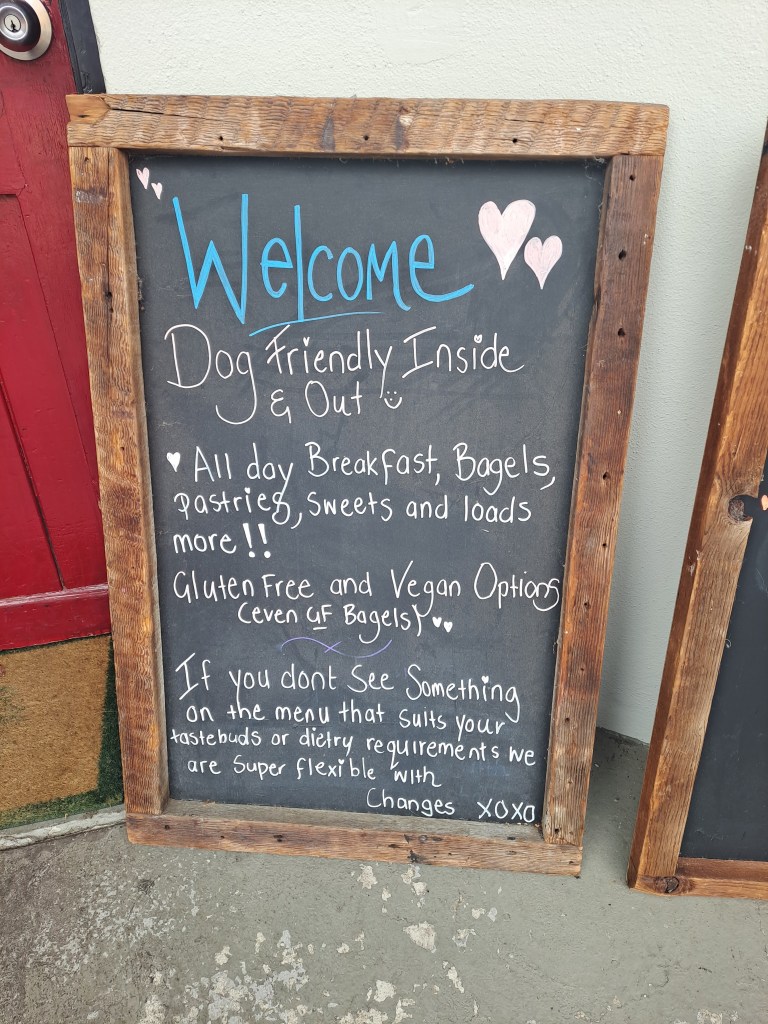
Whether a restaurant has labels or not always ask the staff, some restaurants will say they don’t cater to allergens but, most do even when its not labelled. I’ve often found some of the most accommodating places to be ones without labelling on the menu. Like many places your favourite review websites or apps can be great places to find recommended spots.
Don’t forget to ask questions just like you would at home, so you know that the risk of cross contamination is acceptable to you. On a snowboarding trip to Queenstown, a couple of restaurants said they had gluten free items, however when I enquired further the fryer was shared. One lunch break in Auckland I enquired about a noodle place that had rice gluten free noodles, when I asked questions the water was shared and the broth had soy sauce containing wheat. On both occasions if I hadn’t asked more questions I could have been affected by gluten.
Where to Put This Into Practice
If you’re planning a trip across the region, I’ve put the practical, restaurant-by-restaurant version of all this into three dedicated guides. They’re written from my own experience as a gluten free and dairy free traveller, but the labelling logic above applies underneath whatever you’re managing:
If your combination includes allergies beyond gluten and dairy, the Essentials Travel Pack builds a personalised guide including naturally safe dishes and an allergy card for your restrictions wherever you’re headed.
The Takeaway
Supermarkets are safe havens: Thanks to zero-tolerance gluten rules and PEAL, packaged ingredients are among the easiest to read in the world.
Beware the oats: Oats cannot be labelled “gluten-free” in ANZ—swap your oat milk coffee for almond, soy, or lactose-free cow’s milk.
Tree nuts are always named: You won’t have to guess what “tree nuts” means on a package; every nut is listed individually.
Restaurants require advocacy: Menu acronyms (GF, DF, V) carry no legal weight, so always ask staff about shared fryers and prep water.
Australia and New Zealand’s labelling laws are detailed because they’re built around certainty rather than guesswork. A specific list of allergens has to be declared in plain English, gluten free carries its own stricter zero tolerance standard again, oats sit outside that claim entirely, and none of it extends past the supermarket shelf into the kitchen. Once you know the categories, whatever your combination of restrictions, the region becomes one of the more straightforward places in the world to eat safely.
There’s a moment most restriction travellers know well. You’re standing in front of the breakfast buffet at a hotel in Queenstown, plate in hand, and you genuinely don’t know what’s safe. Or you’re at home planning that trip through the Loire Valley and three hours of Googling later you’re less certain than when you started. AI tools promised to fix that. And they do help, just not always in the way you need.
Think of it this way. A generalist AI, like ChatGPT or Claude, is like a knowledgeable librarian, they can point you in the right direction, give you solid general information, and they’re genuinely useful. A specialised tool built around your specific restrictions is more like a travel consultant who’s actually travelled your way, they don’t just brief you, they send you off with everything you need in your hand. Personally I use both, and I’ll show you exactly where the difference shows up, because for some trips, the librarian is all you need.
What standard AI actually does well
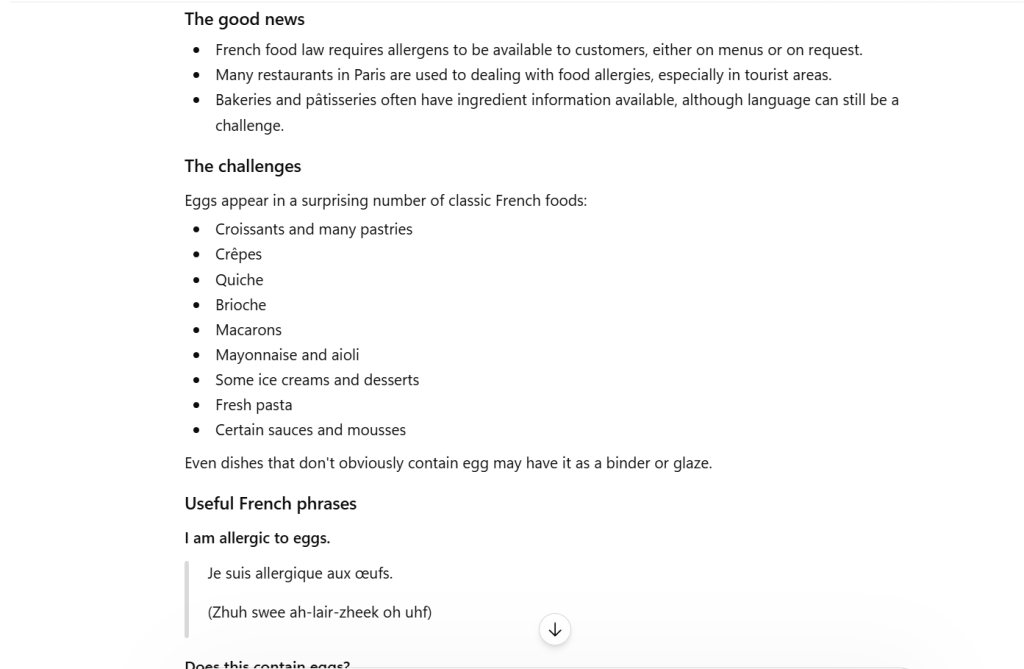
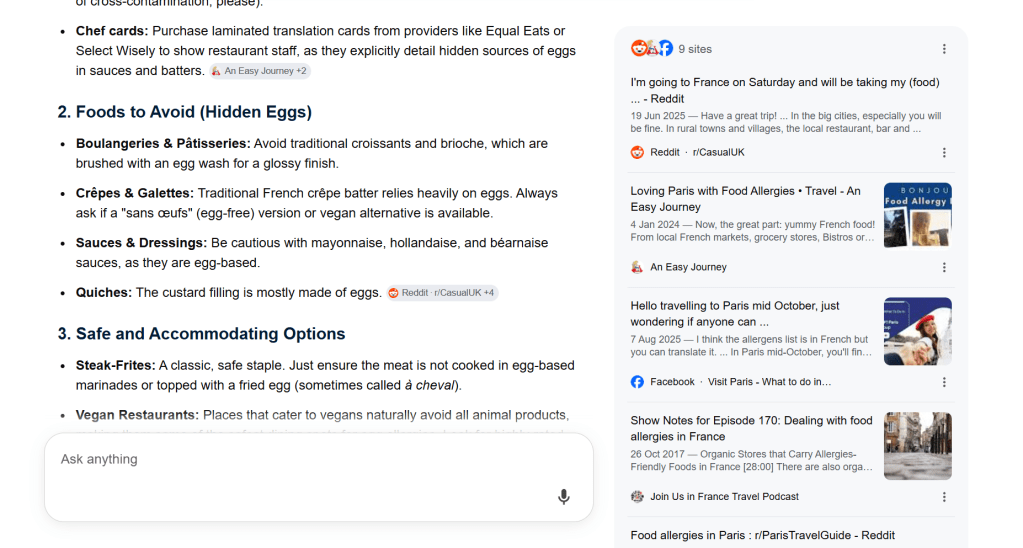
Ask ChatGPT about travelling to Paris with an egg allergy and it’ll tell you about French food law, flag that eggs turn up in places you wouldn’t expect like béarnaise and brioche, give you phrases to use, and suggest some smart cultural workarounds like leaning into North African and Vietnamese restaurants. That’s genuinely useful. It even thought to ask about severity. Google’s AI overview, powered by Gemini, goes further in some areas, it names specific supermarkets like Monoprix and Naturalia, flags the EpiPen and doctor’s letter angle for severe allergies, and even catches that steak-frites ordered à cheval comes with a fried egg on top. If you’re heading somewhere well documented, travelling with a single common restriction, and you’re comfortable doing a bit of your own follow up research, a generalist AI will get you a long way.
And if you didn’t open ChatGPT, but instead Googled it and read the AI overview at the top of the results, and yes we all do this, that’s not a bad starting point.
There’s one catch with the Google AI overview in particular. It’s only as good as what ranks well in search, and most of what ranks well is written for single restriction travellers. If you’re managing more than one restriction, and a lot of us are, the results start to get complicated fast. Something flagged as a safe egg free option might be full of gluten. A vegan restaurant recommended for egg allergy might use oat milk in everything. The overview doesn’t know your combination, it knows the most common question. This isn’t just an AI problem by the way. Anyone who’s followed a gluten free recommendation to a crêperie and then discovered the dairy free part wasn’t even considered will know exactly what I mean.
Example one: At the breakfast buffet
So where does it get complicated? Not in what these tools know, but in what they do with it once you’re actually there, standing in front of a decision that needs a practical answer, not a briefing.
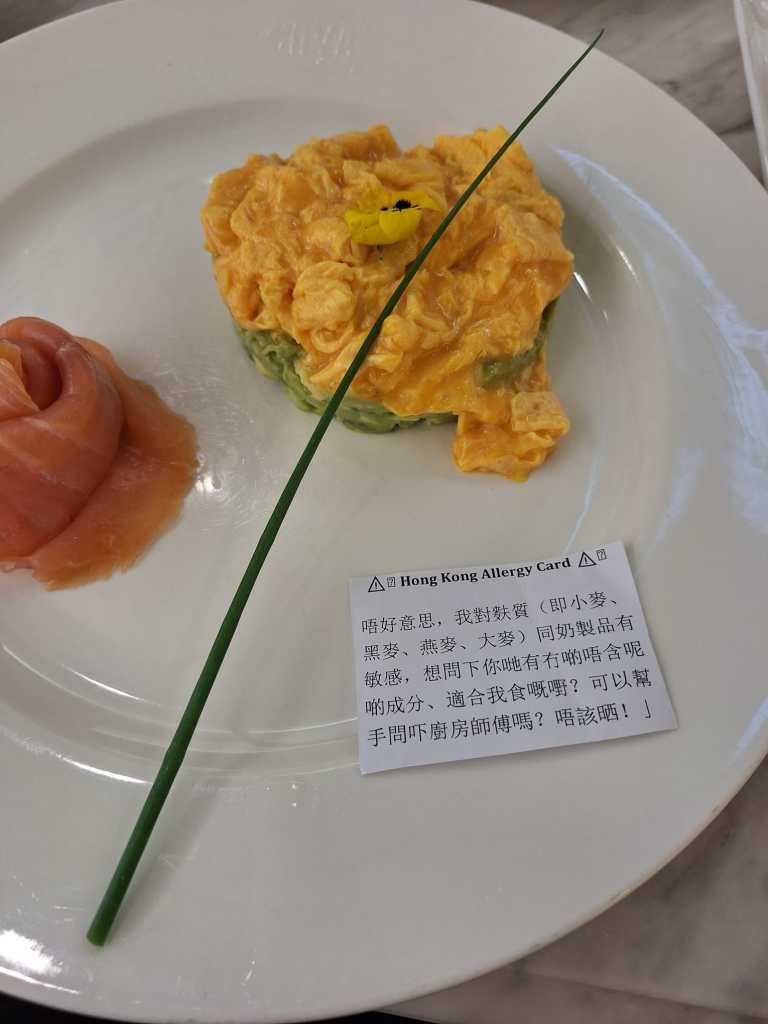
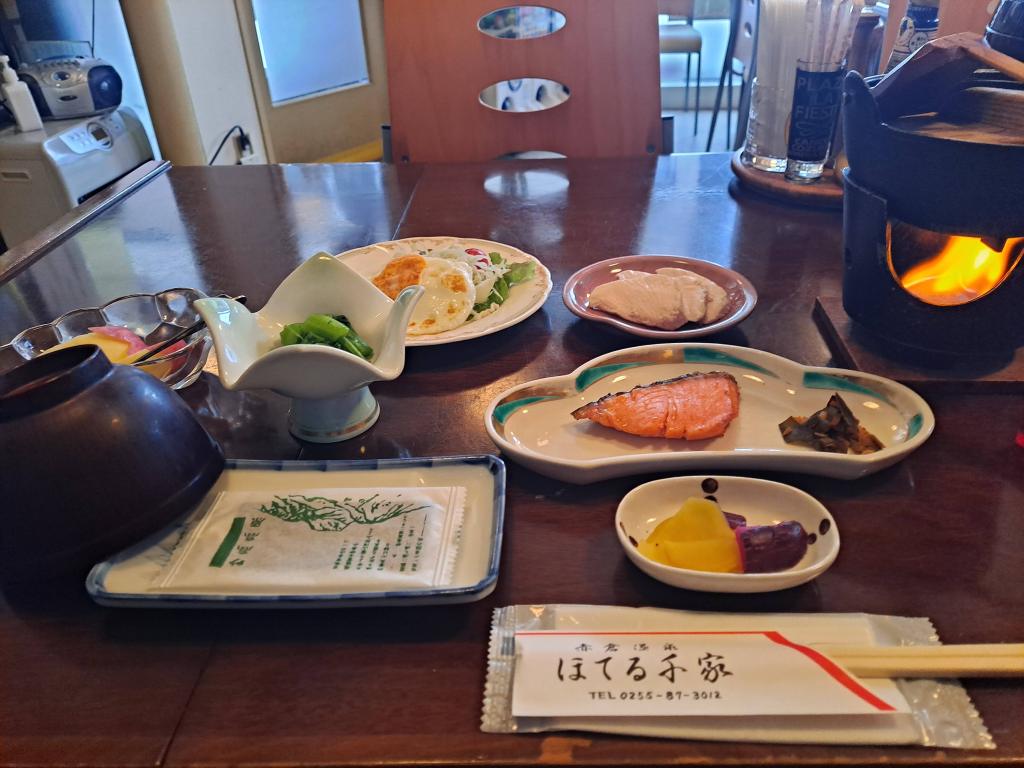
Take this plate. I was staying at a Toyoko Inn in Japan and asked ChatGPT whether this breakfast was safe for someone who is gluten free and dairy free. The staff were busy and I wasn’t sure if it was ok to ask.
The response was reasonable. It flagged the right risks, the possible soy glaze on the fish, the eggs potentially cooked with butter or milk, the mystery sauce. It gave me a confidence rating of 7-8 out of 10 for gluten free and 5-6 out of 10 for dairy free. Then it asked me three follow-up questions before it would go further.
A confidence rating is not much use when you’re hungry and the buffet is closing in twenty minutes.
I asked my own tool, the product sutability checker the same question. It also flagged the right risks, and it also asked a follow up question to confirm my restrictions. But then it gave me the specific Japanese phrases to ask about each dish on the plate, a ready to show card for staff, and safer default choices if I couldn’t get a clear answer. It’s built to err on the side of caution, which means it won’t give you a green light until it has enough information to be confident. For coeliac level restrictions that’s not a limitation, it’s the point.
One response you read, the other you take to the buffet, this time with the confidence to know what to ask the staff.
Output from a Chat GPT conversation whether breakfast is GF DF
The output from a conversation if a meal is GF DF in Japan
Example two: Planning at home
Now take a different moment, not standing at a buffet, but at home planning a trip. I asked ChatGPT and Gemini the same question: “I’m allergic to eggs and travelling to Paris for a city break, what do I need to know?”
Both did well. ChatGPT flagged the right foods, gave useful phrases, and suggested leaning into North African and Vietnamese restaurants as a smart workaround. Gemini named specific supermarkets, caught the à cheval steak frites detail, and covered emergency preparation more thoroughly than ChatGPT did. Between them you’d have a solid understanding of the landscape.
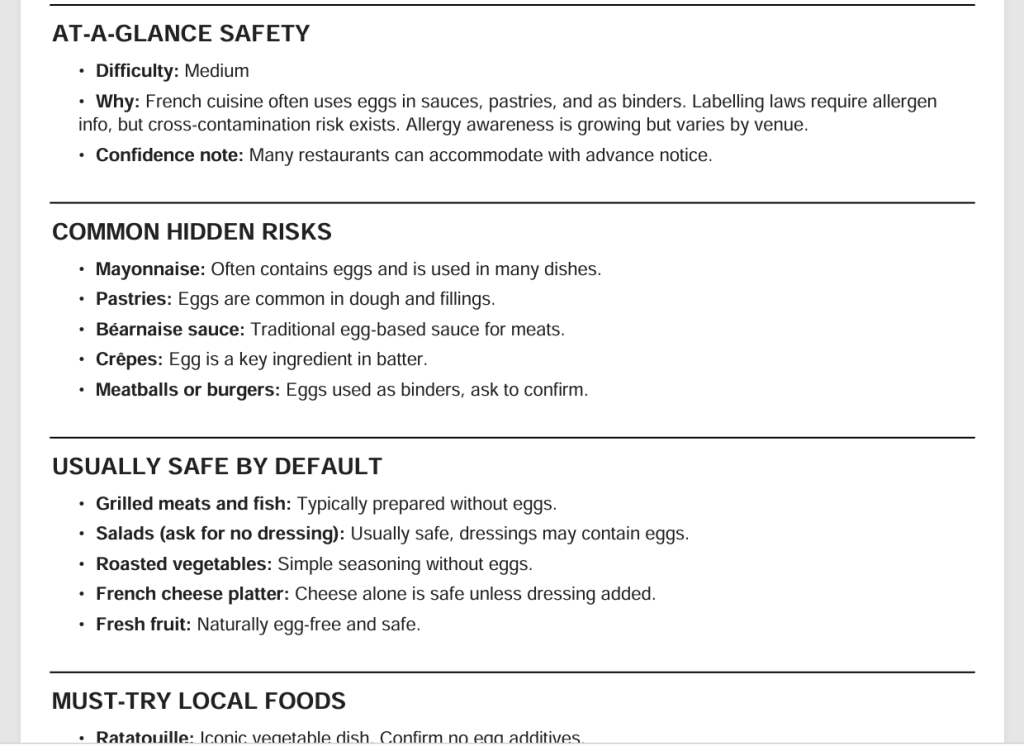
But here’s what you wouldn’t have. You wouldn’t have the specific French labelling words to scan a menu yourself. You wouldn’t have named restaurants with neighbourhoods. You wouldn’t have a bilingual allergy card ready to show staff. You wouldn’t have links to French government labelling resources or the local allergy association. And you wouldn’t have a fallback plan for when things go wrong mid trip, because things do go wrong mid trip.
My tool returned all of that from a single clarifying question about whether I had any other restrictions.
ChatGPT to its credit ended with three more questions before it would go deeper. Gemini ended with “tell me your neighbourhood and favourite foods.” Both are useful but if you close the tab at that point, which most people do, what you’re left with is a briefing, what you need is a kit.
Chat GPT output for a traveller allergic to eggs going to Paris
Gemini output for a traveller allergic to eggs going to Paris
Globally Sauced Essentials output for a traveller allergic to eggs going to Paris
If you need to go deeper on specific restaurant recommendations for a destination, I’ve built a separate tool entirely, a dining guide built just for that, it even checks if a restaurant is still operating. While the menu checker i perfect for deciphering a menu to understand what’s in a meal. The essentials pack is designed to give you a detailed overview across every category, while the dining guide or menu checker is where I go when I want to drill down further.
Why this happens
So why does this happen? It’s not that ChatGPT or Gemini are getting it wrong. It’s that they’re built to be helpful to everyone, which means they’re optimised for nobody in particular. They don’t know your specific combination of restrictions, your risk tolerance, or that you’re standing at a Toyoko Inn buffet at 7am trying to figure out if the eggs are safe. They give you the most useful answer they can for the most common version of your question.
A tool built specifically for restriction travel starts from a different place. The cultural context, the safety-first mindset, the multi-restriction framing, the “here’s what to actually do right now” output, that’s all baked in before you ask your first question. You don’t need to know what to ask, which matters more than it sounds. If you knew exactly what to ask, you probably wouldn’t need the tool.
There’s one more thing worth being upfront about. If you asked ChatGPT or Gemini the same question twice, you might get a different answer. Generalist AI is designed to be conversational and varied, which is great for a lot of things but less reassuring when you’re trying to make a safety call. I ran the same meal check twice for this post and got noticeably different responses. A tool with a fixed prompt structure covers the same categories every time, the wording might shift slightly but the framework doesn’t.
The other difference is that my tool is deliberately cautious. It won’t give you a green light until it has enough information to be confident. For some people that feels slow. For anyone who’s been glutened by a “probably fine” call, it feels exactly right.
That moment at the breakfast buffet in Queenstown, or the three hours of planning for the Loire Valley that left you less certain than when you started, that’s what this is all about. Not replacing the research, but making sure that when you close the tab you’re holding something useful. A kit, not just a briefing. If a generalist AI gets you there, brilliant. If you’ve ever closed a tab and still felt unsure or that it was still too much work, it might be worth trying something built specifically for your needs and how you travel.
If you’re Gluten Free or Coeliac Japan is either going to ruin every other country for you, or overwhelm you on day one. From small neighbourhood eateries to convenience stores that feel five years ahead of the rest of the world, there’s far more on offer for gluten free and dairy free travellers than you might expect.
It is a country that rewards preparation, do some research, know what foods are naturally safe and what questions to ask and you will be rewarded.
One thing I love about Japan? Show a restaurant, café, or shop your allergy card and they won’t guess. If it’s not safe, they’ll tell you. That clarity is so good and removes a huge layer of stress.
This guide blends my experience from multiple trips with the foundations from our Essentials Travel Pack, Dining Guide and recommendations from other travellers to give you what you need in minutes, not hours of late night searching.
If scanning Japanese packaging looking for ingredients makes you think “where do I scan?” learn how to read Japanese Food Labels while you’re here. If Japan is the starting point for a Nagano / Niigata ski trip I’ve gone further in a dedicated post. Here’s how to not only survive Japan gluten and dairy free but thrive and want to go back.
Tips and advice for gluten free, dairy free travellers in Japan
Allergy card text and essential local phrases
Safe gluten-free, dairy free dishes, what to look forward to
Some mouth watering dining and grocery options in Tokyo, Nagano, Kanazawa, Kyoto, Osaka, Hiroshima and beyond
Gluten Free, Dairy Free Labelling and Menu Information
Japan’s food labelling laws are clear, but they’re not designed with gluten-free or dairy-free travellers in mind. By law, packaged foods must declare seven mandatory allergens: egg, milk, wheat, buckwheat, peanuts, shrimp, and crab. That’s helpful, but also where many assumptions go wrong.
Gluten is not labelled as a category. Only wheat is required, which means foods containing barley, rye, oats or malt may still appear “safe” at first glance.
Soy sauce is a major blind spot. It almost always contains wheat
Dairy beyond milk isn’t always obvious. Butter, cream, cheese, and milk powders can appear under broader ingredient terms
Japan also has a list of recommended (but not mandatory) allergens including; soy, sesame, almonds, and cashews, but these may or may not be declared, depending on the manufacturer.
Restaurants in Japan are not required to provide allergen menus, and “gluten-free” as a concept isn’t widely used in traditional dining, however dairy can be less common especially in more traditional cuisine. What I’ve found is, show an allergy card (mine is below) and staff are very quick to say ‘No’ if they cannot serve you, if they do, respect this and go elsewhere. That doesn’t mean staff are unhelpful, it means:
Menus rarely list full ingredients
Staff may need a clear explanation rather than a label
Asking the right way matters more than asking loudly.
Cross-contamination is also common in small kitchens, shared fryers, and noodle-focused restaurants, even when a dish looks naturally gluten or dairy free.
The Takeaway
Reading packaging carefully, understanding common ingredients, and being able to clearly explain your needs will take you much further than relying on menu icons or English translations.
Essential Gluten Free and Dairy Free Words and Phrases
If you have an allergy card, your translation app, can use both of them and have a few basic Japanese words (here’s the Anki phrases I use) the below will take your experience to the next level. Even if you don’t remember it all any knowledge is power.
Packaged Food Cheat Sheet
Gluten-Related (Avoid)
Wheat
小麦 (komugi) – wheat
小麦粉 – wheat flour
Barley / Malt
大麦 (ōmugi) – barley
麦 (mugi) – barley/wheat (general)
麦芽 (bakuga) – malt
Soy Sauce & Derivatives
醤油 (shōyu) – soy sauce
たまり醤油 – tamari (often still contains wheat in Japan)
Breadcrumbs / Batter
パン粉 – breadcrumbs
フライ粉 / 衣 – frying batter / coating
Use Caution
水飴 (みずあめ / mizuame) – starch syrup (source may be rice, wheat or barley)
調味料(アミノ酸等) – seasonings
加工でん粉 – modified starch
Dairy-Related (Avoid)
乳 / 牛乳 – milk
バター – butter
生クリーム / クリーム – cream
チーズ – cheese
乳製品 – dairy products
脱脂粉乳 / 全粉乳 – milk powders
Naturally GF & DF (Still Check)
米 / 米粉 – rice / rice flour
もち米 – glutinous rice (gluten-free despite the name)
野菜 – vegetables
果物 – fruit
Allergy Card
This is the actual card I use in Japan as a gluten free and dairy free traveller (see image), and I had comments on how polite it is. Allergy is more readily understood in Japan vs. other terms. You can get one with more detail in either the Essentials Travel Pack or the allergy card creator.
English: I am allergic to gluten (wheat/barley/rye/oats) and dairy. Is there anything suitable? If you’re not sure, please say so. Thank you.
The below assumes you have shown staff your allergy card and they have responded with yes or similar. I found that I needed to check soy sauce and confirm if a breakfast item was yoghurt with dairy once or twice but otherwise found I could point at something and say komugi or nyūseihin.
塩味で、ソースは別にしてください。shio-aji de, sōsu wa betsu ni shite kudasai. Season with salt, serve sauces separately.
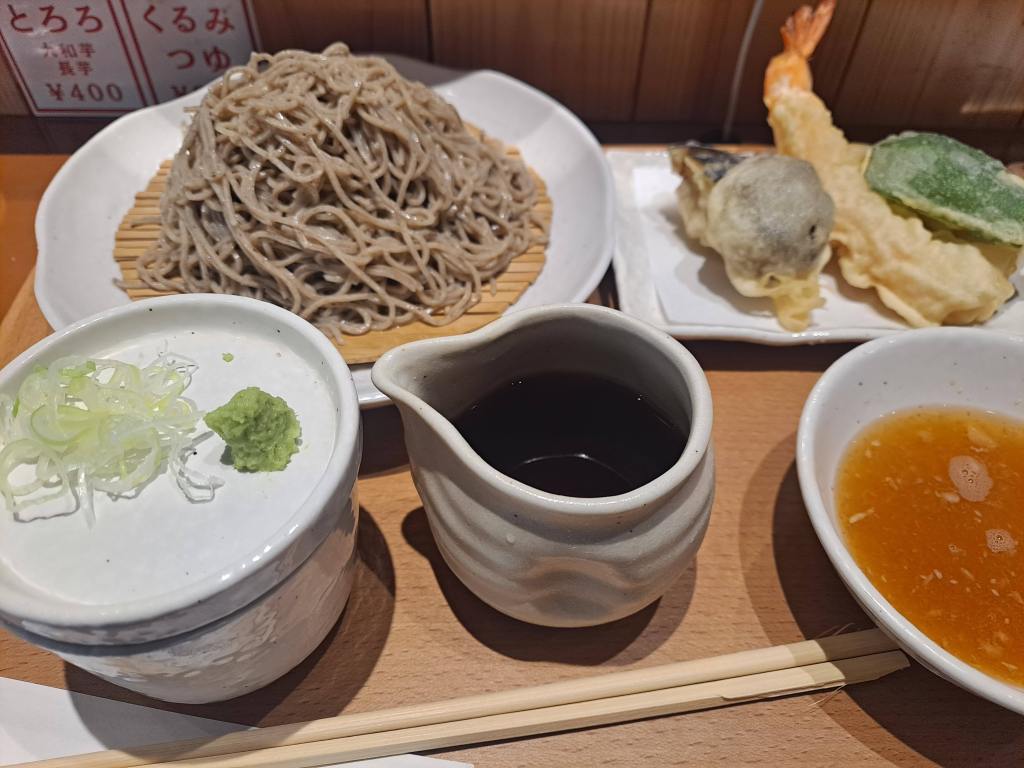
十割そばはありますか。小麦は入っていますか。jūwari soba wa arimasu ka. komugi wa haitte imasu ka. Do you have 100% soba? Does it contain wheat?
揚げ物と共通油は避けたいです。agemono to kyōtsū abura wa saketai desu. I need to avoid fried items and shared oil.
これは小麦が入っていますか?kore wa komugi ga haitte imasu ka? Does this contain wheat?
これは乳製品が入っていますか?kore wa nyūseihin ga haitte imasu ka? Does this contain dairy?
Must-Try Dishes with Gluten Free, Dairy Free Tips
I really love dishes and drinks that are naturally gluten free and dairy free, ideally with minimal adjustments (just check for cross contamination). The below options are great for that. Alongside the options I’ve listed the watch outs. You might find other things if so just eat it if you’re comfortable
Sashimi (刺身) – Pure, simple, and one of the safest choices in Japan. Fresh fish with no batter or sauce. Skip soy sauce or use a gluten-free version.
Nigiri Sushi (寿司) – Fish over seasoned rice. Ask for no soy sauce brushed on and enjoy as-is. Wasabi is usually fine.
Shabu-Shabu (しゃぶしゃぶ) – Thinly sliced meat and vegetables cooked in plain water. Avoid dipping sauces unless confirmed gluten-free. One of the easiest sit-down meals.
Cold or Warm Tofu (冷奴 / 湯豆腐) – Tofu on its own is naturally gluten- and dairy-free. Sauces are optional, plain is safest and very normal.
Yakitori (焼き鳥・塩) – Grilled chicken skewers ordered salt-only (塩). Avoid tare sauce, which almost always contains soy sauce and mirin. Just check the grill for contamination
Yakiniku (焼肉) or grilled meat, ask for plain meats and salt, again check the grill for contamination
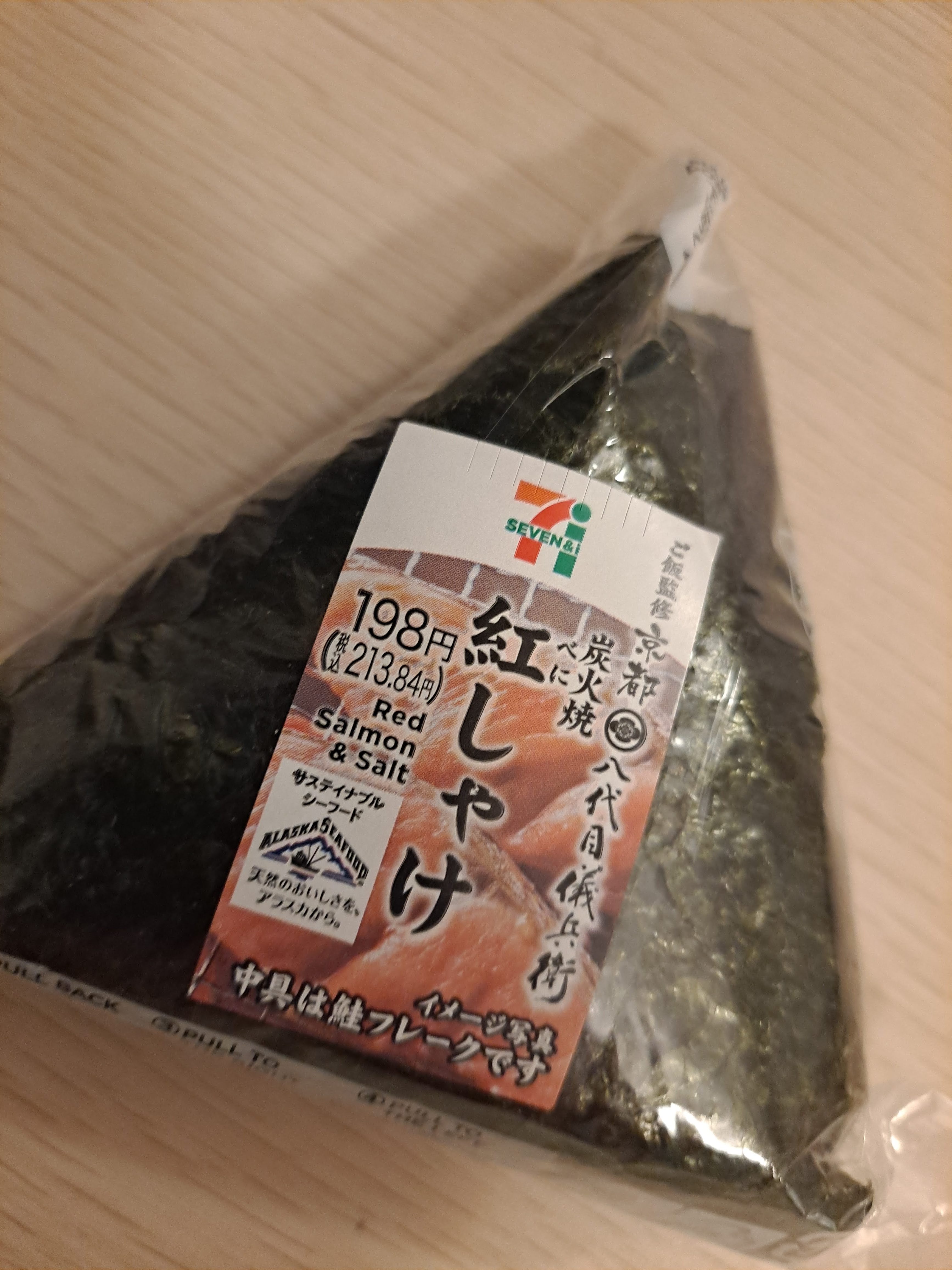
Onigiri with Simple Fillings (おにぎり) – Rice balls with plain fish (e.g. salmon), plum, red bean or salt.Just check the ingredients, some are safe other’s not so. I kept a few in my bag and stored them in the fridge in my room.
Natto (納豆) – Fermented soybeans. Use caution with the seasoning packet, i never added it, but the natto itself is usually safe.
Plain Rice & Grilled Fish Sets (定食) – A very “everyday Japan” option, I had this for breakfast most days if it was available at the hotel. Eat the rice, fish, and vegetables, skip sauces unless you can confirm with the staff.
100% Buckwheat Soba or Juwari Soba (十割そば) – If it is Juwari it can be gluten-free. But note the dipping sauce (つゆ) often contains soy sauce so ask first.
Sake (日本酒) – Traditional sake is made from rice, water, yeast, and kōji—no wheat, no dairy. I always ask or look for Junmai (純米) or pure sake which doesn’t include other distilled alcohol as I also react to wheat even when distilled.
Shōchū (焼酎) – Distilled spirit commonly made from sweet potato, rice, or barley. So check the base ingredient before ordering.
Sweet potato (芋) and rice (米) shōchū are generally gluten free but I ask.
Barley (麦) shōchū is not suitable if you are gluten free
Just remember sauces are where things get complicated, not the food itself. Order simply or plain. You aren’t “missing out”, just ask for some salt to dip your sashimi in (The chef recommended that to me in one restaurant in Akakura Onsen) or bring a few soy sauce packets from home.
Delicious Gluten-Free and Dairy Free Dining Options in Tokyo, Kanazawa, Osaka, Kyoto and Beyond
How I Vet These Restaurants: Places I have personally eaten at since going gluten and dairy free are marked with an asterisk (*). The remaining spots have been heavily vetted through local communities and highly rated by fellow sensitive travelers. If you are traveling in a group, I highly recommend booking ahead, being spontaneous is wonderful, but missing out due to a full restaurant can throw a wrench in your plans.
My Personal Tolerance Standards: While I am not formally diagnosed with coeliac disease, I am highly sensitive and react sharply to minor cross-contamination, such as crumbs in a shared toaster or shared fryer oil. I personally vet these locations based on how strictly they handle kitchen cross-contamination. I am also lactose free, though I generally choose to avoid all dairy entirely when traveling away from home to be safe.
Not included on this list are a range of chains with allergy meals such as Kura sushi, Bikkuri Donkey, Curry House, COCO, Denny’s restaurant, Mos Burger and Matsuya Foods, you’ll find these all over Japan.
Avan – Everything in this cafe in Ueno station is gluten free and they serve sweet and savory dishes including gluten free churros
Gluten Free T’s Kitchen – Restaurant serving delicious gluten free Japanese dishes, its small so you may need to book.
Gonpachi – They have a gluten free menu with tempura, sashimi, grilled chicken and other treats
NCカレー(Natural Curry Restaurant) – This restaurant serves up delicious Japanese curries and has gluten free and vegan options
Tempura Asakusa SAKURA – Everything is gluten free and the flavours and atmosphere come highly recommended
Ginza & Tokyo Station
鮨和食バル【東京橋】* – I stayed in the nearby hotel and had breakfast here, staff knew what was in the food and the seafood and rice bowl with miso sourp was delicious and safe.
2foods Vegan restaurant Ginza* – This vegan restaurant has some delicious gluten free options including a delicious omurice & a couple of sweet offerings.
Ain Soph. Ginza* – This is a great place to experience a variety of Japanese vegan food. They’re known for the pancakes. In summer you do need to book.
Soranoiro Nippon – I struggled to find this in Tokyo station but for GF ramen and gyoza its worth looking for.
Tokyo Midtown Yaesu* – When I couldn’t find the GF ramed this was a lifesaver, the salad was really tasty and the staff checked the ingredients and helped me find something safe.
Harajuku
Gonpachi Nori-temaki Harajuku – The staff at this hand rolled sushi restaurant explain what is and isn’t gluten free and even have gf soy sauce.
RICEHACK GlutenfreeBakery – This riceflour based bakery also does dairy free food. Note there are no tables only a bench outside
Rizlabo Kitchen – Known for its gluten-free fluffy pancakesand crepes, they also have a good selection of sweet and savory dishes.
Gluten Free T’s Kitchen* – Restaurant serving delicious gluten free Japanese dishes, its small so you may need to book but worth a visit if you’re worried you wont be able to try some Japanese classics.
Shibuya
グルテンフリーおばんざいLL – This dedicated GF, lunch only spot is only open on some days, and reservations required, booked through a DM on instagram.
Okomedoki Rice Burger – They only have one gluten free option but reviewers mention its safe and is a great burger alternative
Shinbu Sakiya Ramen – This restaurant serves incredible gluten free ramen, kaarage chicken and gyoza. It also has vegan options as well.
Shinjiku
Ain Soph. Shinjiku* – This is a great place to experience a variety of Japanese vegan food. They’re known for the pancakes and also have a branch in Ginza.
D.I.Y. Salad & Delicatessen* – The staff were able to make me a suitable, safe and delicious custom chicken salad.
Marbre vegan* – This vegan restaurant has a number of gluten free options including delicious cakes and pastries
Moyan Curry* – This Japanese curry house has a number of GF options, the last time I came though they said there was butter in the sauce. So its not DF. Is worth a visit if you can tolerate butter.
Paricolle Kabukicho – This cafe is a real treat, great food with much of it gluten free. Almost all dishes are gluten free here and some are vegetarian. They are all clearly labeled.
Teppan Baby – This is gluten free but the grill top is the same so there could be some contamination at this okonomiyaki restaurant, it does review well for GF nonetheless
Kobayashi Soba – Another place that comes highly rated which was closed when I visited, caters to vegan as well as other dietary needs
The Laughing Frog 笑蛙屋* – This bar serves fantastic cocktails and some delicious sausages. The owner will go check ingredients for you.
Takagi – This soba restaurant caters to gluten free diners but going on reviews does may attract more tourists.
Temariya – Going by the reviews this pastry option could be worth a look if its open, its a rice flour bakery.
Nagano
Cafe&Bar PATo – Another spot that was closed when I visited but its all gluten free
Foret coffee – Delicious coffee and gluten free snacks!
Nagano-ken Choju-shokudo – This restaurant caters to vegetarian and gluten free customers but does get busy, so be prepared to wait
Shinsyu Jyuwari Soba Ten* – This soba shop has a gluten free menu (they use tablets) and the chef is super helpful, showing you how to eat it if needed. It can get busy though
Akakura Onsen
Mr Burger* – I stayed in the associated hotel, where they provided plain safe, delicious japanese breakfasts each day. On the menu is an egg and ham rice bowl with miso. It was delicious and nice to have a safe choice.
NINJA Riceball & Sake* – The Onigiri is made while you wait and so much better than the kombini offerings, they also have gluten free beer and safe options are listed on the menu. Staff will also show you how to drink sake properly.
Noren Akakura Sushi* – This sushi restaurant was very accommodating for gluten free, showed me they used different knives etc and explained the safe options.
Obake Bar & Restaurant – Such a cute and fun little bar. Almost everything on their menu is gluten free, they fry with gluten free flour and only use gluten free soy sauce!
Panorama Cafe & Dining* – This aussi run restaurant does have a number of gluten free items on the menu but they do use a shared fryer, however they have other safe options, just let them know you’re coeliac. Your flat white is safe, they use separate jugs for the alternative milks
Restaurant Shibata – This restaurant has gluten free options, just ask the staff.
Madarao / Tangram
Japan Snowsports – The menu can be adapted for a range of dietary needs and is highly rated by gluten free travellers
MiSTER DARUMA – Most of the food is gluten free and safe for coeliacs and the restaurant is also great for food allergies with advance notice.
Love for All – Serving up vegan and vegetarian Japanese food, you need to book via their instagram page but is often recommended and caters to GF
Moron Cafe* – A trendy coffee shop serving some safe cakes and dairy free coffee made using separate jugs.
Omicho Market* – There is lots of seafood and fruit available here, the seafood stalls had signs saying they can cook it for you there. There is also delicious and safe GF Karaage chicken and mochi.
Shirom Creperie – I didn’t eat here but you’ll see it mentioned lots, just a heads up it doesn’t do dairy free
Slow Luck – This vegan restaurant was closed when I visited but comes highly rated
Kyoto, Nara & Osaka
Kyoto
CHOICE – This vegan restaurant has some great options for gluten free diners as as well including gluten free beer. It’s a Western style restaurant and home made pizza looks to be the go to order
Everysoy* – The macha cream puff and the soy latte amazing and the staff are aware of the allergens were in each flavour.
Gion Soy Milk Ramen Uno Yokiko – Wonderful ramen restaurant in the heart of Kyoto. There’s a range of ramen dishes and gyozas and everything is fully vegan and gluten free
KYOTO ENGINE RAMEN – This ramen restaurant has delicious food and has vegan / dairy free options as well as GF. There’s a separate GF menu.
Teuchi Toru Soba* – This spot serves delicious 100% buckwheat soba and tempura, its an affordable authentic spot where the chef knows his stuff.
UNO RAMEN Sanjo – This GF, vegan restaurant features soy milk ramen, gyoza and a range of other delicious offerings
Nara
Ace Sushi – Staff are knowledgeable about what is and isn’t gluten free
Big Mountain Cafe&Farm – The GF restaurant also has vegan and dairy free options including burgers, pizza and cakes
Naramachi Vegan Nabi – The menu here is gluten-free, vegan and nuts-free. Not only that but read the reviews they are glowing
Onwa – This GF and vegan cafe has delicious taco’s, burgers, rice bowls and cakes
Sarasojyu – GF Cafe with delicious pasta, sandwiches and pastries. Note: their hours are updated monthly on Instagram. Please check before visiting.
FOLK茶菓 (folksaka) cafe + bakery – This restaurant is gluten free and has a great selection of gluten free and vegan sweet and savory dishes
Genji-soba – Delicious soba noodles a must visit if you’re vegan or gluten free
OKO – Fun Okonomiyaki Bar – This place is a must visit if you’re looking for gluten free or vegan food in Osaka, it is small though so there may be a wait
Optimus cafe – This vegan restaurant has a number of gluten free choices
OSAKA ENGINE RAMEN – There’s a separate gluten free menu and the gf ramen is clearly marked
Hiroshima & Miyajima Island
Hiroshima
広島お好み焼き undo – The kitchen is not fully gluten free however they have a range of gluten free, vegetarian and vegan options and has lots of positive reviews online
Koguma – This okonomiyaki restaurant is known for being good with food allergies and customers who are coeliac, looks like a must visit
MoreThan HIROSHIMA – Lists GF options on their menu and is knowledgeable about cross contamination
Miyajima Base – Going on reviews the curry and rice flour donuts and karaage chicken are a must try.
Joining a Tour or Cultural Experience?
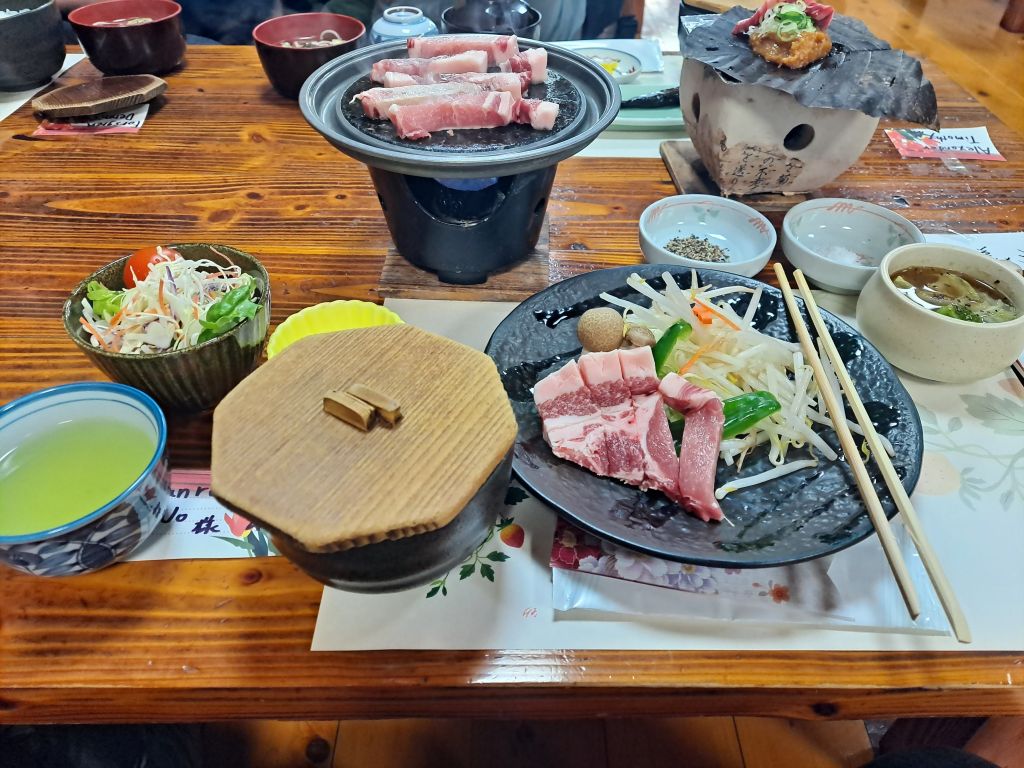
Don’t assume traditional experiences are off limits, they’re often worth asking about. When I visited Shirakawa-go I enquired ahead about my gluten and dairy free requirements, and what arrived was anything but a compromise. A full traditional meal with tabletop grilled meat, salad, miso soup, and rice, the emergency onigiri stayed firmly in my bag.
Honestly? My meal looked better than the Hida beef everyone else was having. Sometimes dietary restrictions work in your favour.
The key is asking in advance and being specific about your restrictions. Many smaller traditional restaurants and tour operators will go out of their way to accommodate you if given notice, even if they don’t advertise it.
Japanese Sweets & Gluten/Dairy: What to Know
Japanese sweets (wagashi) often look safe, and sometimes are but ingredients vary widely by region, shop, and recipe. So check the ingredients and / or ask the staff. Top tip to find the stores, generally the touristy area’s. If a store isn’t busy I would show them my allergy card and ask for help. One or two of my purchases were quite different in taste to what I’m used to, but it’s a great experience.
Common Gluten & Dairy Risks in Sweets
Mizuame (水飴) is frequently used as a sweetener or binding agent. Its starch source isn’t always clear.
Soy sauce (醤油) appears in some savoury-sweet snacks and rice crackers.
Wheat flour (小麦粉) is common in dorayaki, castella, and Western-style pastries.
Dairy shows up more in modern sweets, desserts, and bakery items than in traditional wagashi.
Sweets That Are Often Safer (But Still Check)
Mochi made with rice flour only (no fillings or coatings)
Daifuku with simple red bean filling (avoid flavoured or “cream” versions)
Plain rice crackerswithout soy sauce seasoning
Fresh fruit-based desserts
Sweets That Are Commonly Risky
Dorayaki (wheat pancakes)
Castella (contains wheat and eggs)
Cream-filled mochi or “fusion” wagashi
Convenience Store Cheat Sheet: Gluten & Dairy-Free
Boiled eggs (7-Eleven, Lawson, and FamilyMart all have them)
Fruit – Buy it cut up, singles or cups
Onigiri – Safe options usually include; Salt, Salmon, Plum, Red Bean Paste
Some salads are safe choices
If you can have dairy you will have more options, look for yoghurt and cheese
Soy Milk in flavoured, single serving
Soy Joy or Kind bars, check for dairy
If you find a Natural Lawson stock up, they are delicious
Contact them in advance to check if they can cater to your needs.
Many hotels including Business Hotels offer a free or cheap breakfast, if its free great, show the staff you’re allergy card to see what is safe but do ask in advance if you can, I book though booking.com and use their messaging
In some places your dining choices otherwise are limited, so make sure you can cancel it free of charge if you need to.
Make sure there is suitable dining options near to your accommodation, you don’t want to have to catch a train or walk when you or someone else is tired.
Some people prefer to get options that are self catering, but one thing to be aware of is, in Japan hot water and a microwave are usually available for use free and convenience stores have disposable cutlery.
Any medications you might need either day to day or if you accidentally eat or drink the wrong thing
Some wet wipes, a pocket package or two of tissues and a mask
Have a small travel bag or zip lock bag to put the above in
Final Tips from a Gluten Free, Dairy Free Traveller
Don’t be afraid to ask for help, the locals are will say yes or know depending on if they can serve you, respect that but always check sauces and for shared fryers and water.
Use reviews from other gluten free or coeliac travellers, they’re gold just be mindful different tolerance levels
This guide blends real-world experience with the foundations from our Essentials Travel Pack and dining guide research giving you what you need in minutes, not hours of late night reading.
FAQ
How do I say I’m gluten and dairy free in Japanese?
The phrase I use is: “Watashi wa guruten (komugi / ōmugi / raimugi / ōtsu mugi) to nyūseihin no arerugī ga arimasu.”
This translates to: “I am allergic to gluten (wheat, barley, rye, oats) and dairy.”
In Japan, the concept of an allergy is far more widely understood than coeliac disease or intolerances. Framing it as an allergy generally results in clearer communication and more cautious handling.
You’ll notice I specify the individual grains. While the word “gluten” isn’t always fully understood, the ingredients themselves are. Listing them reduces confusion.
One important note: if an izakaya declines to serve you due to allergy concerns, it’s not culturally appropriate to negotiate cross-contact risk. A no is usually a firm no.
Is Japan safe for gluten-free travellers?
Honestly yes, and for me it was easier than I expected.
That said, preparation matters. Check the planning guide for deeper support, carry an allergy card, download and familiarise yourself with a translation app, and make sure you have mobile data (eSIM or local SIM).
Do that groundwork and Japan becomes far more manageable. One thing I deeply respect is that if a restaurant isn’t confident they can serve you safely, they’ll say no. That clarity removes guesswork, and protects you.
Is it easy to eat dairy-free in Japan?
Honestly the dairy free in combination with the gluten free is something I always find harder.
If you are ‘only’ lactose free like I am and don’t use Lactose tablets perhaps try and get used to them, it will open up options for you. I wish I had once or twice.
Dairy sneaks in similar places to home, in sauces in the curry, the sweet treats, often even chips and other snacks.
Do I need to bring food to Japan?
I bring a couple of backpacker meals and some snacks (bliss balls) just in case. Both of these are in my carry-on in case the special meal isn’t suitable. You’re needs might differ but I did bring home both the backpacker meals this time.
Most of the time, yes. Just like you can probably get at home it can be made with tamari, but the safe bet unless its gluten free is to avoid it, its pretty rare in standard restaurants.
Are Japanese convenience stores good for gluten-free options?
Yes, surprisingly good. See the Convenience Store Cheat Sheet: Gluten & Dairy-Free for my go to’s options. If you can tolerate dairy, your choices expand even further, but even strictly gluten- and dairy-free travellers will find more safe options than you might expect at home.
Unless you’re in a very remote area (check Google Maps), there’s usually a convenience store nearby with something you can eat.
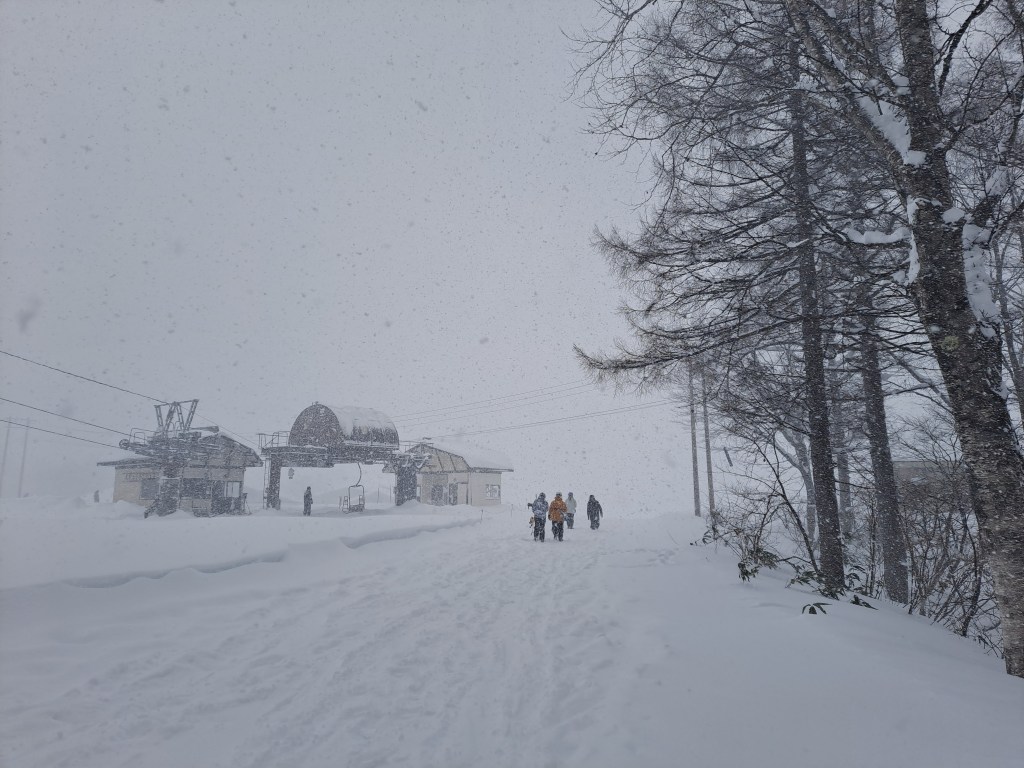
Picture this: it’s lunchtime, you’re snowboarding, and every option on the mountain contains dairy. But the convenience store in the next town has onigiri with salmon. You take the gondola down, ride into town, grab lunch, and head back up. For the full guide to eating gluten and dairy free at Japan’s ski resorts, head to our gluten free skiing guide for Nagano and Niigata.
How many countries let you do that?
Can I rely on Google Translate for food allergies in Japan?
Something I noticed on this last trip, the number of non Japanese workers is increasing so have your allergy card phrase as a favourite in your translation app then you can convert it, if they can’t read Japanese.
The big thing with Google Translate is to set it up right and know how to search the packaging, it’s intimidating at first. Read out guide on Translation Apps and how to use them for our advice.
Once you’ve been there a few days you’ll figure out what is where on the label and can scan it for the characters above: Packaged Food Cheat Sheet, even if you can only kinda identify what wheat or something vaguely grain and dairy looks like it will help you decide if its a firm no or check on the translation app.
Adelaide doesn’t always get the credit it deserves as a destination, let alone for its food. It may not be your first choice of destinations but after spending a week there it really should be. Often overshadowed by Melbourne and Sydney, it’s a stunning city within a park, surrounded by a ring of parklands more than twice the size of New York’s Central Park. For gluten free and dairy free travellers, the food is fantastic, incredible variety and caters to all tastes.
This guide comes from my recent birthday trip with my mum, both of us gluten and dairy free, so being able to eat off someone else’s plate was a novelty I took advantage of. I’ve done the research, walked the streets, gone on day trips, and eaten my way through so you don’t have to spend your trip with five browser tabs open.
It says something about the options available when there were so many good ones that I never made it to the Coeliac Australia approved venues I’d originally planned to visit. If I’ve sparked your interest, here’s how to have a delicious gluten and dairy free break in Adelaide.
Gluten Free, Dairy Free Labelling and Menu Information in Australia
Safe gluten-free, dairy free dishes, what to look forward to
Some mouth watering dining and grocery options in key locations
Our favourite tips for local day trips
Gluten Free, Dairy Free Labelling and Menu Information
Like New Zealand Australia has some of the strictest gluten free labelling laws in the world, and that works in our favour. Under Australian food law, a product labelled “gluten free” must contain no detectable gluten. This is a zero tolerance standard, stricter than what you may have at home. This means that when you see “gluten free” on a label in an Australian supermarket, it genuinely means what it says.
On some labels you might see may contain or may be present to indicate the possible unintended presence of allergens. These are voluntary statements made by food suppliers, just because one label has it and the other does not doesn’t make the label without them safer.
What about the Oats?
Heads up, internationally, there are different approaches to the place of oats in the gluten-free diet. In Australia and New Zealand oats cannot be labelled ‘gluten free’. Coeliac Australia has a whole page on Oats. This may mean that some of your favourite snacks you would assume were sold here are not available, but don’t worry try some of the great local alternatives we’ve listen further down.
A note on eating out and avoiding cross contamination
The above labelling laws apply to packaged products, not restaurant meals. When eating out, the same rules apply as anywhere, ask about preparation methods, shared fryers, shared water, and cross contamination. Adelaide restaurants are generally excellent, but it pays to ask and tip say you are coeliac not just gluten free so staff are aware it is not a preference.
One night, mum and I were out we were at a mexican restaurant, the waitress was lovely, answered all my questions, let the chef know, did everything right. I still had that feeling that it wasn’t 100%, you know the one. but no, completely safe and delicious. Never been more happy to be wrong.
Important local menu/package words or phrases
If you see Contains gluten, this is a mandatory allergen statement under FSANZ whereas May contain is a voluntary note about cross-contact risk but it not being on a label doesn’t mean no cross-contact risk. This is a key difference vs. some countries one product with and one without may have the same risk.
Common menu shorthand you’ll find includes: Gluten Free (GF), Dairy Free (DF), Vegetarian (V) and Vegan (VG). Heads up, Gluten Free Friendly or Gluten Free Ingredients are things you will see in some places. This generally means the ingredients are gluten free but you should ask about cross contamination, shared fryers, shared water and the like. In Australia and New Zealand you may see this more than other places due to the strict gluten free standards, comparing the two countries for larger towns and cities I generally find Australia a little easier than New Zealand.
Tips for Eating Gluten & Dairy Free in Adelaide
Must-Try Dishes with Safety Tips
Adelaide definitely has some dishes you’ll want to try when you get here and good news you don’t need to miss out if you’re gluten and dairy free. Here’s some local favourites and what to watch out for.
Dish / Item
Why It’s Special
Notes for Safety
Coffin Bay oysters
Iconic SA seafood, ultra-fresh.
Order natural or with GF, dairy-free dressing.
Kangaroo fillet
Lean, uniquely Australian protein.
Request no butter and GF sauce.
Octopus
Popular on Greek-influenced menus.
Confirm GF marinade and dairy-free finish.
McLaren Vale Grenache
An earthy, fruit-forward, and beautifully food friendly wine. Definitely recommend visiting the vineyards.
Check if the wine has been fined or filtered with milk.
Flat White
Adelaide café culture is excellent.
If you’re sensitive to cross contamination ask for a seperate jug and be careful of the want
Naturally Gluten and Dairy Free Dishes
I really love dishes and drinks that are naturally gluten- and dairy-free, ideally with minimal adjustments (just check for cross contamination). The below options are great for that and commonly found in Adelaide. Alongside the options we’ve listed why. This isn’t exhaustive its some of our favourites.
Grilled meats with salad or rice bowls and poke – Naturally gluten free bases and sauces adjustable.
Vietnamese rice paper rolls – Rice wrappers and fresh fillings.
Sushi or sashimi without soy – Plain fish and rice are naturally safe.
The Duke of Brunswick, Port Admiral and Gluten’s FREED are your safety nets and Coeliac Australia accredited, if you’re unsure about a venue and need a guaranteed safe meal, head to one of these.
Adelaide’s café scene is generally very allergy-aware. Most will have GF bread available on request, and are happy to adjust menus to cater for additional restrictions but ask about cross-contamination.
Dairy free is generally well understood but less of a focus than GF, so always confirm individual dishes, especially sauces and dressings.
Download the Find Me Gluten Free app before you go, it’s fantastic for discovering spots you haven’t pre-researched.
The Adelaide Farmers Market (Showgrounds, Sunday mornings) has dedicated GF stalls including Just Gluten Free bakery, worth a visit if you’re there on a Sunday.
The Adelaide Central Market also has a number of suitable offerings, we had Turkish Delight, Donuts, Lactose Free Milk, Dolmades, and Paella but there were also other baked goods, cured meats, fruit and vegetables, dips to name some options all Gluten Free and often Dairy Free.
Delicious Gluten-Free and Dairy Free Dining Options
How I Vet These Restaurants: Places I have personally eaten at since going gluten and dairy free are marked with an asterisk (*). The remaining spots have been heavily vetted through local communities and highly rated by fellow sensitive travelers. If you are traveling in a group, I highly recommend booking ahead, being spontaneous is wonderful, but missing out due to a full restaurant can throw a wrench in your plans.
My Personal Tolerance Standards: While I am not formally diagnosed with coeliac disease, I am highly sensitive and react sharply to minor cross-contamination, such as crumbs in a shared toaster or shared fryer oil. I personally vet these locations based on how strictly they handle kitchen cross-contamination. I am also lactose free, though I generally choose to avoid all dairy entirely when traveling away from home to be safe.
Coeliac Australia Accredited Venues
Adelaide has something rare in the Australian dining scene: multiple Coeliac Australia accredited venues, including two fully dedicated 100% gluten free kitchens under the same ownership.
The Duke of Brunswick Hotel: South Australia’s first independently owned hotel accredited by Coeliac Australia and the winner of the AHA National Award for All Abilities Hotel 2024. The entire kitchen is GF, no cross-contamination risk, no awkward questions. If you’re after pub classics, schnitzel, fish and chips, burgers, pizza, plus one of the widest selections of GF beer in South Australia this is the spot. While it is entirely gluten free it’s not dairy free so do check the menu and ask questions if you’re dairy free or have other restrictions.
Port Admiral Hotel – Port Adelaide itself is worth exploring, heritage buildings, the Maritime Museum, galleries. Pair lunch at this 100% gluten free kitchen, Coeliac Australia accredited with an afternoon walk. It’s the sister venue to the Duke of Brunswick, so has the same inclusive philosophy, community pub vibe. While it is entirely gluten free it’s not dairy free so do check the menu and ask questions if you’re dairy free or have other restrictions.
Gluten’s FREED – This gluten free AND nut free bakery also caters to those who have other well-known dietary allergies. Note you must order online and click and collect or get delivery, they don’t have a walk in shop.
Dedicated Gluten Free Bakeries
Beyond the accredited venues, Adelaide has a selection of dedicated GF bakeries worth checking out.
Food For You Especially – This 100% gluten free bakery. has a range of Bread, pastries, slices, savoury options, its one of the most established dedicated GF bakeries in Adelaide.
Gluten Free 4U – This bakery has a range of baked goods that are not only gluten free but also cater to many other dietary restrictions, worth checking out.
Adelaide CBD
Afghan Charcoal Kebab House* – Well worth a visit, this unassuming spot serves up food so delicious you could taste the flavours for a while afterwards. We both had the mixed kebab on rice with three skewers and salad. Lamb, chicken and lamb mince.
Botanic Lodge* – Tucked away in the Botanic Gardens this spot serves up delicious food. We shared the lamb sausage with roasted onion and beetroot and it was delicious.
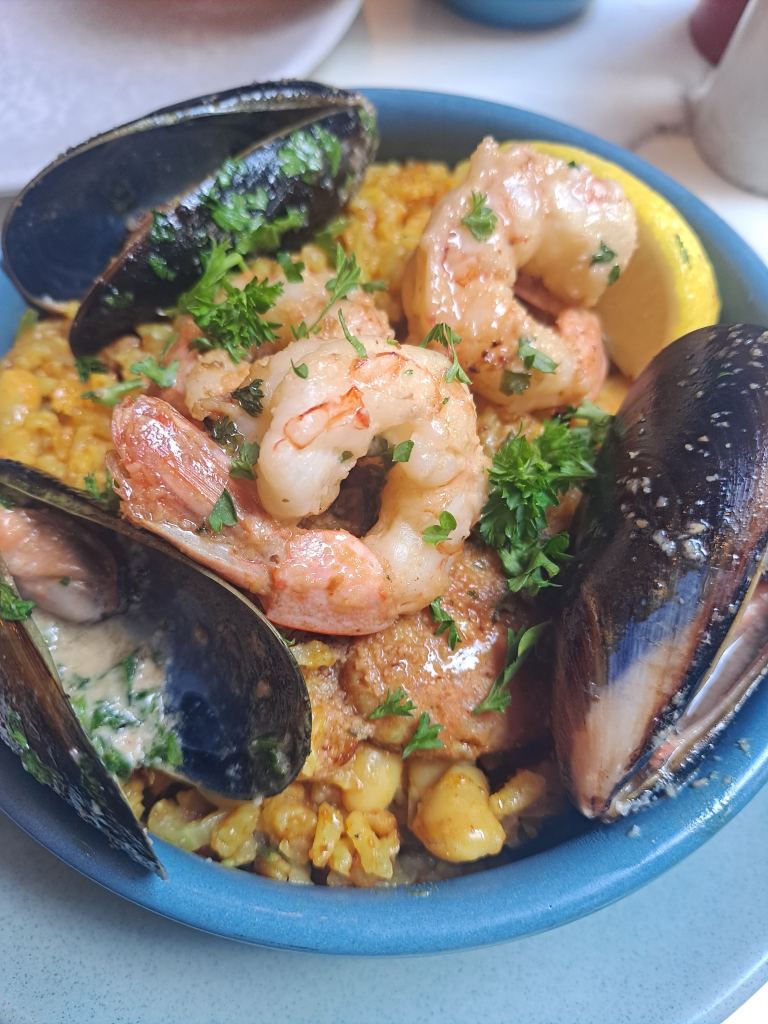
Cumbia Bar Kitchen* – Right in the Adelaide Central Market this restaurant clearly labels the menu and were able to make the paella gluten and dairy free, and it was delicious. Mum and I shared one for lunch and had a sangria each.
Dino’s Greek* – From the dedicated fryer, to the most delicious gluten free pita that they are justifiably proud of this place is a gem. They answered all our questions about eating there and were even able to have a joke about it when they put the food down. We had a glass of rose and a Greek Chicken or Greek Lamb Pita with the tzatziki swapped out for hummus and chips, it was delicious.
Grill’d Burgers* – A healthy burger chain serving up delicious burger and fries. Staff know the ingredients and can cater to gluten and dairy free no problem. We each had the Summer Sunset Burger and shared some chips.
Hecho En Mexico Adelaide* – We had fajitas (one pork and one chicken) with no mint cream or cheese. We asked questions about the hot plate, found they used butter so asked if they can swap to oil which they did, this was the one spot I was nervous about but had no reason to be, it was delicious and safe.
Likuid Espresso* – This cafe near the train station is great value and always has a few people dining. We each had scrambled eggs on gf toast, they knew what was in the food and made sure it was safe, omitting the milk from the scrambled eggs.
Sit Lo* – This casual Vietnamese eatery caters to gluten and dairy free diners with rice or vermicelli bowls. Suitable options are marked GF and staff know their ingredients. We had a roast pork with rice and grilled chicken with vermicelli and share some steamed greens.
Sushi Hub* – Right on Rundle Mall, One staff member knew the ingredients but the staff member serving us was unsure so ask questions. We had the salmon and tuna nigiri. They did have gluten free soy sauce.
We never made it to the fine dining end of things, not because it wasn’t tempting, but because there were so many excellent options at every other level that we simply ran out of meals.
Got a day trip planned?
Adelaide is brilliant as a base for day trips, and the good news is that the food-friendly attitude doesn’t stop at the city limits. Not every operator will be able to cater to dietary needs but mention your needs to them ahead of time, research options in likely stops and pack a backup snack or two and you might be surprised. Don’t assume that being away from the city means being stuck with whatever’s available. We did day trips to Victor Harbor and Hahndorf / McLaren Vale and had a number of choices, simply by asking in advance where the stops would be so I could do some research. If you can have dairy you would have even more options.
Popular day trips from Adelaide worth considering:
The Barossa Valley
About an hour from Adelaide, it’s one of Australia’s great wine regions, and accessible for gluten free and dairy free travellers. Wine is naturally GF, and several tour operators accommodate dietary needs with advance notice.
Self-drive option: Hire a car and visit cellar doors at your own pace. Jacob’s Creek, Penfolds and Magill amongst others all welcome walk-ins.
Guided tour option: Several operators either offer GF-friendly lunches on request or give you free time to find your lunch, do some research, book ahead and confirm your needs.
Adelaide Hills, McLaren Vale & Hahndorf
Just 30 minutes from the CBD, the Adelaide Hills, wine region of McLaren Vale and the German-heritage town of Hahndorf is worth a visit. I recommend researching possible food options before hand, especially if you are on a day tour.
Traditional German fare (schnitzel, bratwurst, strudel) contains wheat, surprisingly most of the options I saw were gluten free, the dairy in the mashed potatoes was usually the issue for us. We can recommend this cafe though:
Same But Different Cafe* – We ordered a Reuben Bagel and a Stacked Brekky Bagel and went halves and shared a gf vegan chocolate friand. They’d run out of bagels but swapped it for delicious home made bread. They knew what was in the food and checked if we wanted vegan cheese or to omit it.
Victor Harbor and Fleurieu Peninsula Tour
The Fleurieu Peninsula is a stunning coastal area which includes the McLaren Vale wine region and some beautiful coastal scenery where we saw seals and pelicans. The towns of Strathalbyn, Goolwa, and Victor Harbor are all different but all had solid gluten free options including;
Bean Machine* – In Strathalbyn, this cafe made coffee milk seperate milk jugs and had a gluten free dairy free treat.
The Old Market Shed– In Strathalbyn, the store had a number of packaged and fresh products but the find was the gluten free cafe in the same building, they also detail other key ingredients and had a range of cabinet food.
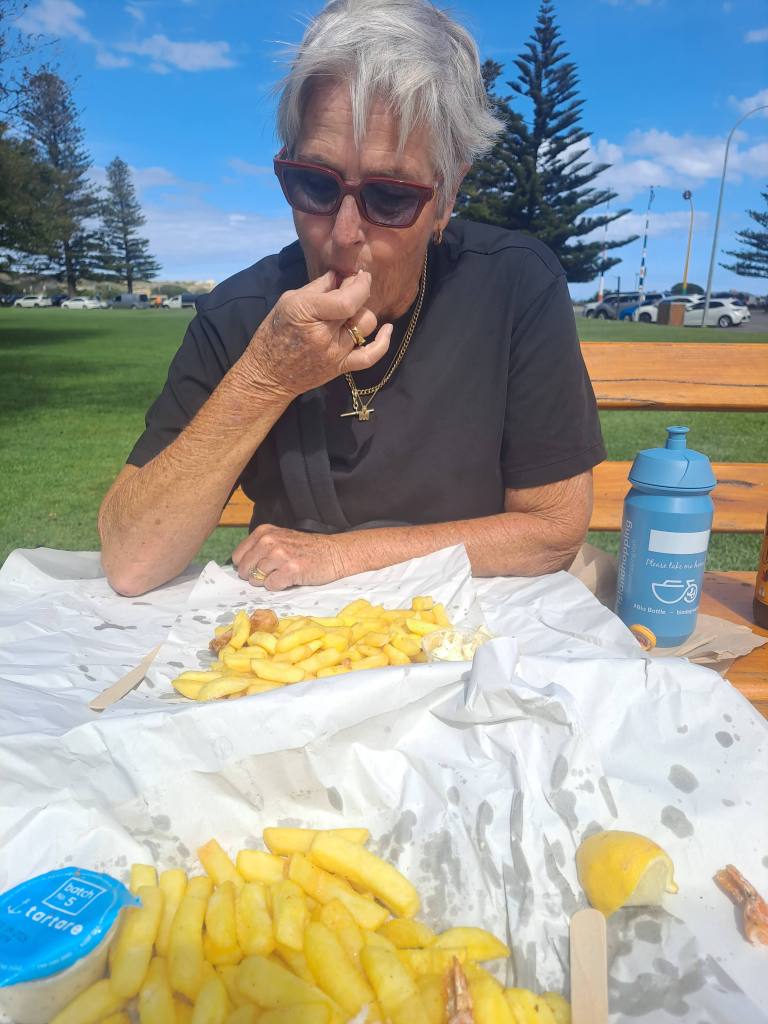
J F & C* – In Victor Harbor, if you’re looking for gluten free dining options this one is probably on the list for good reason. Not only are their fish and chips delicious but the dedicated fryers, labelled wrapper and to staff that know their allergens is very reassuring. We had the calamari pack and the prawn pack.
The same rules apply everywhere, book ahead if it could be busy or you’re in a large group, give them a heads up about your restrictions, and you’ll be surprised how often your needs can be accommodated.
Gluten-Free, Dairy Free Groceries
Whether you’re self-catering, stocking up on safe snacks, or just want to know your options, Adelaide is well-served.
Supermarkets
Woolworths & Coles: Both have stores right on Rundle Mall opposite each other, they both carry strong Free From ranges including GF bread, pasta, cereals, snacks and dairy alternatives. The labelling laws mean you can shop with confidence, and being kiwi’s we found many of our favourites from home but some delicious coconut macaroons, brownies, lactose free greek yogurt and juicy boysenberries were favourites.
Health Food & Specialty Stores
The Happy Jar (CBD): Bulk wholefoods, zero-waste, strong GF focus. Good for snacks and pantry staples.
Nutrition Republic Goodwood: Health food café and store. Good for GF snacks and supplements.
The Organik: Organic market and café. Cited by the GF community as a reliable source of specialty products.
Adelaide Central Market
If you only do one thing in Adelaide outside of eating at restaurants, make it the Adelaide Central Market. Open since 1869, it’s one of the largest undercover fresh produce markets in the Southern Hemisphere and is brilliant for gluten free and dairy free travellers. Not only are there a number of suitable options (including turkish delight, local milk, donuts, delicious meats, fruit and vegetables, paella and dolma) but the food is reasonably priced, with a number of locals using it for their weekly shop. I found fruit and vegetables were similar or even cheaper than Woolworths when we went.
Accommodation and Food
Contact them in advance to check if they can cater to your needs if breakfast is included, I book though booking.com with free cancellation and use their messaging to ask about dining options at the hotel.
Make sure there is suitable dining options near to your accommodation, you don’t want to have to catch a train or walk when you or someone else is tired.
Some people prefer to get options that are self catering, so they have a kitchen depending on your situation this might be a great option.
Any medications you might need either day to day or if you accidentally eat or drink the wrong thing
Final Tips from a Gluten Free, Dairy Free Traveller
Adelaide is one of those cities that rewards travellers who do their research, and gluten free and dairy free travellers who plan ahead will find it a breath of fresh air. Between the fully accredited pubs, the dedicated bakeries, the extraordinary Central Market, and a fine dining scene that takes dietary needs seriously, there’s very little reason to feel limited here.
With the right preparation and tools, you can enjoy the food without panic.
The Essentials Travel Pack builds it all for your exact combination, your restrictions in the local language, an allergy card, key phrases, local foods to try, and what to watch out for. Everything you need in minutes, not hours.
FAQ
Is Adelaide good for gluten free and dairy free travellers?
Adelaide is one of the best cities in Australia for gluten free and dairy free travellers. Between dedicated gluten free kitchens, Coeliac Australia accredited venues, an extraordinary Central Market, and a café scene that takes dietary needs seriously, there is a lot to choose from at every budget.
Are there dedicated gluten free restaurants in Adelaide?
Yes, Adelaide has two fully dedicated 100% gluten free pub kitchens under the same ownership: the Duke of Brunswick Hotel and the Port Admiral Hotel, both accredited by Coeliac Australia. There are also several dedicated gluten free bakeries including Food For You Especially and Gluten’s FREED.
Is the Adelaide Central Market good for gluten free and dairy free?
The Adelaide Central Market is brilliant for gluten free and dairy free travellers. There are naturally safe options throughout, fresh produce, meats, paella, dolma, and more. At prices that are comparable to or cheaper than supermarkets.
Can I do gluten free day trips from Adelaide?
Yes. The Fleurieu Peninsula, Hahndorf, and the Barossa Valley all have options for gluten free and dairy free travellers with a little research ahead of time.
What are the gluten free labelling laws in Australia?
Australia has some of the strictest gluten free labelling laws in the world. Any product labelled gluten free must contain no detectable gluten, a zero tolerance standard that is stricter than many other countries including the US and UK.
Most dietary restriction travel advice is written for people staying in big cities. Book a hotel somewhere with suitable food and a good location, sort a dedicated gluten-free restaurant, use an allergy card, perhaps check the menu online. Done.
That advice is fine, until you decide you actually want to go somewhere. A ski village in the mountains, the thatched roof post town on a scenic railway, a powder-hunting resort an hour from the nearest supermarket. Or even that dream beach holiday somewhere warm. That’s where the standard advice falls apart, and where a bit of extra planning pays off properly.
I’ve been working through the itinerary for my next Japan trip, a twenty-five day northbound snowboarding and sightseeing route through Tohoku and Hokkaido, hitting places like Zao Onsen, the Morioka ski resorts, and Aomori — and the food planning for somewhere like Geto Kogen (a remote powder resort with, frankly, no reliable GF/DF options on mountain) is a completely different conversation to Sapporo, where I’ll be able to eat kaisendon for breakfast and have gluten free ramen and tempura for dinner.
I didn’t want to share an abstract list with you, here’s what actually works, in places where lists don’t exist and Google Maps has three options. Heads up, the examples through here are related to my upcoming and previous trips, but they work just as well whether your going on an idyllic beach holiday, a surf trip, or just want to base yourself in some smaller towns for a while. And if you’re reading this and thinking that trip sounds like me, contact me on social media, I’m happy to share the full plan.
Your accommodation is your safety net
In a city, a bad restaurant is a ten-minute walk from a better one, and yes, even with dietary restrictions there is likely to be more than one option. In a ski village, your accommodation might be the only safe meal going.
The self-catering baseline is lower than you might think. Most hotel rooms anywhere in the world have a fridge. Microwaves are increasingly standard in many places, often in a shared lobby space. A kettle is almost universal. That’s all you need, enough to store food from a supermarket run, heat a backup meal, or rehydrate something you’ve brought. You don’t need a full kitchen, just pack a bowl and some camping cutlery so you’re not looking for something when you’re hangry.
Contact hotels through the booking platform before you are committed to staying. If they offer breakfast or dinner, even for an additional fee, send them a message through the secure messaging system asking whether they can accommodate your restrictions. I did this for every accommodation when I was planning a ski trip to Nagano & Niigata last year, most replied, the ones that didn’t? I used the free cancellation and went elsewhere.
Hotel Senke in Akakura Onsen was one that came through; a lot of places did to be honest but knowing that they could do breakfast, and had an option for dinner was a real lifesaver. A reply telling you they can help is useful information. No reply is also useful information.
Book flexible cancellation where you can, If research tells you there’s genuinely nothing safe within range of a particular lodge, you want the option to move your base. Remote resort areas or rural villages rarely improve once you’re there.
Learn the food landscape before you arrive
Every destination has its own logic, and understanding it in advance means you can make confident calls in the moment rather than stressing at the menu.
What’s naturally safe, and where
In places with strong regional food cultures, and Japan is full of them, some dishes are naturally low-risk for your restrictions if you can ask the right questions. For gluten-free and dairy-free travel in Japan I look for the following (The Essentials Travel Pack is fantastic for generating these options and more)
Sashimi-focused izakayas are usually your best anchor
Yakitori ordered shio (salt, not tare) is a reliable option
100% buckwheat soba (十割そば, jūwari) where you can find it
Onigiri with simple fillings — avoid anything with mayo or soy-seasoned fillings
Yakiniku or grilled meat ask for plain meats and salt
In regional areas, local specialities are often worth researching. Ouchi-juku, a beautifully preserved Edo-period post town on the Yagan Railway, has negi-soba (a regional buckwheat noodle dish) at places serving jūwari soba, plus grilled char on a stick (salted, roasted over charcoal) and tochi-mochi (horse chestnut rice cakes), which are naturally gluten and dairy free, just check the topping. None of these would turn up on a typical GF Japan guide. Finding these was tricky. I ended up looking for jūwari soba (十割そば) on the menu then putting the menu through Google Translate to check.
Hidden ingredients
In Japan, dashi (usually bonito-based fish stock) and soy sauce (which nearly always contains wheat) are the two things that catch people out the most. Both are foundational to Japanese cooking in a way that’s easy to underestimate, they turn up in broths, sauces, marinades, dressings, and things that look like plain vegetables. A dish that reads as naturally simple often isn’t.
Many countries have ingredients that feature heavily in the cuisine, this isn’t isolated to Japan, but knowing this in advance means you know what to ask about, not just what to avoid.
What is the service culture like?
Japan’s service culture is one of the most careful I’ve encountered. Restaurants will often say no if they can’t guarantee safety, which is actually a good thing, even when it’s inconvenient. Two places said no on a night in Kanazawa, and the third, where they said yes, I trusted completely. You learn to read a careful no as more useful than a breezy yes. If you’re headed to Japan read up on Why Japan Handles Food Allergies Differently to the West.
Meanwhile other countries will go out of their way to help, if like me cross contamination is a concern this isn’t ideal if they don’t understand the steps needed to minimise the risk of cross contamination.
That said, remote areas do have fewer options, so “knowing which battles to pick” matters more when you only have a handful of restaurants within reach.
Use the right tools
Translation
For Japan specifically, Papago handles food terminology and cultural nuance better than most general-purpose translators like Google Translate, but something will be better than nothing. It’s worth downloading and learing to use before you go, not after.
They are essential to ask follow up questions to confirm cooking practises or cross contamination risks as well as scanning ingredient labels at convenience stores and supermarkets. Which let’s face it you will be doing when you can’t speak the language fluently, both Papago and Google Translate’s image scanner are great at this.
Learn to use the image scan mode, download the languages you need and create and save some key phrases, before you travel not when you’re standing in a 7-Eleven in a ski village trying to work out if the onigiri has soy in the seasoning. I’ve been known to practise in my local asian grocery store much to the amusement of staff. I do into this more in this post: The Best Translation Apps for Dietary Restrictions and How to use Them.
A physical allergy card
This is non-negotiable for sit-down restaurants, and more so in areas where English is limited. A card you can hand to staff, which they can take to the kitchen, is more reliable than a phone screen in a busy environment and more accurate than spoken communication when nuance matters.
The key things your card needs to cover:
Your specific restrictions (all of them, don’t just list one)
Cross-contamination, not just ingredients
Both what to avoid and what you can eat
If you’re using an AI-generated card, which you can generate here: Free Allergy Card, review it before you travel, I recommended translating it into a third unrelated language, then back into your native language (Thanks for the tip Harry). A native speaker is ideal but often there’s not one of those handy. AI translation is good and getting better, but treating it as a draft to verify rather than a finished product is the right approach.
Structure your itinerary to give yourself easy wins
One of the most useful things you can do when planning a trip that includes genuinely remote areas is to sandwich them between cities where eating is easier.
On a Tohoku run, Sendai and Sapporo are both excellent food cities with plenty of safe options. Sendai in particular earns its place: winter is oyster season at Matsushima, and fresh grilled oysters (seasoned with seawater, nothing added) are naturally GF and DF. Sapporo in January means kaisendon at Nijo Market, soup curry (check the base, but often safe), and Hokkaido crab.
These easy stretches matter because they reduce the cumulative stress of the harder ones. If you know Sapporo is coming up and you trust it, the days at Geto Kogen where you’re living off onigiri feels more manageable rather than grim.
For my upcoming trip my easier locations are: Nikko, Sendai and Sapporo, the harder locations will be Zao Onsen while Aomori, Morioka and Aizuwakamatsu could go either way, I’ve found naturally safe options, the occasional reviewed gluten free offering (most don’t mention dairy free though) and there are convenience stores in all those places. Asking the right questions and using my allergy card will be key.
Consider basing yourself in hubs, For my upcoming trip I’ve also chosen to do more day trips and stay in hubs, for me this looks like staying in Morioka near to the train station and planning day trips to Hachimantai Shimokura, Appi Kogen and Tazawako Kogen as well as some backup ski resorts including Geto Kogen depending on conditions and how I’m feeling. Recently when I was in Adelaide with mum we did the same, stayed for longer somewhere central and did day trips to McLaren Vale and Victor Harbor. For me that approach takes the stress off finding suitable meal options, reduces travel days and in the case of Morioka significantly reduces the cost of the accomodation as the resorts are more costly but in most cases have no suitable food options at least listed online.
Build in a reliable chain backup. In Japan, CoCo Ichibanya (Japanese curry restaurant) often has allergen-specific menus and is worth knowing the location of in each city. I also do a quick check to see what supermarkets and convenience stores are handy, in small ski towns there may only be one, if any. It’s not exciting, but it’s useful to have in your back pocket.
Prepare for travel days and mountain days specifically
Mountain days and travel days are the ones that catch people out. You’re moving, food timing is unpredictable, and remote resorts especially can have very limited safe options at the cafeteria.
Pack a day bag for mountain days. For a remote resort like Geto Kogen, I’m planning onigiri from the night before in Morioka, plus backup snacks. Appi Kogen, the most food-equipped of the Morioka-area resorts has a Nepali-Indian restaurant in the base lodge, and Indian curries with rice are often a genuinely safe GF/DF option, but I will need to ask about butter / ghee in the curry, however not every resort will have that.
Backup food for the trip overall. Commercially packaged dehydrated meals or safe snacks travel well, and they’re there for the moments where timing doesn’t work out. This is especially true for ryokan or hotel dinners where you’ve pre-arranged something but the onsen village itself has nothing else. If you’re bringing food from home into Japan, check customs requirements, you’ll need to declare it.
Convenience stores are more useful than they look. Japanese convenience stores, think 7-Eleven, FamilyMart, Lawson all stock boiled eggs, plain onigiri (shio is the safest filling to look for but salmon or adzuki bean is also usually safe), and plain nuts in most locations. They’re not glamorous, but they’re usually there even in small towns, and knowing how to read the labels (or scan them) means you can use them confidently.
The honest version
Off the beaten path travel with dietary restrictions is not seamless. Some places will have one safe option and it’ll be fine. Some places will have no reliable options and you’ll be glad you packed backup food. Some ryokan will go genuinely out of their way for you when you ask in advance and the dinner will be one of the best of the trip.
The framework above doesn’t make it perfectly smooth. It makes it manageable and worth doing, which is the point.
The places worth going to aren’t always the places with the longest lists of safe restaurants. Sometimes the thatched-roof post town with one soba shop that happens to do jūwari noodles is exactly right.
The honest guide for gluten free and dairy free skiers and snowboarders, from the lifts to the izakaya.
Skiing or snowboarding in Japan is everything people say it is. The powder, the onsens, the convenience stores open at midnight when you’re back from the mountain and somehow still hungry. But if you’re gluten free, dairy free, or juggling both, there’s a bit more to figure out before you click into your bindings.
The good news? You’re in the right part of Japan. Nagano Prefecture is soba country, 100% buckwheat soba, made with pride, is far more accessible here than almost anywhere else in Japan. And Niigata, which sits just over the mountains, is renowned throughout Japan for producing some of the country’s finest rice. Between the two, naturally safe food is woven into the fabric of the region in a way that genuinely works in your favour once you know where to look.
The less good news, if you’re also dairy free like me, the mountain itself is trickier. Dairy sneaks into a lot of on-mountain options, and in smaller resort towns the evening restaurant scene is more limited than somewhere like Hakuba. But with the right preparation it’s absolutely manageable, and some of the meals I’ve had in this region rank among my favourite travel eating experiences anywhere.
This guide covers five resort areas: Hakuba, Nozawa Onsen, Akakura Onsen, Madarao/Tangram, and Shiga Kogen. Each has a different vibe and a very different food scene, and knowing that before you book matters more than most people realise.
How I Vet These Restaurants: Places I have personally eaten at since going gluten- and dairy-free are marked with an asterisk (*). The remaining spots have been heavily vetted through local communities and highly rated by fellow sensitive travelers. If you are traveling in a group, I highly recommend booking ahead, being spontaneous is wonderful, but missing out due to a full restaurant can throw a wrench in your plans.
My Personal Tolerance Standards: While I am not formally diagnosed with coeliac disease, I am highly sensitive and react sharply to minor cross-contamination, such as crumbs in a shared toaster or shared fryer oil. I personally vet these locations based on how strictly they handle kitchen cross-contamination. I am also lactose-free, though I generally choose to avoid all dairy entirely when traveling away from home to be safe.
Before we get into the resorts, if you haven’t already read the main Japan gluten free and dairy free guide, start there for the full labelling law breakdown, allergy card phrases, convenience store cheat sheet, and packaged food vocabulary. This post assumes you’ve got those foundations and focuses on what’s specific to a ski trip.
And if your looking at this and thinking Nagano and Niigata sound great but you’re looking at heading northbound, my next trip is a snowboarding and sightseeing route through Tohoku and Hokkaido, think places like Zao Onsen, the Morioka ski resorts, and Aomori. If that trip sounds like more like you, contact me on social media or email, I’m happy to share the full plan. I’ve also gone into how I’m planning this trip in How to Travel Off the Beaten Path with Dietary Restrictions.
When researching destinations I recommend pairing using this guide to identify which resorts meet your dietary needs along with Powderhounds or Snow Japan to identify resorts that meet your skiing or snowboarding needs. In combination they will help you figure out to ski or board next.
Send Your Gear Ahead with Yamato Transport
If you’re travelling with skis or a snowboard, the single best thing you can do is use Yamato Transport’s ski delivery service. You can drop your gear at most convenience stores or your hotel and have it delivered directly to your resort accommodation, usually within a day or two. It costs a few thousand yen and saves you an enormous amount of hassle on trains, buses, and gondolas. Collect it from your accommodation when you arrive. Do the same on the way home. The easy way plan for this is to give yourself a few days to get to and from the resort and explore Tokyo or the surrounding areas. I recommend checking out Narai-Juku, Matsumoto, Nagano, Kanazawa, Shirakawa-ko to name a few but Takayama, Nagoya, Izu Penninsula, Hakone and the Mt Fuji area or Kariuzawa are all also close by and are highly regarded.
For gluten and dairy free travellers, this matters more than you might think, travelling lighter means more capacity in your bag for snacks, backpacker meals, and emergency supplies, and less stress navigating busy train stations when you’re already managing dietary needs on the road.
Stop in Nagano City on the Way
If you’re travelling from Tokyo or another major city, most routes to the Nagano ski resorts pass through or near Nagano (the city). Don’t rush through it. It’s your gateway to the Japanese Alps and is the gateway to outdoor adventures, hot springs, and centuries-old history.
For gluten free travellers Nagano is worth a stop for two reasons. First, it’s the heart of soba country and home to some of the best juwari soba restaurants in Japan, a proper lunch here before heading to the mountain is genuinely one of the better meals you’ll have on the trip. The Shinsyu Juwari Soba Ten* is excellent and has a dedicated gluten free menu.
Secondly, and more practically, Nagano has a full range of supermarkets and larger convenience stores where you can stock up on safe snacks, onigiri, and supplies before heading somewhere smaller and more remote. If you’re going to Akakura, Madarao, or Shiga Kogen, this is your last easy chance to stock up properly.
Sort Your eSIM or SIM Card Before You Leave the City
Signal in mountain areas can be patchy or absent. Having your translation app set up, your allergy card saved offline, and your key phrases loaded before you head into the mountains means you’re not scrambling at a busy lunchtime restaurant on the slope. Sort it at home, in Tokyo or at the airport, not on arrival at the resort.
Before You Hit the Mountain: The Essentials
Sort Your Accommodation Breakfast First
In smaller resort towns like Akakura and Madarao, your dinner options in the evening are limited and most restaurants open late afternoon. If you’re out on the mountain all day your accommodation breakfast becomes more important than usual. Contact them in advance, show them your restrictions, and ask what they can do. A plain Japanese breakfast, rice, grilled fish, miso soup and pickles is often naturally safe or can be made so, confirm in advance with your accommodation. I found it was better to spend the money on this than be reliant on onigiri for two meals each day. Be sure to book somewhere with free cancellation so you have flexibility if they can’t help.
Pack the Onigiri. Every Day.
This is not optional when you’re gluten and dairy free on the mountain. I kept one or two in my jacket pocket every single day. Convenience store onigiri with salmon, salt, or plum filling are your most reliable options, but check the ingredients each time, different chains have different ingredients even for the same variety. If you’re heading somewhere remote or the convenience store is a gondola ride away, pack them the night before and keep them in your room fridge.
I forgot to do this on a powder day and ended up taking the gondola up from one resort, riding down, buying onigiri and heading back up the lift to the other resort as there were no gluten free dairy free options for lunch.
Ask Staff If You’re Not Sure
If the mountain restaurant isn’t too busy and you’re curious about something, ask. Show your allergy card, point at something that looks simple, and ask clearly. The worst they can say is no, and in Japan they will tell you clearly if they can’t help rather than guess. That clarity is one of the things I genuinely appreciate about travelling with dietary restrictions in Japan, a no means no, not maybe. One thing we recommend, if you’re not sure how to use a translation app or when to use your translation app vs. an allergy card we can help with that.
On the Mountain: The Honest Reality
Mountain restaurants in Japan tend to serve crowd-pleasing, warming food — curry, ramen, udon, katsu. Most of it contains gluten. Dairy hides in sauces, curry bases, and soup stocks more than you might expect.
If you’re gluten free only, you have more options. Plain rice dishes, grilled chicken or fish without sauce, miso soup (check for wheat and barley), salads and edamame are usually available somewhere. You might find a curry that works if you can confirm the base.
If you’re gluten and dairy free, like me, the mountain is where onigiri earns its place. I wouldn’t rely on finding a full safe hot lunch on the slopes at every resort outside Hakuba. Having something in your pocket means you’re not cutting your day short because you’re hungry and nothing is safe, or catching the gondola up to ride down to the next town to grab some onigiri at the convenience store. No I didn’t learn, this happened twice!
You’re in Soba and Rice Country: Use It
Nagano Prefecture is one of the most celebrated soba regions in Japan. Buckwheat grows well at altitude with cool temperatures, and the tradition of making 100% buckwheat soba, called juwari soba (十割そば) and it goes back centuries. Restaurants that serve juwari soba are genuinely proud of it and know exactly what they’re serving.
Ask specifically for juwari soba and confirm the dipping sauce, tsuyu almost always contains soy sauce so ask for it on the side or skip it entirely unless its gluten free and eat the noodles with salt. Using salt as a dipping sauce instead of soy sauce was recommended to me by a chef in Nagano. Simple and genuinely delicious. To do the same ask “with salt, please” (塩でお願いします).
One important note for coeliac travellers: shared cooking water. In a busy soba restaurant that also serves regular soba, the water may be shared. The Shinsyu Juwari Soba Ten* in Nagano has a dedicated gluten free menu and a helpful chef — worth the trip if you’re passing through.
Just over the mountains, Niigata Prefecture is renowned throughout Japan for the quality of its rice. The climate and snowmelt water from the mountains create ideal growing conditions, and locals are genuinely proud of it. For gluten and dairy free travellers this is good news, plain rice here is worth eating on its own merit. Look out for it in your hotel breakfast set, in onigiri, and in simple rice bowl dishes at restaurants. It turns what might otherwise feel like a safe-but-plain meal into something worth ordering.
Hakuba
Hakuba is the most international of the Nagano ski resorts and that shows clearly in the food scene. There are more western-style restaurants here than anywhere else in the region, more English-speaking staff, and more allergen awareness simply because the international crowd demands it. If flexibility matters to you, Hakuba gives you the most options.
Local food culture: Hakuba is known for Hakuba pork, locally raised and featured in many restaurants. Wagyu beef and Shinshu salmon also appear regularly. Shabu-shabu using plain beef or pork slices cooked in water is one of the safest and most satisfying options for gluten and dairy free diners, just skip the dipping sauces or confirm they’re safe.
Naturally safe options to look for: Plain yakitori salt only (塩), sashimi and nigiri without soy sauce, rice and grilled fish sets, edamame, plain tofu. If you’re just gluten free, Hakuba’s burger bars and western restaurants give you significantly more options, including some with labelled allergen menus.
For families and picky eaters: Hakuba is the easiest resort in this guide for families. Burgers, pizza, and western-style food sit alongside the Japanese options, which takes the pressure off if you’ve got kids or anyone in the group who needs more familiar choices.
Booking: Essential for popular spots, especially in peak season. Many of the best restaurants book out weeks in advance.
Nozawa Onsen
Nozawa is a beautiful traditional onsen village that happens to have great skiing. It feels much more authentically Japanese than Hakuba, which is part of its appeal, this also means fewer western-style options and slightly less allergen awareness in general. The flip side is that traditional Japanese food is naturally gluten free friendly if you know what to order.
Worth noting: the food scene in Nozawa has improved noticeably over the last couple of seasons, with more options appearing as the resort gets busier and attracts a more international crowd. It’s heading in the right direction, though it’s still more limited than Hakuba. Book ahead during peak season as the village fills up quickly.
Local food culture: Nozawa Onsen is famous for nozawana, a locally grown leafy vegetable that’s pickled and eaten as a side dish. Naturally gluten and dairy free, you’ll see it everywhere — a great safe side with a plain rice meal. Good soba is also available here, being in Nagano prefecture, so juwari soba is worth seeking out.
Naturally safe options to look for: Nozawana pickles, plain rice dishes, sashimi, yakitori salt only, onigiri. The village is compact and walkable so you can check menus before committing.
For families and picky eaters: Nozawa’s improving village scene and compact layout makes it manageable with kids. A good second choice after Hakuba if you want a more traditional Japanese experience without sacrificing too many options.
Akakura is where I stayed for my snowboarding trip and it’s a smaller, quieter resort town than either Hakuba or Nozawa. The skiing is great, the onsen is brilliant, and the town is charming, but the food scene is more limited, particularly for the gluten and dairy free combination especially if you’re on keen on traditionally Japanese food.
On the mountain I relied on onigiri for lunch most days, salmon, plum or salt from the local convenience store, kept in my jacket pocket. If you’re just gluten free you’ll find a bit more on mountain, but being dairy free on top made it difficult.
Akakura sits in Niigata Prefecture, which is renowned throughout Japan for producing some of the country’s finest rice. That local pride in rice shows up in the food, a simple rice bowl or plain breakfast set here is genuinely worth eating, and the hotel breakfast in particular was a highlight of my stay. Contact your accommodation in advance to confirm what they can do and ask specifically about the miso soup.
Naturally safe options to look for: Plain Japanese breakfast sets featuring local Niigata rice, onigiri from the convenience store, sashimi at dinner, yakitori salt only, plain rice dishes.
Convenience store access: Check where your nearest convenience store is relative to your accommodation before you book. In a small resort town this matters more than it would in a city.
Madarao & Tangram
Madarao is a quieter resort in Nagano with excellent powder and a relaxed vibe. It’s smaller than Hakuba or Nozawa but what it lacks in variety it partly makes up for in quality — a handful of the restaurants and accommodation options here are genuinely excellent for dietary restricted travellers.
Worth knowing: Pinchi’s Place and Red Tricycle Madarao are both part of the Blueys group. If you’re staying with them you’re well placed across both restaurants, the team understands dietary needs well and the 100% gluten free kitchen at Pinchi’s is a genuine asset. Japan Snowsports is another operation that also offers both accommodation and food, and comes highly rated by dietary restricted travellers. Basing yourself with either of these make the food planning significantly easier — everything is in one place and you’re not scrambling for options in a small town.
Local food culture: Traditional Nagano with some international influence. Juwari soba is worth seeking out here as with the rest of the prefecture.
Naturally safe options to look for: Plain rice and fish, yakitori salt only, sashimi, juwari soba. Restaurants here tend to be accommodating with advance notice.
Shiga Kogen deserves a mention because of its sheer scale, it’s one of the largest ski resorts in Asia, covering multiple interconnected areas across a high plateau. If you’re after serious terrain and serious mileage, it’s hard to beat.
The food situation however requires more planning than the other resorts in this guide. Shiga Kogen is remote, the village infrastructure is limited, and the on-mountain and village dining options for gluten and dairy free travellers are quite restricted without advance preparation.
The most practical approach is one of two things. Either choose a hotel that can genuinely cater to your dietary needs and confirm it in writing before you arrive, the hotel dining becomes your main option and knowing it’s sorted removes a huge amount of stress. Or stay in Yamanouchi town at the base of the mountain, which has a more developed food scene and better convenience store access, and travel up to the resort each day. I didn’t make it here but had planned to originally and the later was how I was going to organise my trip. There are regular buses to the resort.
Naturally safe options to look for: Plain Japanese breakfast sets at your hotel, onigiri from convenience stores before you head up, sashimi and plain rice in the evenings. Juwari soba is available in the wider Nagano area so worth seeking out if you venture into town.
My recommendation: Sort your accommodation and its food offering first, before anything else. Shiga Kogen is one of those destinations where the food planning genuinely shapes where you stay rather than the other way around.
Convenience Stores: Your Best Friend on the Mountain
Worth saying again here because it’s so specific to a ski trip, the convenience store is your safety net. In city travel you can usually find a restaurant when you need one. On the mountain or in a small resort town at 7am before the lifts open, the combini is doing a lot of heavy lifting.
Onigiri with salmon, salt, or plum. Boiled eggs from 7-Eleven. Plain fruit. Edamame if you can find it. Soy Joy or Kind bars without dairy. Perhaps a salad without dressing or some nuts. Keep them in your room fridge overnight so you’ve always got something for the mountain the next morning.
If you come across a Natural Lawson, stock up, the range is noticeably better for dietary restricted travellers.
For the full convenience store cheat sheet with Japanese characters, head to the main Japan guide.
Final Tips from a Gluten Free, Dairy Free Traveller
Skiing or snowboarding in Japan is definitely do-able, especially at these resorts.
With the right preparation and tools, you can enjoy the food without panic.
This guide blends my real-world experience with the foundations from the Essentials Travel Pack and dining guide research, giving you what you need in minutes, not hours. Think your dietary restrictions listed in the local language, an allergy card to show restaurant staff, key phrases for when your allergy card isn’t enough plus local foods to try and any watch outs all for your combination of restrictions and tailored to your trip.
FAQ
Is skiing and snowboarding in Japan manageable gluten free and dairy free?
Yes, genuinely, but it takes a bit more planning than a trip to Hakuba where the international food scene is strong. The combination of gluten free and dairy free is the challenge, not the gluten free alone. Pack your onigiri, sort your accommodation breakfast in advance, and treat the convenience store as your friend rather than a last resort.
What do I eat on the mountain?
Onigiri, honestly. For most resorts outside Hakuba the on-mountain options for the full gluten and dairy free combination are limited. If you’re just gluten free you’ll find more. Check what the mountain restaurant has when you arrive, ask staff if it’s quiet, and don’t count on finding a full safe hot lunch unless you’ve confirmed options in advance.
Which resort has the most options?
Hakuba by a clear margin, because of its international crowd and western-style restaurant scene. Nozawa Onsen is improving season by season and is a strong second. Madarao has some excellent dedicated options if you base yourself with the right accommodation. Akakura and Shiga Kogen require the most planning of the five.
Is Shiga Kogen worth it?
For the skiing, absolutely — it’s a remarkable resort. For dietary restricted travellers it just needs more preparation than the others. Sort the accommodation first and everything else follows.
Do I need to bring food from home?
I bring a couple of backpacker meals and some snacks just in case. The backpacker meals came home with me this trip, the convenience stores and accommodation breakfasts covered me — but having them there meant I never felt stressed about it.
Is the juwari soba really worth it?
Yes. You’re in the region that made it famous. A bowl of 100% buckwheat soba with salt instead of the dipping sauce, made fresh by a chef who’s been doing it for decades, is one of the better meals you’ll have in Japan. Look for it. If your passing through Nagano (the city) right next to the train station is Shinsyu Jyuwari Soba Ten, they have gluten and dairy free 100% buckwheat soba and tempura, the staff will show you how to eat it and the tablets have an English menu.
What’s the easiest resort for families?
Hakuba, without question. Nozawa is a solid second. The smaller resorts — Akakura, Madarao, and Shiga Kogen — are wonderful but require more food planning flexibility, which is easier without little ones in tow.
Should I send my ski gear ahead?
Yes. Yamato Transport’s ski delivery service is one of the best things about skiing in Japan. Drop your gear at a the airport or hotel and collect it at your resort accommodation, just allow a few days for it to get there. It frees you up on public transport and gives you more bag space for snacks and supplies.
Avoid gluten, not adventure. Spain is a dream travel destination. With a fascinating blend of history, art, incredible scenery, and a relaxed culture that celebrates life, it has something for everyone. Yes, that includes us coeliac’s and gluten-free travellers. Whether you’re strolling through tapas bars in Barcelona or enjoying paella by the sea in Valencia, eating safely and deliciously is absolutely possible.
Like so many places Spain has become more aware of gluten intolerance and coeliac disease in recent years, especially in major cities.
You’ll find gluten-free products in supermarkets, and more restaurants are aware of gluten-free needs and label allergens clearly. The language barrier (read our post on Allergy Cards vs. Translation Apps), cross-contamination risks (especially in smaller eateries), and regional dishes can still pose challenges.
Some mouth watering dining options in a few of the tourist hot spots
Supermarkets, websites and tips for gluten free travellers
Gluten Free, Dairy Free Labelling and Menu Information
Spain enforces some of the strictest allergen labelling laws in Europe, governed by EU Regulation 1169/2011 and national Royal Decree 126/2015. The EU regulation requires that 14 major substances causing food allergies or hypersensitivities must be labelled if they, or ingredients made from them, are present in prepacked foods (including alcoholic drinks) or non-prepacked foods. These 14 labeled allergens include; cereals containing gluten, crustaceans, eggs, fish, mollusks, nuts, peanuts, soybeans, milk, celery, mustard, sesame, lupin and sulphur dioxide or sulphites exceeding 10 mg/kg or 10 mg/liter, expressed as SO2.
The law is implemented in the EU, but each member state had the option to choose how allergen information is provided. The Spanish Royal Decree establishes that in restaurants and bars this information can be given either in writing (sign at the food, in the menu, on a board, in a folder or form) or verbally. If allergen information is provided verbally, written documentation must be easily accessible on request.
Any product labelled gluten-free must contain less than 20 parts per million gluten
You can buy gluten-free products in practically all spanish supermarket chains
Restaurants and bars are required by law to provide allergen information, and if it is verbal they must have written infromation easily accessible, handy if langauge is a barrier.
The Spanish Coeliac Association App (FACE)
Spain’s coeliac association, FACE, offers a paid app that many travellers swear by. It includes:
A database of certified gluten‑free restaurants
A barcode scanner for supermarket products
Verified GF brands and packaged foods
Regional recommendations
Cross‑contamination notes
It’s especially helpful if you’re travelling outside major cities or juggling multiple restrictions, the verified product list alone can save you a lot of label‑reading time. Heads up, it is in Spanish, but its definitely worth a look.
Essential Gluten Free Words & Phrases
Essential Spanish Words
“Sin gluten” (gluten-free)
“Contiene gluten” (contains gluten)
“Trigo” (wheat)
“Cebada” (barley)
“Centeno” (rye)
Essential Spanish Phrases
“¿Puedo ver los ingredientes?” – Can I see the ingredients?
“¿Esto contiene gluten?” – Does this contain gluten?
“Soy celíaco/a. ¿Tiene opciones sin gluten?” – I have celiac disease. Do you have gluten-free options?
“¿Está cocinado en aceite separado?” – Is this cooked in separate oil?
Allergy Card
This is the actual card we recommend for Spain if you don’t need as must detail around cross contamination or safe foods. You can get your own custom version in either the Essentials Travel Pack or the Free Allergy Card Creator.
English: I have coeliac disease and cannot eat gluten (wheat, barley, rye, oats). Please avoid cross-contamination and could you check with the kitchen which dishes are safe for me? Thank you.
Spanish: Soy celiaco/a y no puedo comer gluten (trigo, cebada, centeno, avena). Por favor, evite la contaminación cruzada y ¿podría consultar con cocina qué platos son seguros para mí? Gracias.
Must-Try Dishes with Gluten Free Tips
If you’ve read a few of my posts you’ll know I love dishes and drinks that are naturally gluten free, ideally with minimal adjustments (just check for cross contamination). The below options are great for that. Alongside the options I’ve listed my top things to clarify.
The key watch outs for many tapas bar staples such as these is to look out for breadcrumbs (“pan rallado”), flour thickened sauces, and shared fryers. Remember to ask questions to confirm cross contamination or if wheat especially is an ingredient. I recommend showing your allergy card to establish the severity and then backing it up with questions you have favourited in your translation app if you’re not fluent in Spanish. You can read more about this here Allergy Card vs Translation Apps when to switch.
Safe Staples
Tortilla Española – egg, potato, onion. Always check they haven’t added flour.
Pulpo a la Gallega – Galician-style octopus with paprika and olive oil.
Paella – Often gluten-free, but double check stock and seasoning.
Jamón Ibérico – Cured ham, 100% gluten-free.
Pimientos de Padrón – Fried green peppers, simple and delicious.
Patatas Bravas – Safe, but verify sauce ingredients for flour
What to Avoid (or Ask About)
Croquetas – Usually made with wheat flour and deep-fried.
Calamares Fritos (Fried squid) – Typically battered.
Pan con tomate – Tasty, but served on gluten bread.
Churros – Traditional and tempting, but not safe unless specially made GF.
Gazpacho or Salmorejo – Some recipes thicken with bread.
Delicious Gluten-Free Dining Options
Barcelona
Tons of gluten-free bakeries, certified restaurants, and a strong health food culture. Check out these recommendations;
Jansana Gluten Free Bakery – A 100% gluten-free bakery that is highly praised for its delicious pastries and sweets
Cøliaki – Known for a wide variety of gluten-free options and dedicated gluten-free kitchen
As de Bastos – A 100% gluten-free restaurant offering traditional Spanish dishes, highly recommended for celiacs.
Gluten‑Free Fast Food Options
Sometimes you just want something quick, predictable, and safe, especially after a long travel day. Spain actually does pretty well here. Let’s face it for many of us, these options may not be available at home, so if that’s the case dig in.
McDonald’s Spain
McDonald’s Spain is one of the most coeliac‑friendly in Europe. Here you’ll find: Gluten‑free buns (individually wrapped and heated separately), dedicated preparation protocols and clearly labelled allergen charts. The gluten free menu is available on their website Gluten Free Menu. Here’s how to order at the kiosk:
Select the burger you want (such as a Cheeseburger or Big Mac)
Click Personalize/Modify and go to More options
Remove the standard bun and select + Pan Sin Gluten (GF bun)
Your burger is prepared in a separate part of the kitchen and is served in a sealed, GF-labeled box to prevent cross-contamination
Burger King Spain
Thanks to a partnership with the Spanish Celiac Association (FACE), they offer specific gluten-free buns, burgers (including the Whopper), and safely prepared fries. The gluten free menu is available on their website Gluten Free Menu and they also list the gluten free restaurants on their website Gluten Free Restaurants. Here’s how to order:
Use the Self-Service Kiosk: At the digital kiosk look for the dedicated “Sin Gluten” (Gluten-Free) category.
At the Counter: Tell the cashier you need the “menú sin gluten” and they will take your order directly.Packaging:
Your gluten-free burger will come in a clearly marked wrapper, and for extra safety, items are usually flagged with a gluten-free sticker on your takeout bag.
Gluten‑Free Beer in Spain
Spain has embraced gluten‑free beer in a big way, you’ll find options in supermarkets, bars, and even some tapas spots. During my research I found the following the most commonly available in local bars:
Estrella Galicia Gluten‑Free (EGGF) — the most widely available
Ambar Sin Gluten — popular and easy to find
Daura Damm — labelled GF, though some coeliacs prefer to avoid it due to production method
Mahou Sin Gluten — increasingly common in Madrid
Look for these at: Mercadona, Carrefour, El Corte Inglés or at bars (just ask for “cerveza sin gluten”). If you’re dairy‑free or have other restrictions, these beers are typically safe, but always check labels, Spain uses clear allergen icons.
Travelling Spain With Multiple Restrictions
Spain is fantastic for gluten‑free travellers, but if you’re juggling two or more restrictions, things get a little more… interesting. Think of it like tapas: one dish is easy, but managing the whole table takes strategy.
If you’re gluten‑free + dairy‑free, for example, you’ll find that:
Many gluten‑free bakeries still lean heavily on butter, cream, or milk powders.
Tapas bars often use cheese as a garnish or thicken sauces with dairy.
“Sin gluten” menus don’t always list other allergens clearly.
If you’re gluten‑free + vegetarian/vegan, expect:
Fewer naturally GF plant‑based tapas (lots of croquettes, breaded items, or shared fryers).
Some veggie restaurants use seitan or oat‑based products, both unsafe.
If you’re gluten‑free + halal, note:
Spain labels allergens well, but halal certification is less common.
Many safe GF dishes (like jamón) won’t be suitable, so you’ll rely more on seafood and veg dishes.
The good news: Spain’s awareness of coeliac disease is high, and with the right phrases, tools, and prep, you can navigate multiple restrictions confidently. This is exactly where Globally Sauced shines, our Essentials Travel Pack cross‑check all your restrictions against local dishes, restaurants, and supermarket products so you’re not guessing at every meal.
Gluten-Free Groceries
Mercadona– The king of affordable GF goods (labelled “sin gluten”)
Any medications you might need either day to day or if you accidentally eat or drink the wrong thing
Some wet wipes, a pocket package or two of tissues and a mask
Have a small travel bag or zip lock bag to put the above in
Final Tips from a Gluten Free, Dairy Free Traveller
Don’t be afraid to ask, Spaniards are helpful
Always check sauces and shared fryers
Look for naturally gluten free options
Use reviews from other gluten free or coeliac traveller, they’re gold
Relax and enjoy, it’s possible to eat well and stay safe in Spain
Spain’s rich food culture doesn’t have to be off-limits. With a little prep and the right tools, you can enjoy paella, pintxos, and pastries without panic.
If you want everything in one place, your dietary restrictions listed in the local language, an allergy card to show restaurant staff, key phrases for when your allergy card isn’t enough plus local foods to try and any watch outs, the Essentials Travel Pack builds it all for your exact combination. It gives you what you need in minutes, not hours.
The last place you want to get sick is on a plane. Airport food can feel like a game of chance when you have dietary restrictions, but with a bit of preparation, it becomes manageable. Whether you’re gluten free, dairy free, nut-free, or managing a combination, the process is largely the same. The options might look different, but the approach holds.
A quick note on expectations before we get into it: airports vary enormously. A large international hub like Singapore Changi or Hong Kong International will have genuine options across multiple terminals. A small regional airport might have a convenience store and a kiosk. Knowing which you’re dealing with, and planning accordingly, is half the battle.
Research before you get there
Don’t leave this to chance at the departure gate. A few minutes of research before you leave the house can save a lot of stress, especially if you’re travelling early morning, late at night, or through a smaller airport where options are limited.
Useful places to look:
Find Me Gluten Free lists airports specifically, making it easy to search by terminal. It’s one of the better tools for this.
Facebook groups and Reddit communities for your specific restriction often have recent, real-world reports from travellers who’ve been through that airport recently.
Google Maps reviews can flag allergy-friendly cafes, though quality varies.
The airport’s own website sometimes lists dining options by terminal, which at minimum tells you what’s there even if it doesn’t confirm what’s safe.
I learned this the hard way leaving Calgary a couple of years ago. I’d come from Banff and hadn’t thought to check in advance. When I got to the airport there was nothing suitable open. The bookshop sold snacks, which kept me going while I waited, but it wasn’t exactly a great start to a long-haul flight. A small amount of planning would have fixed it entirely.
One thing worth checking, especially at larger airports: whether the options you’ve found are actually in your terminal, look for a terminal map before you fly on the airport website or similar. Flying out of Japan for the first time, I got excited about a 7-Eleven that came up in my research. It was in a completely different terminal. By the time I’d worked that out, time was tight and I opted for vending machine onigiri that I had to throw away becuase it contained gluten.
What to look for on the day
Once you’re through security, a quick scan of what’s available is worth doing before you commit to anything. Here’s how I think about it;
Naturally safe options
Depending on your restrictions, there are often safer bets hiding in plain sight. Nigiri sushi (check for soy sauce), fresh fruit, plain salads, and sealed pre-packaged snacks can all be worth a look. Not glamorous, but reliable
Transiting Hong Kong on a trip earlier this year, there were a couple of options that might have worked for me as someone who’s gluten and dairy free, but I was at the start of a long trip and really wasn’t confident. Fruit and chips at a kiosk to the rescue. Not exciting, but I landed feeling fine, which was all that mattered.
Fast food
Most major fast food chains publish allergen information online and operate with standardised processes, which makes them a reasonable option when you’re stuck. It’s worth a look before you rule them out entirely. Just keep in mind that practices can vary between countries, even within the same chain.
Sit-down restaurants
Airport restaurants can work, but they need more caution than you might apply at a dedicated restaurant at home. Cross-contamination is common in high-volume kitchens. If you do eat at one, be specific with staff: name your allergens clearly (say cashews, not tree nuts; say wheat, not just gluten), confirm what the dish contains, and check that safe prep can actually be guaranteed. If you’re coeliac or have a severe allergy, apply the same level of scrutiny you would anywhere else.
Before you eat
A couple of small habits that are worth building into your airport routine;
Carry disinfecting wipes and use them before you eat. Wipe down your hands, the tray or table surface, and anything your food is going to come into contact with. It takes thirty seconds and it matters, especially if you’re managing a contact-sensitive allergy.
If you’re eating at a food court or grab-and-go counter, keep your food away from shared surfaces where possible and watch for cross-contamination from neighbouring trays or tables.
Bring backup snacks
This is non-negotiable. You should already have snacks for the flight itself (see our guide to special meals and flying for full details on that), but the airport is a separate problem. The last thing you want is to eat your flight snacks before you’ve even boarded because there was nothing suitable in the terminal.
Small airports can have almost nothing for restricted travellers. And even if you’re departing a well-stocked international hub, things happen. Flights get delayed. Weather forces emergency stops. Connections go wrong.
My mum experienced this on a trip back from Fiji. The plane made an unscheduled stop in Tonga due to a mechanical issue. The airport was tiny, options were minimal even for regular travellers, and because of flight changes her special meal request hadn’t transferred. Without snacks, it was a very long few hours in the blazing heat waiting for the situation to resolve. Pack enough to cover unexpected delays, not just the flight itself.
One final note: if you’re carrying snacks through customs, know what you can and can’t declare at your destination. Australia and New Zealand in particular have strict biosecurity rules, and getting caught with undeclared food is not the kind of stress or cost you want at the end of a long trip. When in doubt, eat it before you land, throw it away before security or check the rules in advance.
The airport can surprise you too
It’s worth saying, because airport eating with dietary restrictions isn’t always a story of compromise and contingency plans. On a stopover in Vancouver flying back from Calgary to Auckland, I ended up in the Air Canada lounge as someone’s plus one after a random act of kindness from a fellow passenger. Four hours of waiting turned into wine and a gluten free, dairy free curry with rice. Sometimes the airport genuinely delivers. Plan for the worst, but stay open to the unexpected.
The short version
Research your airport and terminal before you leave. Find Me Gluten Free, Facebook groups, and Google Maps are all useful.
Check terminal maps carefully. Options in another terminal might as well not exist if you’re short on time.
Fast food chains publish allergens and can work in a pinch.
Apply full restaurant caution if you’re eating at a sit-down place: be specific, name your allergens clearly.
Wipe down surfaces before you eat.
Pack backup snacks that cover delays, not just the flight.
Know what you can carry through customs at your destination.
For everything about the flight itself, including special meal codes, what to do if your meal doesn’t make it on board, and what to pack in your carry-on, head to our guide to special meals and flying.
When you travel, understanding local food norms is always useful. What do people actually eat here? What’s considered off-limits? Are restaurants open to modifications, or is the menu the menu? These questions matter for any traveller. But if you’re navigating dietary restrictions, they matter a lot more.
One layer that often gets overlooked is religion. The dominant faith in a country or region shapes what’s served, how food is prepared, and which ingredients are considered everyday staples versus the things nobody touches. That’s not just cultural context, it’s practical information you can use, it shapes entire food industries, from street food vendors to your local Indian restaurant or international fast food chains.
I see this come up online all the time. Someone asks whether Japan is safe for vegans, someone says yes, and then the conversation unravels as more people comment because fish sauce and dashi (a stock made from dried fish) are foundational to Japanese cooking, and many Japanese Buddhists who don’t eat meat still consider fish entirely acceptable. Two people using the word “vegan” can mean completely different things depending on where in the world they are and what shaped that food culture.
That’s what this post is about. Not telling you which religion is “best” for your restrictions, but helping you understand how local religious food customs intersect with what you can and can’t eat, so you can plan more intelligently, ask better questions, and occasionally discover that the food culture you’re stepping into works surprisingly well in your favour.
A few things to note before we get into it. Religious practice varies enormously within any faith, across regions, generations, and individuals. What’s standard in one community may not apply in the next town over. This is a starting point for understanding, not a rulebook. And as with everything, you still need to advocate for yourself and ask questions, use your allergy card, so you can be sure the food you’re being served is suitable for you.
Islam prohibits pork and alcohol, and requires that meat be slaughtered in a specific way to be considered halal. In Muslim-majority countries and communities, these rules shape menus at every level, from street food stalls to restaurants.
Where this helps you
If you avoid pork, travelling through Muslim-majority countries like Indonesia, Malaysia, Morocco, Turkey, or much of the Middle East removes a lot of the guesswork. Pork simply isn’t on most menus, and you’re unlikely to encounter it as a hidden ingredient in the way you might in, say, Germany or parts of East Asia. Lard, which can sneak into pastries and cooking fats in other parts of the world, is also largely absent.
Gelatine is another hidden ingredient worth knowing about. Most conventional gelatine is pork-derived and appears in unexpected places like sweets, marshmallows, and some medications. In halal food environments, gelatine is either absent or derived from beef or fish, which matters for anyone avoiding pork-derived products.
Alcohol restrictions mean that dishes cooked in wine or beer, which can catch gluten-free travellers off guard in European cuisines, are rarely a concern.
Vegetarian and plant-based dishes are common, particularly in street food and home-style cooking, so if you’re avoiding meat for any reason, you’ll generally find options.
Middle Eastern and halal food is pleasantly keto-friendly. Meat is central while dairy features in some regions, bread however is present but not always dominant. So if you are following a keto diet you might be pleasantly surprised.
Where it gets more complicated:
Halal certification covers meat preparation, but it doesn’t speak to cross-contamination with gluten, dairy, or other allergens. A halal kitchen isn’t automatically a safe kitchen for someone with coeliac disease or a nut allergy. Wheat is used extensively across Middle Eastern, South Asian, and North African cuisines, often in ways that aren’t obvious: in sauces, as a thickener, in spice blends. Dairy is also widespread, with yoghurt, cream, and butter appearing regularly.
If you’re gluten-free and dairy-free in a halal-dominant food culture, both foods feature heavily so you will need to ask questions and do your research. Our post on Gluten Free in the Middle East and Africa is a great starting point.
Sesame is a frequent fixture in Middle Eastern cooking, tahini and halva are staples. So cross contamination could be a concern as Halal environments don’t remove sesame.
Judaism and Kosher Food Culture
Kosher dietary laws are detailed and specific. Pork and shellfish are prohibited. Meat and dairy cannot be mixed or eaten at the same meal, and separate utensils and preparation surfaces are required for each. Meat must be slaughtered and prepared in a specific way to be considered kosher.
I came across this unexpectedly while searching for gluten-free options in Singapore. One of the results that kept coming up was Aniba, a kosher restaurant. I wasn’t looking for kosher, I was looking for somewhere my mum could eat safely, but the meat and dairy separation meant it was solving the problem without me even realising it. That’s exactly the kind of overlap this post is about.
Where this helps you
The meat and dairy separation is the most interesting angle for travellers with dietary restrictions, particularly those who are dairy-free. In a strictly kosher restaurant, a meat meal will contain no dairy at all, by law rather than by preference. That means no butter in sauces, no cream in soups, no cheese on top. For dairy-free travellers, a certified kosher restaurant can be one of the safest places to eat in cities with a significant Jewish community, precisely because the rules are structural rather than dependent on a chef’s memory.
Israel has notably strong allergen labelling culture, partly influenced by the requirements of kosher certification and partly due to broader food regulation. Gluten-free options are widely available, and ingredient transparency tends to be higher than in many other countries.
In cities like New York, Paris, Buenos Aires, and Melbourne, kosher-certified restaurants and delis can be worth knowing about if you’re navigating multiple restrictions, especially a dairy-free and gluten-free combination.
Where it gets more complicated
A dairy meal in a kosher restaurant is the flip side. Dairy-only menus can be heavy on cheese, cream, and butter, so if you’re dairy-free, you need to ask which type of menu you’re looking at before assuming it’s safe.
Kosher certification also doesn’t cover gluten or other common allergens beyond the meat and dairy separation. Wheat is a staple in Jewish baking and cooking traditions, so if you’re gluten-free you will need to ask questions.
Traditional Jewish cooking, particularly in Sephardic and Middle Eastern Jewish communities, features nuts prominently in both savoury dishes and sweets. Halva, nut-based pastries, and almond-heavy desserts are common, so if you’re managing a nut allergy, kosher restaurants and Jewish delis aren’t the straightforward option they might be for dairy-free travellers.
Sesame is extremely common in Jewish cooking. Tahini and halva appears constantly. Kosher environments don’t remove sesame at all and may also be harder to avoid.
Hinduism and Vegetarian Food Culture
Hinduism doesn’t have a single unified dietary code, but a significant proportion of Hindus are vegetarian, and beef is avoided across the faith due to the sacred status of cows. In practice, this shapes food culture across India, Nepal, Bali, and parts of Sri Lanka in ways that are immediately useful for certain travellers.
I learned the flip side of this without leaving home. My Indian colleagues regularly share their lunches, and the food looks and smells incredible. But it also almost always contains ghee or butter, it’s so embedded in the cuisine that it doesn’t always register as a dairy ingredient the way butter or cream does. That holds true whether you’re eating at a colleague’s desk, at an Indian restaurant down the road, or travelling through India itself. Understanding this before you arrive, or before you accept that very generous lunch offer, saves a lot of awkward moments.
Where this helps you
India has one of the most developed vegetarian food cultures in the world. Meat-free options aren’t an afterthought, they’re often the main event. In many regions, entire restaurants are fully vegetarian, and the variety is extraordinary. If you’re vegetarian, plant-based, or avoiding meat for any reason, India is one of the more straightforward destinations in the world for finding food that works.
Jain communities, which follow an even stricter form of vegetarianism rooted in non-violence (more on this below), have influenced restaurant culture in cities like Mumbai and Ahmedabad to the point where you’ll often see “Jain option available” on menus. These kitchens tend to be extremely careful about cross-contact with meat.
Where it gets more complicated
“Vegetarian” in India almost always includes dairy, and lots of it. Ghee (clarified butter) is used extensively in cooking, often invisibly. It goes into dal, rice dishes, rotis, and curries that don’t look dairy-heavy on the surface. Paneer (a fresh cheese) appears throughout the menu. Yoghurt is used as a marinade, a sauce base, and a condiment. If you’re dairy-free, vegetarian-heavy food cultures can actually be more challenging than they first appear, because dairy is so embedded in the cooking that it’s not always flagged or even noticed.
Eggs are another nuance. “Vegetarian” in India often excludes eggs, but this isn’t universal, and it can vary by region and restaurant. If you avoid eggs, don’t assume they’re excluded just because the menu is labelled vegetarian.
For gluten-free travellers, wheat is everywhere in Indian cooking: in roti, naan, paratha, and many snack foods. Rice-based dishes are safer ground, but sauces and spice blends can contain wheat flour as a thickener.
Buddhism and Vegetarian Food Culture
Buddhist dietary practice varies significantly by tradition and country. In many East and Southeast Asian Buddhist traditions, monks and devout practitioners follow a vegetarian or vegan diet. Some traditions also avoid pungent vegetables, particularly garlic, onion, leeks, chives, and spring onion, which are believed to stimulate the senses in ways considered incompatible with meditation.
In countries with strong Buddhist food traditions, like Taiwan, South Korea, and parts of China, you’ll find dedicated Buddhist vegetarian restaurants that serve food free from meat, eggs, and often dairy. These can be genuinely useful for people navigating multiple restrictions, because the kitchens are set up around plant-based cooking rather than adapting meat-based dishes on request.
Temple food in Japan, known as shojin ryori, is a beautifully developed vegetarian cuisine with no meat, no fish, and no pungent vegetables. It’s not widely available outside temples and specialist restaurants, but it exists, and it’s worth knowing about. For this same reason people following a low-FODMAP diet may be in luck with temple food, although its still worth checking in advance before booking the stay.
Some Buddhist vegetarian restaurants, particularly in Taiwan and South Korea, also exclude eggs as well as meat and dairy, making them worth investigating if you’re managing an egg allergy or intolerance. However this isn’t universal across Buddhist practice, so it needs confirming rather than assuming.
Where it gets more complicated
This is where the Japan vegan question I mentioned at the start becomes real. Japanese Buddhism doesn’t uniformly exclude fish. Dashi, the stock that forms the base of enormous amounts of Japanese cooking, is typically made from kombu (seaweed) and katsuobushi (dried bonito, which is fish). Miso soup, many sauces, and seemingly simple dishes often contain dashi. A Japanese cook who considers themselves Buddhist and doesn’t eat meat may still use fish-based stock without a second thought, because that’s how Japanese food works.
The same applies across Southeast Asia. Fish sauce is foundational to Thai, Vietnamese, and Cambodian cooking. Oyster sauce is common in Chinese-influenced cuisines. A restaurant that describes itself as vegetarian in Bangkok may use fish sauce as a base flavour and simply not consider it “meat.” If you’re avoiding fish and seafood, Buddhist food culture requires careful clarification, not assumption.
For gluten-free travellers, soy sauce (which typically contains wheat) appears constantly in East and Southeast Asian cooking. Tamari is the gluten-free alternative, but it’s not the default, and you need to ask specifically, if not bring your own. And if you’re looking for a gluten free temple stay they do exist but it’s not the default. An interesting complication a recent traveller to Vietnam mentioned was that she found chicken stock containing gluten to be much more common than she expected. The hidden ingredients are often the ones we need to ask about.
For travellers with a sesame allergy sesame oil and gomashio appear frequently and it’s either harder to avoid or you need to be aware that cross contamination is a possibility.
Meanwhile if you have a soy allergy, soy sauce, tofu, miso, and edamame are foundational ingredients and makes Buddhism a riskier choice.
Jainism and Strict Vegetarianism
Jainism is a minority religion practised primarily in India, with the largest communities in Gujarat, Rajasthan, and Mumbai. Its dietary rules are among the strictest of any faith tradition. Jains avoid all meat, fish, eggs, and root vegetables (because harvesting them kills the whole plant), including potatoes, onions, garlic, carrots, and beetroot. Many Jains also avoid eating after sunset.
Where this helps you
For people who are vegan or strictly plant-based, Jain restaurants and Jain-influenced kitchens are worth knowing about. The prohibition on meat is absolute and deeply held, which means cross-contact with meat is taken seriously in a way that goes beyond a simple menu preference.
Jain food culture has also pushed Indian restaurant culture toward more transparent ingredient communication in areas where Jain communities are large. The “Jain option” you’ll see on menus in Mumbai or Ahmedabad typically means no onion, no garlic, and no root vegetables, and it’s prepared separately.
Eggs are also excluded from Jain practice, on the basis that they represent potential life. For people managing an egg allergy, that’s a significant practical benefit. Egg tends to hide in batters, sauces, and baked goods in ways that are hard to spot, and most kitchens use it without thinking. A Jain kitchen doesn’t use it at all, which removes a layer of guesswork that egg-allergy travellers deal with constantly.
One less obvious group who benefit from Jain kitchens: people following a low-FODMAP diet. Onion, garlic, and spring onion are often the most common FODMAP triggers and the hardest to avoid when eating out, because they’re invisible in sauces and bases. In a Jain kitchen they’re simply not there, structurally rather than on request. It’s not a complete low-FODMAP solution, other triggers may still be present, but it’s a useful overlap worth being aware of.
Where it gets more complicated
Dairy is not excluded from Jain practice, and in fact features prominently, for the same reasons mentioned above in the Hinduism and Vegetarian Food Culture section. Ghee, milk, and yoghurt are all acceptable, so dairy-free travellers can’t assume a Jain kitchen is safe without asking.
The exclusion of root vegetables also means that some dishes adapted for Jain practice lose the aromatics that other versions rely on. That’s not a safety issue, but it can mean the food tastes quite different from what you might expect.
Christianity and Western Food Culture
Most Christian traditions don’t maintain strict ongoing dietary laws. Some observe Lent (the period before Easter), during which certain Christians avoid meat on Fridays, and some fast on specific days. Beyond that, food is largely unrestricted by faith.
What this means in practice
In countries where Christianity is the dominant religion, food culture is shaped by geography, history, and local agriculture more than by religious dietary rules. European food cultures vary enormously: some are dairy-heavy, some are wheat-heavy, some centre around pork. There’s no overarching Christian food framework that helps or hinders travellers with dietary restrictions.
Where it does occasionally matter: Christian countries may have some or all restaurants closed on Christmas Day or Easter Sunday, which is worth knowing for practical planning rather than dietary reasons.
Using This Knowledge Practically
Understanding the religious food culture of a destination isn’t about finding a loophole or assuming a place is automatically safe because of the dominant faith. It’s about going in with better context so you can ask smarter questions and know what to look for. A few things worth keeping in mind;
Religious restaurants can be unexpected allies. A certified kosher restaurant is structurally dairy-free. A Jain restaurant won’t have meat cross-contact. A Buddhist vegetarian restaurant in Taiwan is often set up for plant-based eating in a way that a regular restaurant adapting to your request simply isn’t. These aren’t perfect solutions for every restriction combination, but they’re worth knowing exist.
“Safe” within a religious framework and “safe” for your restriction are different things. Halal food isn’t gluten-free. Vegetarian food isn’t dairy-free. Kosher food isn’t allergen-free beyond the meat and dairy separation. Religious food standards answer specific questions, not yours, unless yours happen to overlap.
Ask about the base, not just the main ingredient. Fish sauce, dashi, ghee, and lard are the invisible ingredients that catch people out. Understanding which fats and stocks are typical in a food culture helps you know what to ask about, even when the menu doesn’t mention them.
Your allergy card still matters. Religious food culture gives you context and helps you narrow down where to eat, but clear, specific communication about your restrictions remains essential. A card that goes beyond “I’m vegan” or “I’m gluten-free” to explain what you actually can’t eat and why cross-contact matters is still your most reliable tool in any food culture, religious or otherwise. Get your card here
This works at home too, not just on the road. Choosing a cuisine for dinner out, picking a takeaway, navigating a work lunch, or figuring out which restaurants are worth attempting on a Friday night, all of this becomes easier when you understand which food cultures are more naturally aligned with your restrictions. A dairy-free person who knows that halal restaurants are largely butter and cream-free has more options at a casual work lunch than they might think. A vegetarian who understands that Indian restaurants in their city will almost certainly have extensive meat-free menus can stop defaulting to the same three places. The knowledge travels with you, literally and otherwise.
As someone who is gluten and dairy free many gluten free recommendations don’t work, because of the inclusion of dairy. Recently I was in Kanazawa, Japan. I was craving something sweet and there is a crepe shop everyone recommends but guess what it was gluten free sure, but not dairy free. So for me personally the knowledge that jewish food is often naturally dairy free opens doors and eliminates the need to have as many backup dining options when travelling. For the same reason knowing many Indian options contain butter or ghee means if that is the safe option in a location, such as in Tokyo recently I need backup options.
Food shouldn’t be the hardest part of your trip, and we all want to arrive somewhere, whether that’s a new country or a new restaurant, informed rather than blindly optimistic or unnecessarily anxious. Religious food culture is one more layer of understanding that helps you make better decisions, find better options, and eat with more confidence, whatever your combination of restrictions.
FAQ
Is halal food safe for people with a gluten intolerance or coeliac disease?
Not necessarily, you need to ask questions. Not only is wheat based bread common but wheat is commonly found in Middle Eastern, South Asian, and North African cuisines, often as more hidden sauces sauces, as a thickener, in spice blends.
Can I eat at a kosher restaurant if I’m not Jewish
Yes, just be aware that meat and dairy are never mixed in the same meal, so you will not find cheeseburgers or a steak with butter but you will find loads of delicious choices. You may find that they are closed on a Friday evening and Saturday to observe Shabbat.
Is Indian food safe for vegans?
It depends. It can be but due to the presence of ghee and butter you will need to ask questions, often about those ingredients specifically.
What is shojin ryori?
Shojin ryori is a traditional Japanese Buddhist vegetarian cuisine mainly found in temples in temples and focuses on mindfulness, seasonal ingredients, and ethical eating. It is vegan and often avoids strong flavors like garlic or onion.
Ready to Travel Without Food Worries?
Join Globally Sauced today and embark on your journey with personalised dining plans, advice and peace of mind
We use cookies to improve your experience on our site. By using our site, you consent to cookies.
This website uses cookies
Websites store cookies to enhance functionality and personalise your experience. You can manage your preferences, but blocking some cookies may impact site performance and services.
Essential cookies enable basic functions and are necessary for the proper function of the website.
Name
Description
Duration
Geolocation Config
This cookie is used to store the consent settings based on the visitor's location.
30 days
Cookie Preferences
This cookie is used to store the user's cookie consent preferences.
30 days
These cookies are needed for adding comments on this website.
Name
Description
Duration
comment_author
Used to track the user across multiple sessions.
Session
comment_author_email
Used to track the user across multiple sessions.
Session
comment_author_url
Used to track the user across multiple sessions.
Session
Google reCAPTCHA helps protect websites from spam and abuse by verifying user interactions through challenges.
Name
Description
Duration
_GRECAPTCHA
Google reCAPTCHA sets a necessary cookie (_GRECAPTCHA) when executed for the purpose of providing its risk analysis.
179 days
Google Tag Manager simplifies the management of marketing tags on your website without code changes.
Name
Description
Duration
cookiePreferences
Registers cookie preferences of a user
2 years
td
Registers statistical data on users' behaviour on the website. Used for internal analytics by the website operator.
session
These cookies are used for managing login functionality on this website.
Name
Description
Duration
wordpress_sec
Used to track the user across multiple sessions.
15 days
wordpress_test_cookie
Used to determine if cookies are enabled.
Session
wordpress_logged_in
Used to store logged-in users.
Persistent
WP Consent API is a plugin that standardizes the communication of accepted consent categories between plugins.
Name
Description
Duration
wp_consent_statistics-anonymous
4 weeks
wp_consent_statistics
4 weeks
wp_consent_preferences
4 weeks
wp_consent_marketing
4 weeks
wp_consent_functional
It records whether you have allowed or denied the use of functional cookies (e.g., remembering login, language, or shopping cart items).
4 weeks
hidecta
It stores whether a user has accepted or rejected the website's cookie policy, allowing the site to remember this preference so it does not have to ask again on every page load. This cookie is crucial for "cookie control" or ensuring the site complies with data privacy laws by remembering user choices regarding tracking and analytics.
Session
wp_consent_{category}
Stores your consent preference for a specific cookie category (e.g., functional, marketing). It ensures consistent consent management across WordPress plugins supporting the WP Consent API.
30 days
Statistics cookies collect information anonymously. This information helps us understand how visitors use our website.
Google Analytics is a powerful tool that tracks and analyzes website traffic for informed marketing decisions.
ID used to identify users for 24 hours after last activity
24 hours
_gat
Used to monitor number of Google Analytics server requests when using Google Tag Manager
1 minute
_gac_
Contains information related to marketing campaigns of the user. These are shared with Google AdWords / Google Ads when the Google Ads and Google Analytics accounts are linked together.
90 days
__utma
ID used to identify users and sessions
2 years after last activity
__utmt
Used to monitor number of Google Analytics server requests
10 minutes
__utmb
Used to distinguish new sessions and visits. This cookie is set when the GA.js javascript library is loaded and there is no existing __utmb cookie. The cookie is updated every time data is sent to the Google Analytics server.
30 minutes after last activity
__utmc
Used only with old Urchin versions of Google Analytics and not with GA.js. Was used to distinguish between new sessions and visits at the end of a session.
End of session (browser)
__utmz
Contains information about the traffic source or campaign that directed user to the website. The cookie is set when the GA.js javascript is loaded and updated when data is sent to the Google Anaytics server
6 months after last activity
__utmv
Contains custom information set by the web developer via the _setCustomVar method in Google Analytics. This cookie is updated every time new data is sent to the Google Analytics server.
2 years after last activity
__utmx
Used to determine whether a user is included in an A / B or Multivariate test.
18 months
_ga
ID used to identify users
2 years
_gali
Used by Google Analytics to determine which links on a page are being clicked
30 seconds
_ga_
ID used to identify users
2 years
Jetpack's built-in visitor analytics. It records page views, referring sites, search terms, and outbound link clicks, and also carries the shared visitor-tracking library used by Jetpack Instant Search and WooCommerce Analytics.