

A practical guide for travellers managing multiple dietary restrictions; from gluten-free and dairy-free to allergies such as nut or egg, vegetarian, halal, kosher, and beyond.
Japan is one of the most fascinating places to travel with dietary restrictions, not because it’s “easy” in the Western sense, but because the entire system works differently. If you’ve ever wondered why a café in Tokyo will confidently tell you no, while a restaurant in the US or Europe might guess, improvise, or over-promise, this post breaks down the cultural, legal, and practical reasons behind Japan’s unique approach.
I’m coming at this as someone who has travelled Japan gluten-free and dairy-free, and the patterns I’m describing are ones I encountered repeatedly across different cities, budgets, and restaurant types. But the underlying logic applies whether you’re gluten-free, managing a nut allergy, eating halal, or juggling a combination of restrictions. The system is what it is, regardless of which specific things you can’t eat.
If you’re travelling Japan gluten-free and/or dairy-free, I’ve got two dedicated guides worth bookmarking: Gluten and Dairy Free Travel in Japan and Gluten Free Skiing and Snowboarding in Nagano & Niigata.
Japan’s Food Labelling Laws Are Clear, But Not Built for Western Allergies
Japan has one of the most structured allergen labelling systems in the world. But it’s built around Japanese dietary risks, not Western ones.
| Category | Allergens |
| Mandatory (8) | Crab, Egg, Milk, Shrimp, Peanuts, Buckwheat, Walnut, Wheat |
| Recommended (20) | Almonds, Abalone (Paua), Apple, Banana, Beef, Cashews, Chicken, Kiwifruit, Gelatin, Macadamia, Mackerel, Oranges, Peaches, Pork, Salmon, Salmon Roe, Sesame, Squid, Soybean, Wild Yam |
Source: Japan moves to bolster food allergen controls after nut cases spike and Japan’s Food Labelling System
A few things worth knowing before you arrive:
- Gluten isn’t a category. Only wheat must be labelled. This means barley, rye, oats, and malt are not labelled, for example anything with soy sauce, miso, or seasoning blends needs a closer look.
- Buckwheat appears in the mandatory list because it’s a significant allergen in Japan, not because it contains gluten. Pure buckwheat soba is naturally gluten-free, but much of the soba you will encounter is a combination of buckwheat and wheat.
- Dairy often hides under umbrella terms in processed foods, sauces, and curries, particularly in convenience store products. If you’re dairy-free, “milk” will usually be labelled, but butter, cream, and casein are worth checking for explicitly.
- Soy sauce almost always contains wheat, even when the dish it’s in looks naturally safe. This catches a lot of gluten-free travellers off guard.
- If you have a nut allergy, the recommended list includes almonds, walnuts, cashews, macadamia, and others but these are voluntary to label, not mandatory. Check carefully, and your allergy card becomes even more important.
This is why travellers can find Japan both reassuring and confusing at the same time. The system is consistent, it’s just not aligned with how we are used to categorising food safety.
How to identify your allergens on the packaging
Japan’s Consumer Affairs Agency has published a handy guide to the Japanese Food Labelling System that I highly recommend reading. It explains how to read the nutrition and allergen information and how to read the expiry dates.
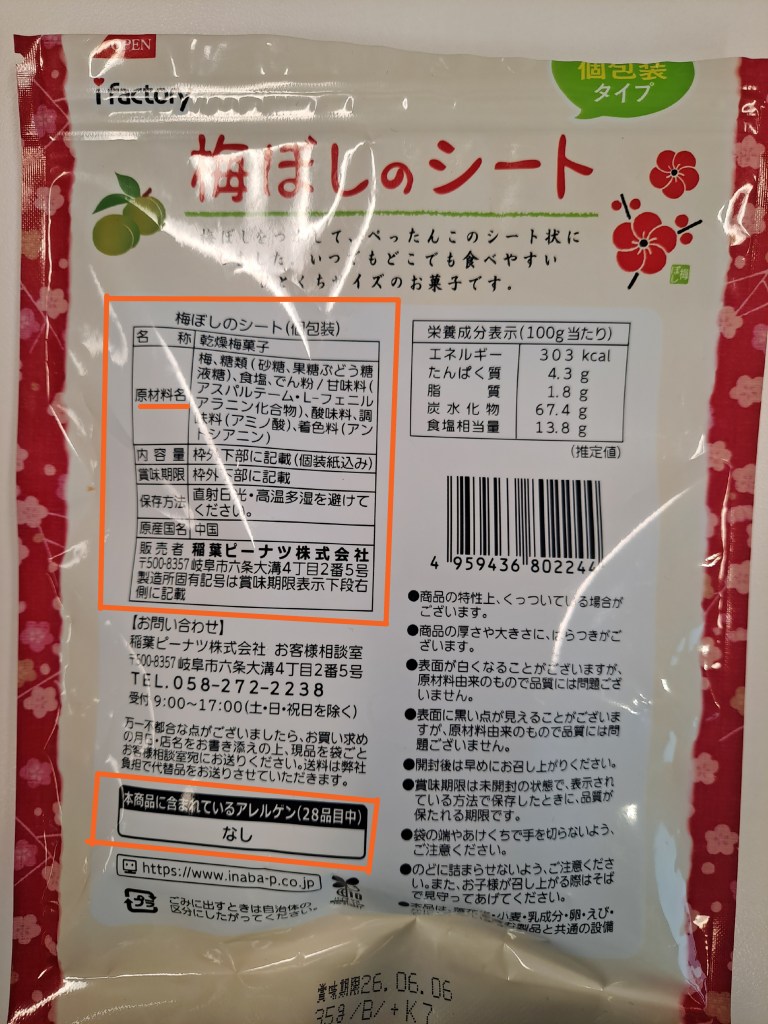
How this information translates into reality took me some time to adjust. On the left is the back of the packaging in Japan. This product has Individual Labeling the top orange box with the nutritional information, and I underlined the ingredients. It also has Collective Labeling, the second orange box containing which of the 28 allergens the product contains in a handy easy to find box.
Note the reference box is commonly listed for convenience but its not a legal requirement.
Restaurants Prioritise Accuracy Over Accommodation
One of the biggest cultural differences is this: if a Japanese restaurant isn’t confident they can serve you safely, they will say no. And that’s a good thing.
Multiple times I had staff read my allergy card, check with the kitchen, and decline politely. No guessing, no “we’ll try our best,” no improvising. If they couldn’t guarantee it, they wouldn’t risk it. This does mean you need a backup plan, a list of a few safe options nearby, rather than one restaurant on a given night, but the trade-off is worth it.

In the West, restaurants often feel pressure to accommodate even when they shouldn’t. In Japan, the priority is avoiding harm, not avoiding disappointment. For anyone managing a serious allergy or multiple restrictions, that cultural clarity removes a huge layer of stress.
Traditional Japanese Cuisine Isn’t Built Around Substitutions
In many Western countries, restaurants are used to modifying dishes: swapping sauces, removing ingredients, building a custom plate. Japan’s food culture works differently.
- Dishes are built around balance, technique, and tradition.
- Sauces are integral, not optional add-ons.
- Kitchens are often small, with shared fryers, shared noodle water, and limited prep space.
- “Gluten-free” as a concept isn’t widely used in traditional dining settings.
So instead of modifying dishes, Japanese restaurants tend to give a clear yes or no based on whether the dish as designed is safe. This is exactly why an allergy card with specific ingredients listed works so well here, it gives staff a binary decision, not a negotiation.
One practical note: using the word “allergy”, even if what you have is an intolerance, coeliac disease, or another autoimmune condition, it tends to get taken more seriously than “I can’t eat” or “I prefer not to.” If staff say no on that basis, accept it and try somewhere else. The system works because people respect it.
Japan Excels at Naturally Safe, Simple Food
Where Japan really shines for restricted travellers isn’t free-from menus or dedicated allergen-friendly restaurants it’s the sheer number of dishes that are naturally safe when you know what to look for and how to order them.
- Sashimi (plain, no soy sauce or with tamari if available)
- Salt-only yakitori
- Plain tofu dishes
- Shabu-shabu cooked in plain water
- Rice bowls with clearly listed toppings
- Rice flour cakes and biscuits
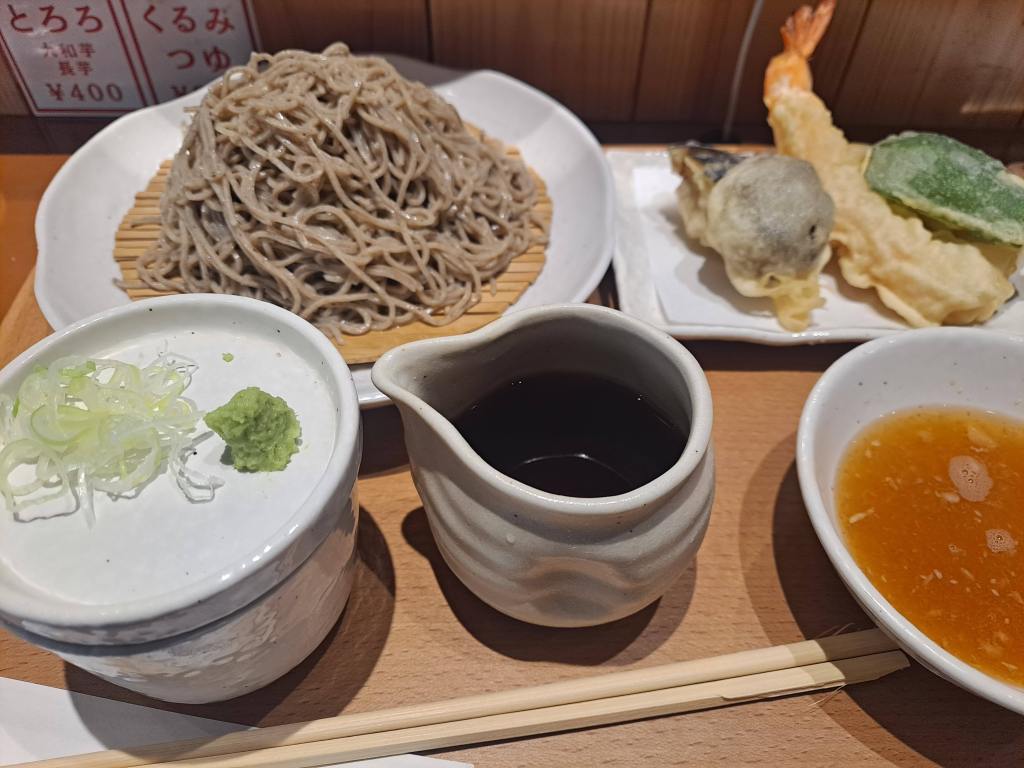
- Juwari soba 100% buckwheat noodles, with a safe dipping sauce (check the tsuyu, as it often contains wheat-based soy sauce)
More than once I ate somewhere I’m fairly sure the staff had never heard the phrase “gluten-free”, but because I’d listed the actual grains I couldn’t eat, they understood the restriction perfectly and made me something safe from scratch, they even showed me they were using a clean board and knife without me asking.
The principle holds regardless of your restriction. If you can name the specific ingredients you need to avoid, clearly and in writing, Japan’s food culture is remarkably good at working with that.
Tip: Whatever your combination of restrictions, the Essentials Travel Pack builds you a personalised list of naturally safe dishes for Japan — including the swaps that make them work for your specific restrictions.
Convenience Stores Are Designed for Everyday Eating, Not Just Snacks
One of the biggest surprises for Western travellers is how genuinely useful convenience stores (konbini) are. In Japan, these aren’t junk food stops. They’re part of daily life, and they’re stocked accordingly. For me, the konbini was a lifeline on more than one occasion:
- Onigiri with salt, salmon, or plum fillings (do check labels some fillings contain soy sauce)
- Boiled eggs
- Plain fruit and salads without dressing
- Soy milk
- Some mochi and packaged snacks (always check, but options exist)

The labelling in konbini is consistent and detailed, which makes it genuinely easier to check ingredients than in many Western supermarkets. If you have a dairy, egg nut or similar allergy rather than gluten sensitivity, the mandatory and recommended allergen lists are printed on packaging, look for the allergen summary section, usually in a bordered box near the ingredients.
This is a significant cultural difference. In the West, convenience stores are often the hardest place to eat safely. In Japan, they’re one of the most reliable.
Japan Values Process, Precision, and Predictability
This is the cultural thread that ties everything together. Japan’s approach to food safety, and allergies specifically is shaped by a broader set of values: respect for process, clarity, and avoiding risk rather than improvising around it. In practice, this means:
- Staff will check ingredients thoroughly rather than guessing
- They’ll decline if they’re not certain
- They won’t improvise a modification they can’t guarantee
- They’ll take your allergy card seriously and give you a definitive answer
For travellers with dietary restrictions, whatever those restrictions are this creates a sense of trust that’s genuinely rare. Even when the answer is no.
In Japan, No Is a Form of Care
This is the part that Western travellers often misunderstand. When a Japanese restaurant says no, they’re not rejecting you. They’re protecting you. It’s a cultural expression of responsibility, and once you understand that, the whole experience shifts.
I came home from both my trips to Japan wishing more countries worked this way. The clarity, the precision, the willingness to say we can’t do this safely rather than wing it, for someone managing multiple restrictions, it’s the opposite of what you might expect, and exactly what you actually need.
The Takeaway
Japan handles allergies differently because the entire system, from labelling laws to kitchen culture to social norms, is built around clarity, precision, and avoiding harm rather than substitution or flexibility.
For restricted-diet travellers, whatever your combination of restrictions, this means:
- You’ll get clear answers
- You’ll avoid guesswork
- You’ll rely more on naturally safe foods than on modified dishes
- Your allergy card will be your most useful tool
- You’ll eat incredibly well with the right preparation
The key is arriving with the right tools: a well-written allergy card that names your specific restrictions clearly, some knowledge of naturally safe dishes, and a backup plan for evenings when the first restaurant says no.
Japan rewards prepared travellers. The good news is that preparation doesn’t require a big budget or a luxury itinerary, it just requires knowing how the system works.

Jo is the founder of Globally Sauced, a travel platform for dietary restricted travellers and is gluten and dairy free. When not outdoors or travelling, she loves to empower people with dietary restrictions so they can explore the world safely.
Globally Sauced offers verified restaurant recommendations, country-specific guides, food label / menu translations, and more downloadable resources for gluten-free, dairy-free, allergy-conscious and other dietary restricted travellers. Learn more at globallysauced.com