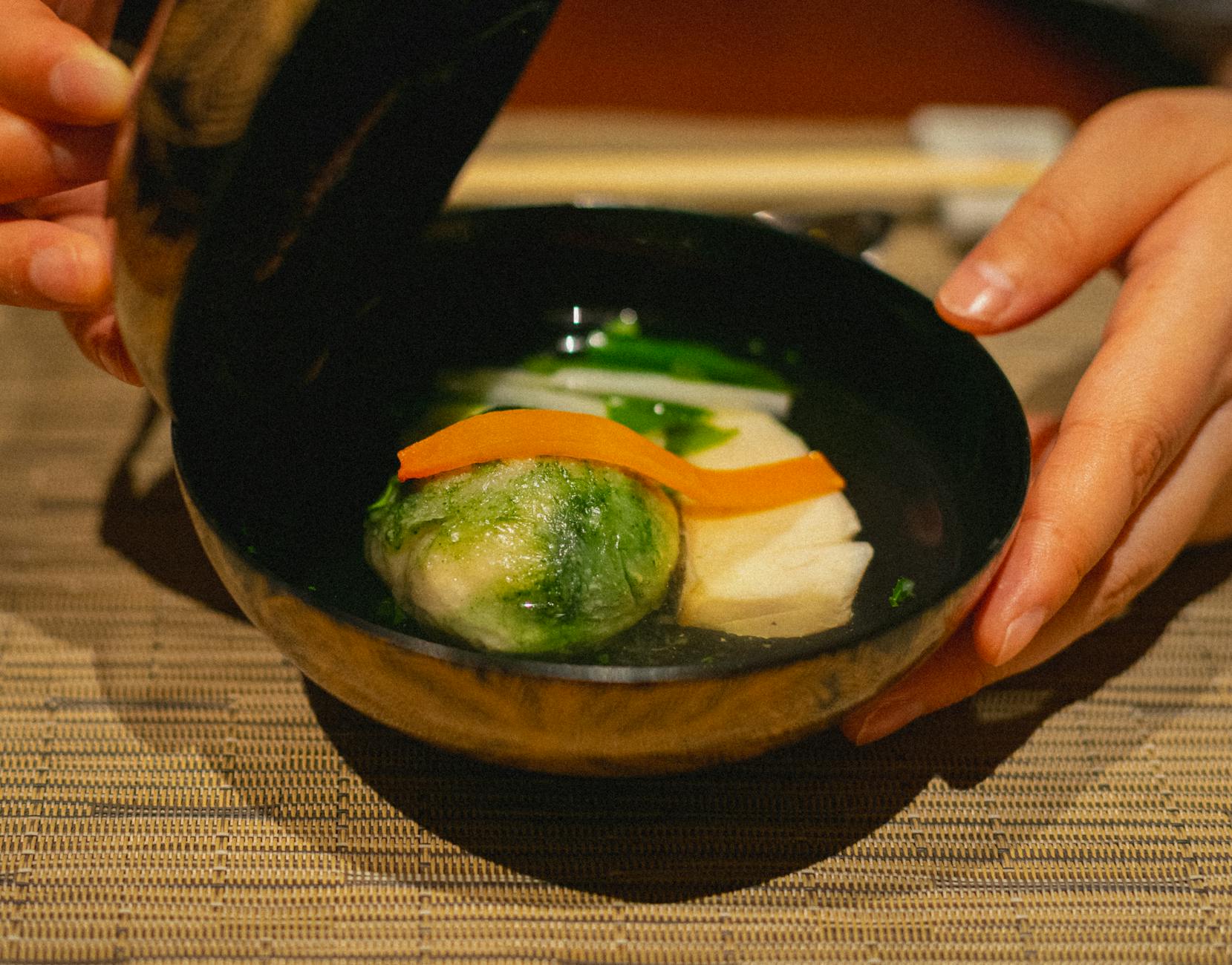
The last place you want to get sick is on a plane. Airport food can feel like a game of chance when you have dietary restrictions, but with a bit of preparation, it becomes manageable. Whether you’re gluten free, dairy free, nut-free, or managing a combination, the process is largely the same. The options might look different, but the approach holds.
A quick note on expectations before we get into it: airports vary enormously. A large international hub like Singapore Changi or Hong Kong International will have genuine options across multiple terminals. A small regional airport might have a convenience store and a kiosk. Knowing which you’re dealing with, and planning accordingly, is half the battle.
Research before you get there
Don’t leave this to chance at the departure gate. A few minutes of research before you leave the house can save a lot of stress, especially if you’re travelling early morning, late at night, or through a smaller airport where options are limited.
Useful places to look:
Find Me Gluten Free lists airports specifically, making it easy to search by terminal. It’s one of the better tools for this.
Facebook groups and Reddit communities for your specific restriction often have recent, real-world reports from travellers who’ve been through that airport recently.
Google Maps reviews can flag allergy-friendly cafes, though quality varies.
The airport’s own website sometimes lists dining options by terminal, which at minimum tells you what’s there even if it doesn’t confirm what’s safe.
I learned this the hard way leaving Calgary a couple of years ago. I’d come from Banff and hadn’t thought to check in advance. When I got to the airport there was nothing suitable open. The bookshop sold snacks, which kept me going while I waited, but it wasn’t exactly a great start to a long-haul flight. A small amount of planning would have fixed it entirely.
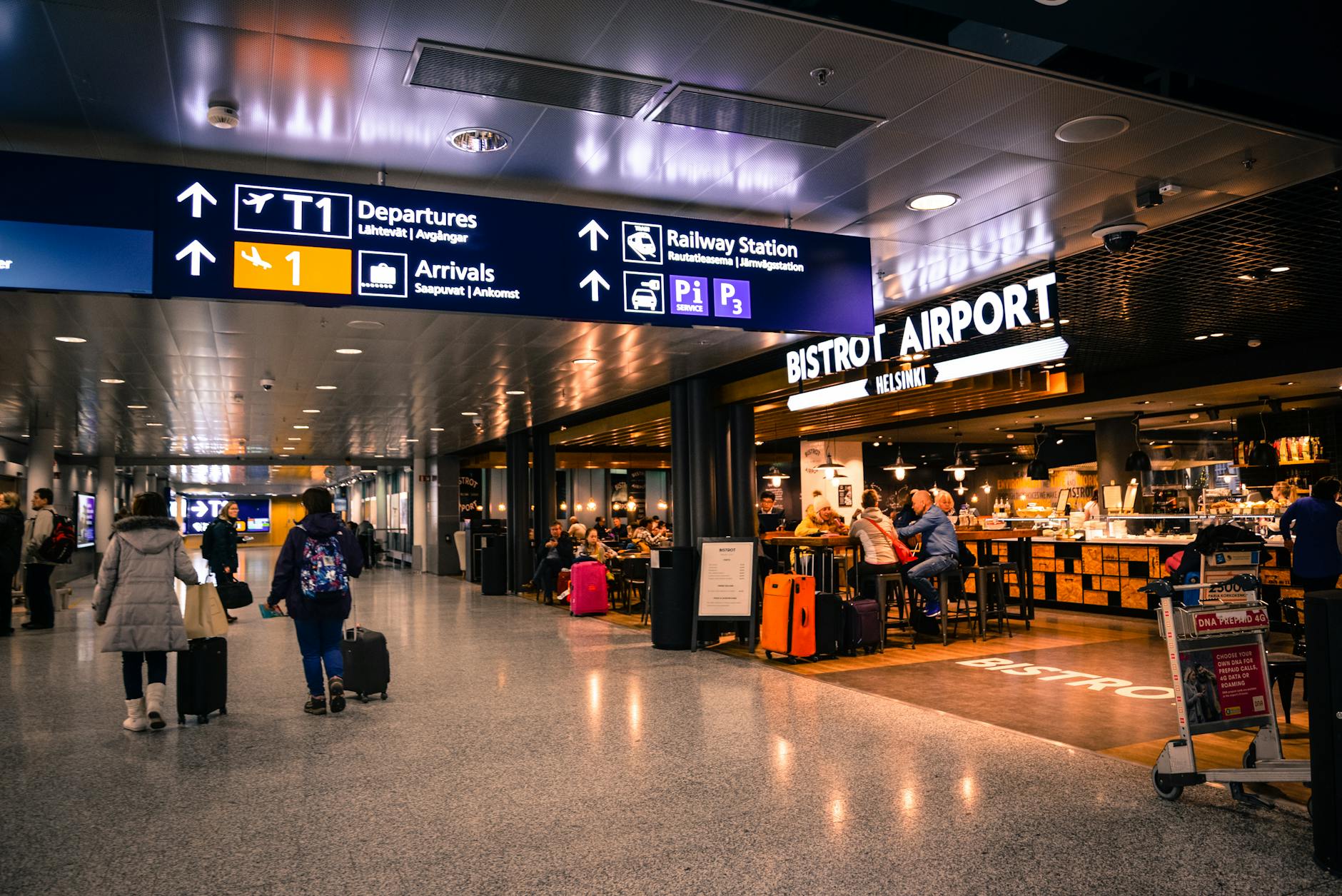
One thing worth checking, especially at larger airports: whether the options you’ve found are actually in your terminal, look for a terminal map before you fly on the airport website or similar. Flying out of Japan for the first time, I got excited about a 7-Eleven that came up in my research. It was in a completely different terminal. By the time I’d worked that out, time was tight and I opted for vending machine onigiri that I had to throw away becuase it contained gluten.
What to look for on the day
Once you’re through security, a quick scan of what’s available is worth doing before you commit to anything. Here’s how I think about it;
Naturally safe options
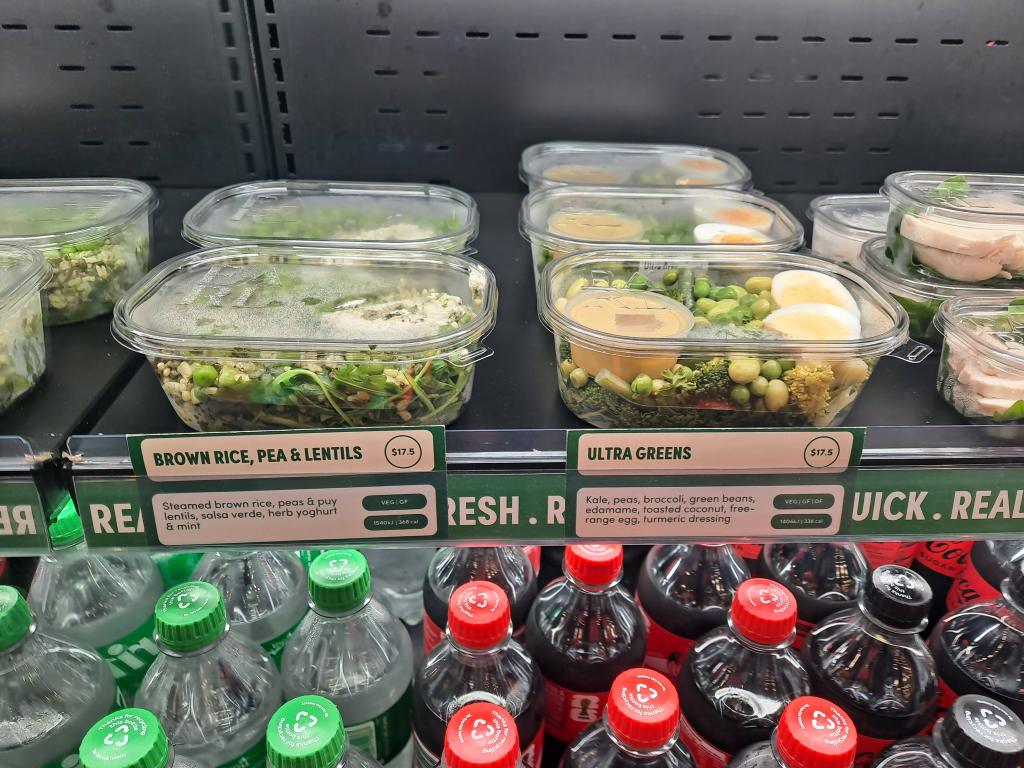
Depending on your restrictions, there are often safer bets hiding in plain sight. Nigiri sushi (check for soy sauce), fresh fruit, plain salads, and sealed pre-packaged snacks can all be worth a look. Not glamorous, but reliable
Transiting Hong Kong on a trip earlier this year, there were a couple of options that might have worked for me as someone who’s gluten and dairy free, but I was at the start of a long trip and really wasn’t confident. Fruit and chips at a kiosk to the rescue. Not exciting, but I landed feeling fine, which was all that mattered.
Fast food
Most major fast food chains publish allergen information online and operate with standardised processes, which makes them a reasonable option when you’re stuck. It’s worth a look before you rule them out entirely. Just keep in mind that practices can vary between countries, even within the same chain.
Sit-down restaurants
Airport restaurants can work, but they need more caution than you might apply at a dedicated restaurant at home. Cross-contamination is common in high-volume kitchens. If you do eat at one, be specific with staff: name your allergens clearly (say cashews, not tree nuts; say wheat, not just gluten), confirm what the dish contains, and check that safe prep can actually be guaranteed. If you’re coeliac or have a severe allergy, apply the same level of scrutiny you would anywhere else.
Before you eat
A couple of small habits that are worth building into your airport routine;
Carry disinfecting wipes and use them before you eat. Wipe down your hands, the tray or table surface, and anything your food is going to come into contact with. It takes thirty seconds and it matters, especially if you’re managing a contact-sensitive allergy.
If you’re eating at a food court or grab-and-go counter, keep your food away from shared surfaces where possible and watch for cross-contamination from neighbouring trays or tables.
Bring backup snacks
This is non-negotiable. You should already have snacks for the flight itself (see our guide to special meals and flying for full details on that), but the airport is a separate problem. The last thing you want is to eat your flight snacks before you’ve even boarded because there was nothing suitable in the terminal.
Small airports can have almost nothing for restricted travellers. And even if you’re departing a well-stocked international hub, things happen. Flights get delayed. Weather forces emergency stops. Connections go wrong.
My mum experienced this on a trip back from Fiji. The plane made an unscheduled stop in Tonga due to a mechanical issue. The airport was tiny, options were minimal even for regular travellers, and because of flight changes her special meal request hadn’t transferred. Without snacks, it was a very long few hours in the blazing heat waiting for the situation to resolve. Pack enough to cover unexpected delays, not just the flight itself.
One final note: if you’re carrying snacks through customs, know what you can and can’t declare at your destination. Australia and New Zealand in particular have strict biosecurity rules, and getting caught with undeclared food is not the kind of stress or cost you want at the end of a long trip. When in doubt, eat it before you land, throw it away before security or check the rules in advance.
The airport can surprise you too
It’s worth saying, because airport eating with dietary restrictions isn’t always a story of compromise and contingency plans. On a stopover in Vancouver flying back from Calgary to Auckland, I ended up in the Air Canada lounge as someone’s plus one after a random act of kindness from a fellow passenger. Four hours of waiting turned into wine and a gluten free, dairy free curry with rice. Sometimes the airport genuinely delivers. Plan for the worst, but stay open to the unexpected.
The short version
Research your airport and terminal before you leave. Find Me Gluten Free, Facebook groups, and Google Maps are all useful.
Check terminal maps carefully. Options in another terminal might as well not exist if you’re short on time.
Fast food chains publish allergens and can work in a pinch.
Apply full restaurant caution if you’re eating at a sit-down place: be specific, name your allergens clearly.
Wipe down surfaces before you eat.
Pack backup snacks that cover delays, not just the flight.
Know what you can carry through customs at your destination.
For everything about the flight itself, including special meal codes, what to do if your meal doesn’t make it on board, and what to pack in your carry-on, head to our guide to special meals and flying.
Jo is the founder of Globally Sauced, a travel platform for dietary restricted travellers and is gluten and dairy free. When not outdoors or travelling, she loves to empower people with dietary restrictions so they can explore the world safely.
Globally Sauced offers verified restaurant recommendations, country-specific guides, food label / menu translations, and more downloadable resources for gluten-free, dairy-free, allergy-conscious and other dietary restricted travellers. Learn more at globallysauced.com
When you travel, understanding local food norms is always useful. What do people actually eat here? What’s considered off-limits? Are restaurants open to modifications, or is the menu the menu? These questions matter for any traveller. But if you’re navigating dietary restrictions, they matter a lot more.
One layer that often gets overlooked is religion. The dominant faith in a country or region shapes what’s served, how food is prepared, and which ingredients are considered everyday staples versus the things nobody touches. That’s not just cultural context, it’s practical information you can use, it shapes entire food industries, from street food vendors to your local Indian restaurant or international fast food chains.
I see this come up online all the time. Someone asks whether Japan is safe for vegans, someone says yes, and then the conversation unravels as more people comment because fish sauce and dashi (a stock made from dried fish) are foundational to Japanese cooking, and many Japanese Buddhists who don’t eat meat still consider fish entirely acceptable. Two people using the word “vegan” can mean completely different things depending on where in the world they are and what shaped that food culture.
That’s what this post is about. Not telling you which religion is “best” for your restrictions, but helping you understand how local religious food customs intersect with what you can and can’t eat, so you can plan more intelligently, ask better questions, and occasionally discover that the food culture you’re stepping into works surprisingly well in your favour.
A few things to note before we get into it. Religious practice varies enormously within any faith, across regions, generations, and individuals. What’s standard in one community may not apply in the next town over. This is a starting point for understanding, not a rulebook. And as with everything, you still need to advocate for yourself and ask questions, use your allergy card, so you can be sure the food you’re being served is suitable for you.
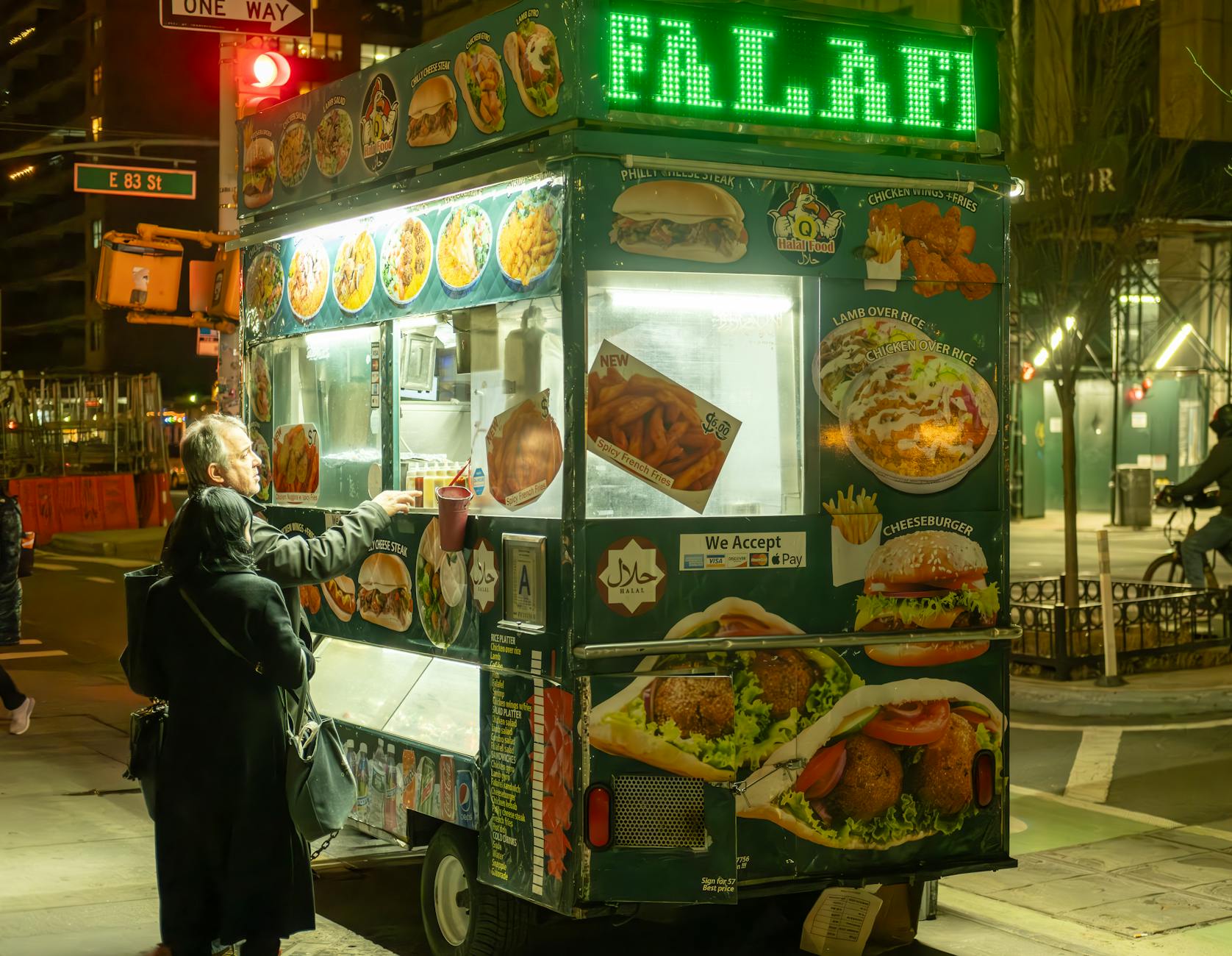
Islam prohibits pork and alcohol, and requires that meat be slaughtered in a specific way to be considered halal. In Muslim-majority countries and communities, these rules shape menus at every level, from street food stalls to restaurants.
Where this helps you
If you avoid pork, travelling through Muslim-majority countries like Indonesia, Malaysia, Morocco, Turkey, or much of the Middle East removes a lot of the guesswork. Pork simply isn’t on most menus, and you’re unlikely to encounter it as a hidden ingredient in the way you might in, say, Germany or parts of East Asia. Lard, which can sneak into pastries and cooking fats in other parts of the world, is also largely absent.
Gelatine is another hidden ingredient worth knowing about. Most conventional gelatine is pork-derived and appears in unexpected places like sweets, marshmallows, and some medications. In halal food environments, gelatine is either absent or derived from beef or fish, which matters for anyone avoiding pork-derived products.
Alcohol restrictions mean that dishes cooked in wine or beer, which can catch gluten-free travellers off guard in European cuisines, are rarely a concern.
Vegetarian and plant-based dishes are common, particularly in street food and home-style cooking, so if you’re avoiding meat for any reason, you’ll generally find options.
Middle Eastern and halal food is pleasantly keto-friendly. Meat is central while dairy features in some regions, bread however is present but not always dominant. So if you are following a keto diet you might be pleasantly surprised.
Where it gets more complicated:
Halal certification covers meat preparation, but it doesn’t speak to cross-contamination with gluten, dairy, or other allergens. A halal kitchen isn’t automatically a safe kitchen for someone with coeliac disease or a nut allergy. Wheat is used extensively across Middle Eastern, South Asian, and North African cuisines, often in ways that aren’t obvious: in sauces, as a thickener, in spice blends. Dairy is also widespread, with yoghurt, cream, and butter appearing regularly.
If you’re gluten-free and dairy-free in a halal-dominant food culture, both foods feature heavily so you will need to ask questions and do your research. Our post on Gluten Free in the Middle East and Africa is a great starting point.
Sesame is a frequent fixture in Middle Eastern cooking, tahini and halva are staples. So cross contamination could be a concern as Halal environments don’t remove sesame.
Judaism and Kosher Food Culture
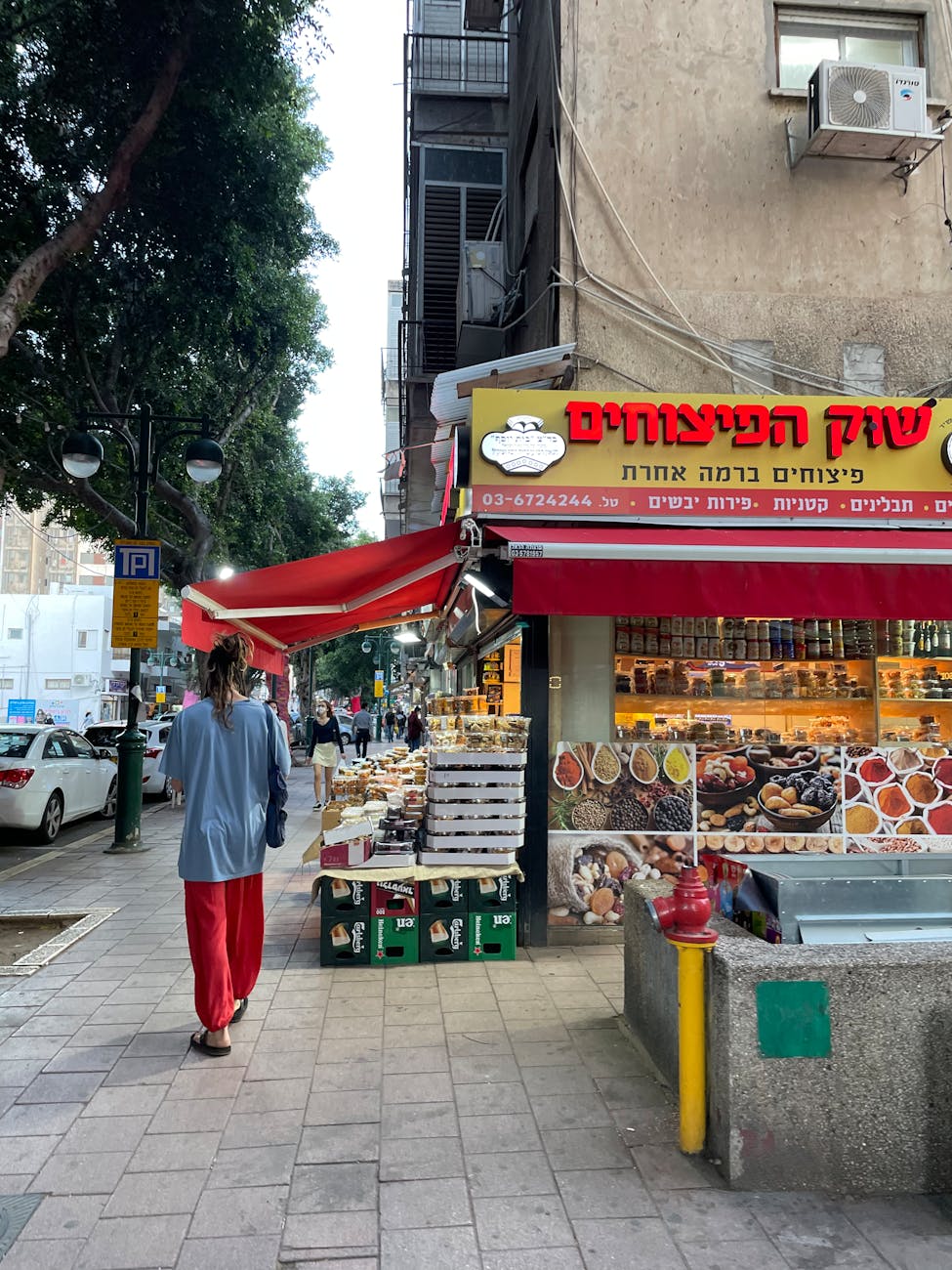
Kosher dietary laws are detailed and specific. Pork and shellfish are prohibited. Meat and dairy cannot be mixed or eaten at the same meal, and separate utensils and preparation surfaces are required for each. Meat must be slaughtered and prepared in a specific way to be considered kosher.
I came across this unexpectedly while searching for gluten-free options in Singapore. One of the results that kept coming up was Aniba, a kosher restaurant. I wasn’t looking for kosher, I was looking for somewhere my mum could eat safely, but the meat and dairy separation meant it was solving the problem without me even realising it. That’s exactly the kind of overlap this post is about.
Where this helps you
The meat and dairy separation is the most interesting angle for travellers with dietary restrictions, particularly those who are dairy-free. In a strictly kosher restaurant, a meat meal will contain no dairy at all, by law rather than by preference. That means no butter in sauces, no cream in soups, no cheese on top. For dairy-free travellers, a certified kosher restaurant can be one of the safest places to eat in cities with a significant Jewish community, precisely because the rules are structural rather than dependent on a chef’s memory.
Israel has notably strong allergen labelling culture, partly influenced by the requirements of kosher certification and partly due to broader food regulation. Gluten-free options are widely available, and ingredient transparency tends to be higher than in many other countries.
In cities like New York, Paris, Buenos Aires, and Melbourne, kosher-certified restaurants and delis can be worth knowing about if you’re navigating multiple restrictions, especially a dairy-free and gluten-free combination.
Where it gets more complicated
A dairy meal in a kosher restaurant is the flip side. Dairy-only menus can be heavy on cheese, cream, and butter, so if you’re dairy-free, you need to ask which type of menu you’re looking at before assuming it’s safe.
Kosher certification also doesn’t cover gluten or other common allergens beyond the meat and dairy separation. Wheat is a staple in Jewish baking and cooking traditions, so if you’re gluten-free you will need to ask questions.
Traditional Jewish cooking, particularly in Sephardic and Middle Eastern Jewish communities, features nuts prominently in both savoury dishes and sweets. Halva, nut-based pastries, and almond-heavy desserts are common, so if you’re managing a nut allergy, kosher restaurants and Jewish delis aren’t the straightforward option they might be for dairy-free travellers.
Sesame is extremely common in Jewish cooking. Tahini and halva appears constantly. Kosher environments don’t remove sesame at all and may also be harder to avoid.
Hinduism and Vegetarian Food Culture
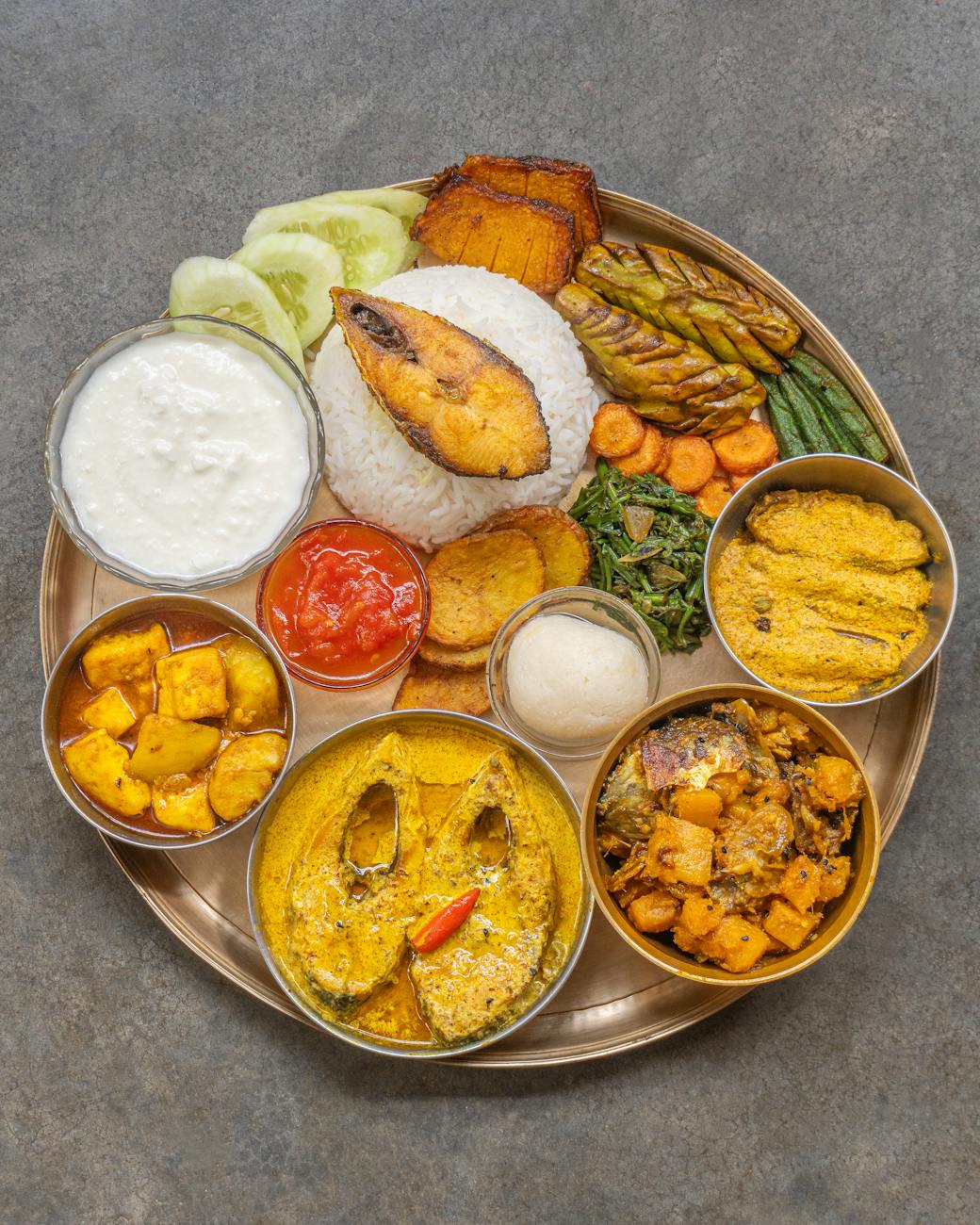
Hinduism doesn’t have a single unified dietary code, but a significant proportion of Hindus are vegetarian, and beef is avoided across the faith due to the sacred status of cows. In practice, this shapes food culture across India, Nepal, Bali, and parts of Sri Lanka in ways that are immediately useful for certain travellers.
I learned the flip side of this without leaving home. My Indian colleagues regularly share their lunches, and the food looks and smells incredible. But it also almost always contains ghee or butter, it’s so embedded in the cuisine that it doesn’t always register as a dairy ingredient the way butter or cream does. That holds true whether you’re eating at a colleague’s desk, at an Indian restaurant down the road, or travelling through India itself. Understanding this before you arrive, or before you accept that very generous lunch offer, saves a lot of awkward moments.
Where this helps you
India has one of the most developed vegetarian food cultures in the world. Meat-free options aren’t an afterthought, they’re often the main event. In many regions, entire restaurants are fully vegetarian, and the variety is extraordinary. If you’re vegetarian, plant-based, or avoiding meat for any reason, India is one of the more straightforward destinations in the world for finding food that works.
Jain communities, which follow an even stricter form of vegetarianism rooted in non-violence (more on this below), have influenced restaurant culture in cities like Mumbai and Ahmedabad to the point where you’ll often see “Jain option available” on menus. These kitchens tend to be extremely careful about cross-contact with meat.
Where it gets more complicated
“Vegetarian” in India almost always includes dairy, and lots of it. Ghee (clarified butter) is used extensively in cooking, often invisibly. It goes into dal, rice dishes, rotis, and curries that don’t look dairy-heavy on the surface. Paneer (a fresh cheese) appears throughout the menu. Yoghurt is used as a marinade, a sauce base, and a condiment. If you’re dairy-free, vegetarian-heavy food cultures can actually be more challenging than they first appear, because dairy is so embedded in the cooking that it’s not always flagged or even noticed.
Eggs are another nuance. “Vegetarian” in India often excludes eggs, but this isn’t universal, and it can vary by region and restaurant. If you avoid eggs, don’t assume they’re excluded just because the menu is labelled vegetarian.
For gluten-free travellers, wheat is everywhere in Indian cooking: in roti, naan, paratha, and many snack foods. Rice-based dishes are safer ground, but sauces and spice blends can contain wheat flour as a thickener.
Buddhism and Vegetarian Food Culture
Buddhist dietary practice varies significantly by tradition and country. In many East and Southeast Asian Buddhist traditions, monks and devout practitioners follow a vegetarian or vegan diet. Some traditions also avoid pungent vegetables, particularly garlic, onion, leeks, chives, and spring onion, which are believed to stimulate the senses in ways considered incompatible with meditation.
In countries with strong Buddhist food traditions, like Taiwan, South Korea, and parts of China, you’ll find dedicated Buddhist vegetarian restaurants that serve food free from meat, eggs, and often dairy. These can be genuinely useful for people navigating multiple restrictions, because the kitchens are set up around plant-based cooking rather than adapting meat-based dishes on request.
Temple food in Japan, known as shojin ryori, is a beautifully developed vegetarian cuisine with no meat, no fish, and no pungent vegetables. It’s not widely available outside temples and specialist restaurants, but it exists, and it’s worth knowing about. For this same reason people following a low-FODMAP diet may be in luck with temple food, although its still worth checking in advance before booking the stay.
Some Buddhist vegetarian restaurants, particularly in Taiwan and South Korea, also exclude eggs as well as meat and dairy, making them worth investigating if you’re managing an egg allergy or intolerance. However this isn’t universal across Buddhist practice, so it needs confirming rather than assuming.
Where it gets more complicated
This is where the Japan vegan question I mentioned at the start becomes real. Japanese Buddhism doesn’t uniformly exclude fish. Dashi, the stock that forms the base of enormous amounts of Japanese cooking, is typically made from kombu (seaweed) and katsuobushi (dried bonito, which is fish). Miso soup, many sauces, and seemingly simple dishes often contain dashi. A Japanese cook who considers themselves Buddhist and doesn’t eat meat may still use fish-based stock without a second thought, because that’s how Japanese food works.
The same applies across Southeast Asia. Fish sauce is foundational to Thai, Vietnamese, and Cambodian cooking. Oyster sauce is common in Chinese-influenced cuisines. A restaurant that describes itself as vegetarian in Bangkok may use fish sauce as a base flavour and simply not consider it “meat.” If you’re avoiding fish and seafood, Buddhist food culture requires careful clarification, not assumption.
For gluten-free travellers, soy sauce (which typically contains wheat) appears constantly in East and Southeast Asian cooking. Tamari is the gluten-free alternative, but it’s not the default, and you need to ask specifically, if not bring your own. And if you’re looking for a gluten free temple stay they do exist but it’s not the default. An interesting complication a recent traveller to Vietnam mentioned was that she found chicken stock containing gluten to be much more common than she expected. The hidden ingredients are often the ones we need to ask about.
For travellers with a sesame allergy sesame oil and gomashio appear frequently and it’s either harder to avoid or you need to be aware that cross contamination is a possibility.
Meanwhile if you have a soy allergy, soy sauce, tofu, miso, and edamame are foundational ingredients and makes Buddhism a riskier choice.
Jainism and Strict Vegetarianism
Jainism is a minority religion practised primarily in India, with the largest communities in Gujarat, Rajasthan, and Mumbai. Its dietary rules are among the strictest of any faith tradition. Jains avoid all meat, fish, eggs, and root vegetables (because harvesting them kills the whole plant), including potatoes, onions, garlic, carrots, and beetroot. Many Jains also avoid eating after sunset.
Where this helps you
For people who are vegan or strictly plant-based, Jain restaurants and Jain-influenced kitchens are worth knowing about. The prohibition on meat is absolute and deeply held, which means cross-contact with meat is taken seriously in a way that goes beyond a simple menu preference.
Jain food culture has also pushed Indian restaurant culture toward more transparent ingredient communication in areas where Jain communities are large. The “Jain option” you’ll see on menus in Mumbai or Ahmedabad typically means no onion, no garlic, and no root vegetables, and it’s prepared separately.
Eggs are also excluded from Jain practice, on the basis that they represent potential life. For people managing an egg allergy, that’s a significant practical benefit. Egg tends to hide in batters, sauces, and baked goods in ways that are hard to spot, and most kitchens use it without thinking. A Jain kitchen doesn’t use it at all, which removes a layer of guesswork that egg-allergy travellers deal with constantly.
One less obvious group who benefit from Jain kitchens: people following a low-FODMAP diet. Onion, garlic, and spring onion are often the most common FODMAP triggers and the hardest to avoid when eating out, because they’re invisible in sauces and bases. In a Jain kitchen they’re simply not there, structurally rather than on request. It’s not a complete low-FODMAP solution, other triggers may still be present, but it’s a useful overlap worth being aware of.
Where it gets more complicated
Dairy is not excluded from Jain practice, and in fact features prominently, for the same reasons mentioned above in the Hinduism and Vegetarian Food Culture section. Ghee, milk, and yoghurt are all acceptable, so dairy-free travellers can’t assume a Jain kitchen is safe without asking.
The exclusion of root vegetables also means that some dishes adapted for Jain practice lose the aromatics that other versions rely on. That’s not a safety issue, but it can mean the food tastes quite different from what you might expect.
Christianity and Western Food Culture
Most Christian traditions don’t maintain strict ongoing dietary laws. Some observe Lent (the period before Easter), during which certain Christians avoid meat on Fridays, and some fast on specific days. Beyond that, food is largely unrestricted by faith.
What this means in practice
In countries where Christianity is the dominant religion, food culture is shaped by geography, history, and local agriculture more than by religious dietary rules. European food cultures vary enormously: some are dairy-heavy, some are wheat-heavy, some centre around pork. There’s no overarching Christian food framework that helps or hinders travellers with dietary restrictions.
Where it does occasionally matter: Christian countries may have some or all restaurants closed on Christmas Day or Easter Sunday, which is worth knowing for practical planning rather than dietary reasons.
Using This Knowledge Practically
Understanding the religious food culture of a destination isn’t about finding a loophole or assuming a place is automatically safe because of the dominant faith. It’s about going in with better context so you can ask smarter questions and know what to look for. A few things worth keeping in mind;
Religious restaurants can be unexpected allies. A certified kosher restaurant is structurally dairy-free. A Jain restaurant won’t have meat cross-contact. A Buddhist vegetarian restaurant in Taiwan is often set up for plant-based eating in a way that a regular restaurant adapting to your request simply isn’t. These aren’t perfect solutions for every restriction combination, but they’re worth knowing exist.
“Safe” within a religious framework and “safe” for your restriction are different things. Halal food isn’t gluten-free. Vegetarian food isn’t dairy-free. Kosher food isn’t allergen-free beyond the meat and dairy separation. Religious food standards answer specific questions, not yours, unless yours happen to overlap.
Ask about the base, not just the main ingredient. Fish sauce, dashi, ghee, and lard are the invisible ingredients that catch people out. Understanding which fats and stocks are typical in a food culture helps you know what to ask about, even when the menu doesn’t mention them.
Your allergy card still matters. Religious food culture gives you context and helps you narrow down where to eat, but clear, specific communication about your restrictions remains essential. A card that goes beyond “I’m vegan” or “I’m gluten-free” to explain what you actually can’t eat and why cross-contact matters is still your most reliable tool in any food culture, religious or otherwise. Get your card here
This works at home too, not just on the road. Choosing a cuisine for dinner out, picking a takeaway, navigating a work lunch, or figuring out which restaurants are worth attempting on a Friday night, all of this becomes easier when you understand which food cultures are more naturally aligned with your restrictions. A dairy-free person who knows that halal restaurants are largely butter and cream-free has more options at a casual work lunch than they might think. A vegetarian who understands that Indian restaurants in their city will almost certainly have extensive meat-free menus can stop defaulting to the same three places. The knowledge travels with you, literally and otherwise.
As someone who is gluten and dairy free many gluten free recommendations don’t work, because of the inclusion of dairy. Recently I was in Kanazawa, Japan. I was craving something sweet and there is a crepe shop everyone recommends but guess what it was gluten free sure, but not dairy free. So for me personally the knowledge that jewish food is often naturally dairy free opens doors and eliminates the need to have as many backup dining options when travelling. For the same reason knowing many Indian options contain butter or ghee means if that is the safe option in a location, such as in Tokyo recently I need backup options.
Food shouldn’t be the hardest part of your trip, and we all want to arrive somewhere, whether that’s a new country or a new restaurant, informed rather than blindly optimistic or unnecessarily anxious. Religious food culture is one more layer of understanding that helps you make better decisions, find better options, and eat with more confidence, whatever your combination of restrictions.
FAQ
Is halal food safe for people with a gluten intolerance or coeliac disease?
Not necessarily, you need to ask questions. Not only is wheat based bread common but wheat is commonly found in Middle Eastern, South Asian, and North African cuisines, often as more hidden sauces sauces, as a thickener, in spice blends.
Can I eat at a kosher restaurant if I’m not Jewish
Yes, just be aware that meat and dairy are never mixed in the same meal, so you will not find cheeseburgers or a steak with butter but you will find loads of delicious choices. You may find that they are closed on a Friday evening and Saturday to observe Shabbat.
Is Indian food safe for vegans?
It depends. It can be but due to the presence of ghee and butter you will need to ask questions, often about those ingredients specifically.
What is shojin ryori?
Shojin ryori is a traditional Japanese Buddhist vegetarian cuisine mainly found in temples in temples and focuses on mindfulness, seasonal ingredients, and ethical eating. It is vegan and often avoids strong flavors like garlic or onion.
Jo is the founder of Globally Sauced, a travel platform for dietary restricted travellers and is gluten and dairy free. When not outdoors or travelling, she loves to empower people with dietary restrictions so they can explore the world safely.
Globally Sauced offers verified restaurant recommendations, country-specific guides, food label / menu translations, and more downloadable resources for gluten-free, dairy-free, allergy-conscious and other dietary restricted travellers. Learn more at globallysauced.com
Here’s something that happens to travellers with dietary restrictions at least once. You search for safe places to eat somewhere new, and a list or instagram posts comes back that actually looks promising. You click through, you get excited, and then you see the prices. And then, the real tell; those reviewers list the hotels they recommend, and it all makes sense. High end international brands, concierge, someone else to help with the hard parts.
I’m not against this approach, if it helps you travel safely and have a great time with less stress do it. But eating safely with dietary restrictions, whether that’s gluten free, dairy free, nut free, halal, vegan, or any combination, doesn’t require a luxury budget. But it requires a different approach.
Ideally plan your trip around a destination that works for your budget and dietary restrictions. I’m going snowboarding again after Christmas and was hoping to go to Italy, had a few options planned. With what’s happening in the Middle East (key transit hub from New Zealand) and the higher costs in Europe, I’m now going back to Japan but heading north and will go to Europe at a later date. Lets face it, that’s not always an option though. Sometimes our destination isn’t as flexible.
These tips work whether you’re managing one restriction or several. They draw on my experience as a backpacker around Europe and North America a few years back but tailored to our needs. They do rely on a level of comfort with reading labels, using allergy cards and translation apps as well as advocating for yourself. If you’d like to build confidence in those areas first, start here: Allergy Cards vs. Translation Apps, what to use and when to switch and also check out How to build food advocacy skills
Eat where the locals eat
Tourist-facing restaurants charge tourist prices, and they’re often the places most likely to rely on pre-made sauces, shared fryers, and vague “gluten-friendly” claims. Local spots tend to be cheaper, fresher, and often more transparent about what’s actually in the food; especially if you can ask.
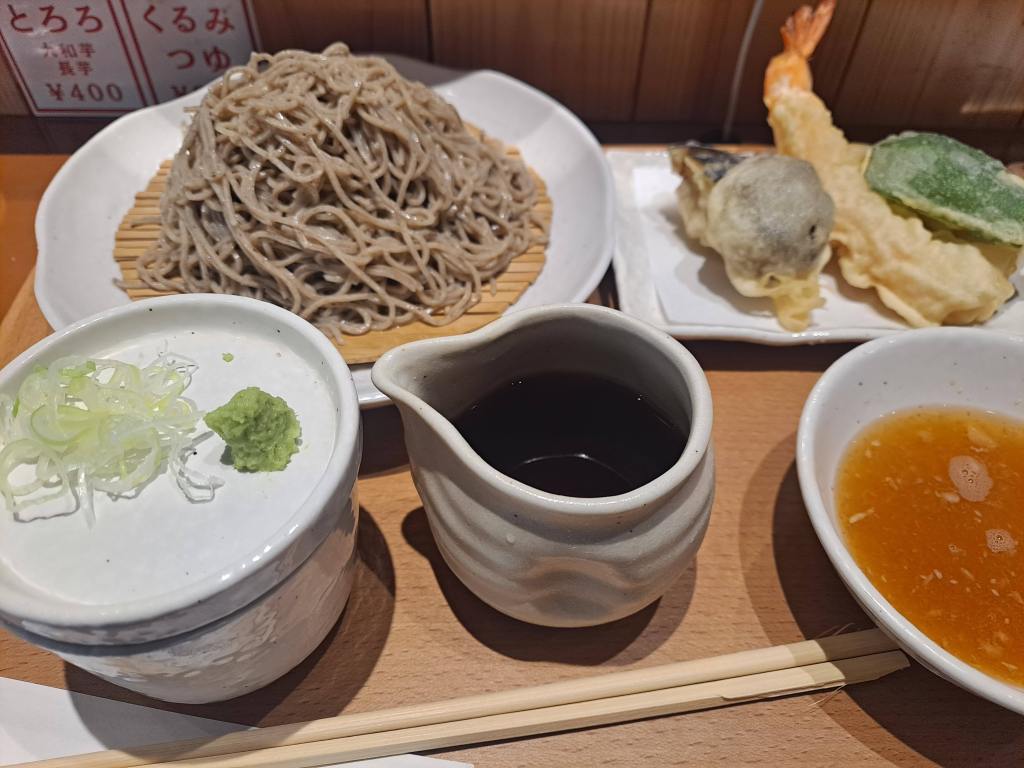
If the language or menu feels daunting, timing helps. Go slightly off-peak: after the lunch rush, before dinner service kicks in. Staff have more time, the kitchen is less chaotic, and you’re more likely to get a real answer to a real question. When I was in Nagano, going after the lunch rush meant the staff actually had time to walk me through how the soba was prepared and to answer questions I hadn’t even thought to ask. Such as how to drink the left over dipping sauce.
Think naturally safe, not dedicated safe
Dedicated gluten free or allergy-friendly restaurants exist on a spectrum, some are excellent, some charge a premium for mediocre food, and many aren’t in the budget bracket anyway. But naturally safe food exists everywhere, often cheaply.
Think meat, seafood, tofu, vegetables, rice, potatoes; Dishes built around whole ingredients rather than sauces and coatings. This is where multi-restriction travellers often have an advantage over people looking for western-style alternatives, you’re already scanning for ingredients rather than labels.
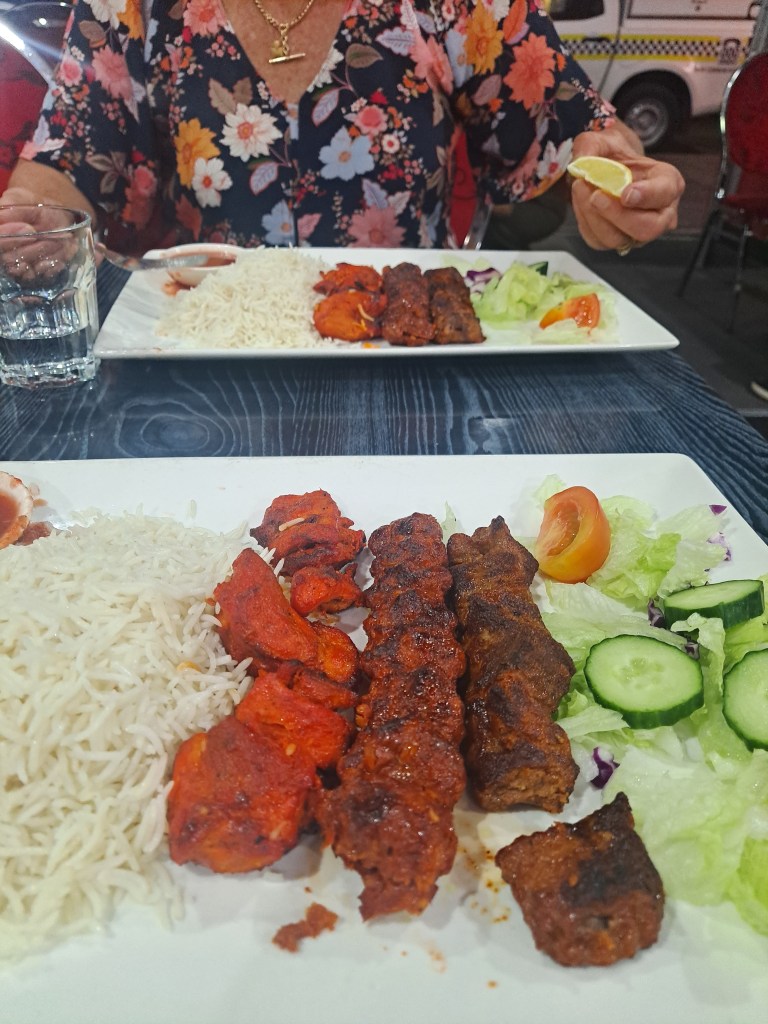
My mum and I found this worked brilliantly in Adelaide. We weren’t hunting for dedicated gluten free venues. We were eating Afghani kebabs, Greek pita, Mexican fajitas; dishes that were naturally safe for both of us, often cheaper than the “safe” spots recommended online, and genuinely great food.
Make lunch your main meal
Dinner prices at many restaurants, particularly in tourist areas can be significantly higher than the exact same food served at lunch. Where lunch specials exist, they’re worth seeking out. You eat well, spend less, and often have more flexibility because it’s quieter.
Cook some of your own meals
Even partial self-catering makes a real difference, both financially and in terms of reducing the daily mental load of navigating restrictions.
Book accommodation with at least a fridge and kettle if you can, even hotels often have this. A microwave opens up more options. Full kitchens in apartments, guesthouses, and hostels are even better.
Before you travel, look up the major local supermarkets online so you know what products and brands to look for when you arrive. I almost always do this, a quick google search usually brings up the online shop and the dietary filters helps me recognise potentially safe options ahead of time. Hint: Take some screenshots and save in a google drive (or similar) folder.
Bring a reusable water bottle, a set of utensils, a container or bowl, and a few zip-lock bags. If crumbs in shared toasters are a problem for you, toaster bags are worth packing. Having breakfast in your room, or at minimum, a snack in your bag takes pressure off finding every single meal of the day.
Keep drinking to a minimum
Alcohol in bars and restaurants is often one of the biggest budget drains when travelling. It’s also worth noting from a restriction perspective: the decisions you make after a few drinks are rarely the ones you’d make sober. Sneaky sources of cross-contamination tend to slip through more easily when you’re not reading ingredients as carefully as you normally would.
Always have a backup
This matters more than people realise. In Japan, many local restaurants are very small, a wait is common, may be booked out, or simply can’t accommodate your combination of restrictions. In Hong Kong, some of the places that look incredible on paper are Michelin starred and often outside my budget. In Paris or Roma, that gluten free bakery you’ve been looking forward to might also be full of dairy.
Know what your backup is before you need it. A nearby convenience store, a supermarket, a dish you’ve already scoped out. Having a plan B is not being pessimistic, it’s just good travel with restrictions.
A note on upcharges
A gluten free or allergy-modified meal should carry a small upcharge when there’s a genuine cost involved, a different base, extra care in preparation. That’s fair. But a large premium just for existing as a multi-restriction traveller is not something you should feel obligated to pay, and the good news is: with the right approach, you usually don’t have to.
Take the guesswork out of communicating your restrictions
One of the most practical things you can do before any trip is have a clear, accurate card explaining your restrictions in the local language, something you can hand over at a restaurant, market, or convenience store without the pressure of trying to explain it on the fly.
If you found this post useful check out the Start Here guide (link below), all the key posts are organised by stage so that food isn’t the hardest part of your trip.
Jo is the founder of Globally Sauced, a travel platform for dietary restricted travellers and is gluten and dairy free. When not outdoors or travelling, she loves to empower people with dietary restrictions so they can explore the world safely.
Globally Sauced offers verified restaurant recommendations, country-specific guides, food label / menu translations, and more downloadable resources for gluten-free, dairy-free, allergy-conscious and other dietary restricted travellers. Learn more at globallysauced.com
A practical guide for travellers managing multiple dietary restrictions; from gluten-free and dairy-free to allergies such as nut or egg, vegetarian, halal, kosher, and beyond.
Japan is one of the most fascinating places to travel with dietary restrictions, not because it’s “easy” in the Western sense, but because the entire system works differently. If you’ve ever wondered why a café in Tokyo will confidently tell you no, while a restaurant in the US or Europe might guess, improvise, or over-promise, this post breaks down the cultural, legal, and practical reasons behind Japan’s unique approach.
I’m coming at this as someone who has travelled Japan gluten-free and dairy-free, and the patterns I’m describing are ones I encountered repeatedly across different cities, budgets, and restaurant types. But the underlying logic applies whether you’re gluten-free, managing a nut allergy, eating halal, or juggling a combination of restrictions. The system is what it is, regardless of which specific things you can’t eat.
Gluten isn’t a category. Only wheat must be labelled. This means barley, rye, oats, and malt are not labelled, for example anything with soy sauce, miso, or seasoning blends needs a closer look.
Buckwheat appears in the mandatory list because it’s a significant allergen in Japan, not because it contains gluten. Pure buckwheat soba is naturally gluten-free, but much of the soba you will encounter is a combination of buckwheat and wheat.
Dairy often hides under umbrella terms in processed foods, sauces, and curries, particularly in convenience store products. If you’re dairy-free, “milk” will usually be labelled, but butter, cream, and casein are worth checking for explicitly.
Soy sauce almost always contains wheat, even when the dish it’s in looks naturally safe. This catches a lot of gluten-free travellers off guard.
If you have a nut allergy, the recommended list includes almonds, walnuts, cashews, macadamia, and others but these are voluntary to label, not mandatory. Check carefully, and your allergy card becomes even more important.
This is why travellers can find Japan both reassuring and confusing at the same time. The system is consistent, it’s just not aligned with how we are used to categorising food safety.
How to identify your allergens on the packaging
Japan’s Consumer Affairs Agency has published a handy guide to the Japanese Food Labelling System that I highly recommend reading. It explains how to read the nutrition and allergen information and how to read the expiry dates.
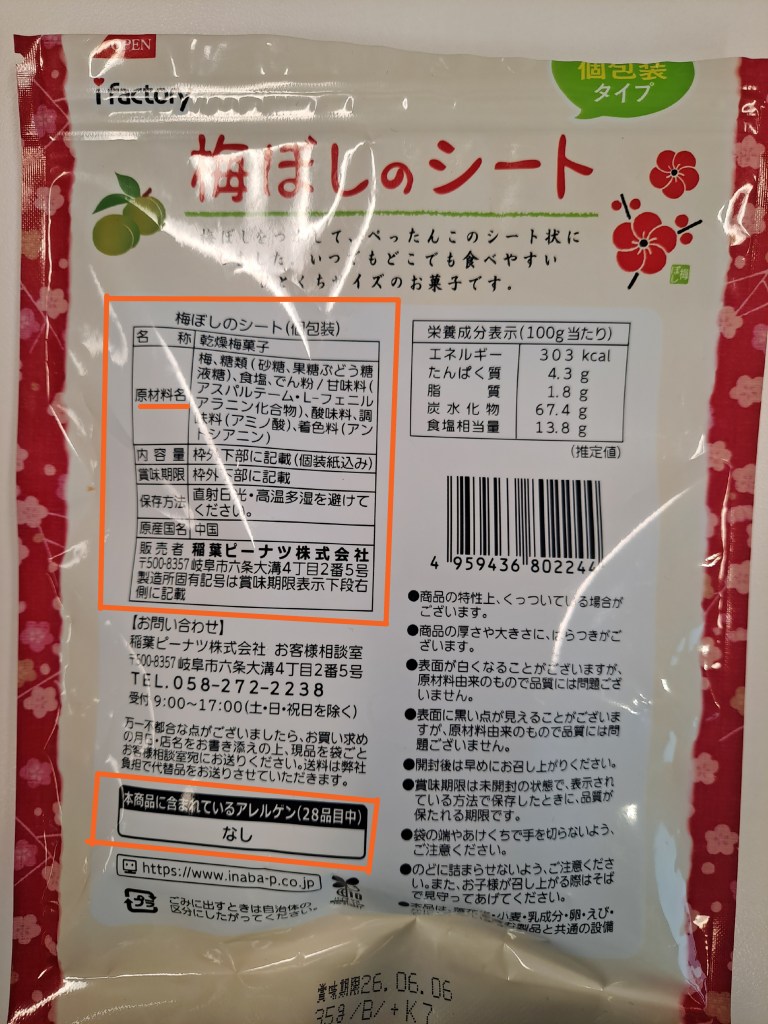
How this information translates into reality took me some time to adjust. On the left is the back of the packaging in Japan. This product has Individual Labeling the top orange box with the nutritional information, and I underlined the ingredients. It also has Collective Labeling, the second orange box containing which of the 28 allergens the product contains in a handy easy to find box.
Note the reference box is commonly listed for convenience but its not a legal requirement.
Restaurants Prioritise Accuracy Over Accommodation
One of the biggest cultural differences is this: if a Japanese restaurant isn’t confident they can serve you safely, they will say no. And that’s a good thing.
Multiple times I had staff read my allergy card, check with the kitchen, and decline politely. No guessing, no “we’ll try our best,” no improvising. If they couldn’t guarantee it, they wouldn’t risk it. This does mean you need a backup plan, a list of a few safe options nearby, rather than one restaurant on a given night, but the trade-off is worth it.
In the West, restaurants often feel pressure to accommodate even when they shouldn’t. In Japan, the priority is avoiding harm, not avoiding disappointment. For anyone managing a serious allergy or multiple restrictions, that cultural clarity removes a huge layer of stress.
Traditional Japanese Cuisine Isn’t Built Around Substitutions
In many Western countries, restaurants are used to modifying dishes: swapping sauces, removing ingredients, building a custom plate. Japan’s food culture works differently.
Dishes are built around balance, technique, and tradition.
Sauces are integral, not optional add-ons.
Kitchens are often small, with shared fryers, shared noodle water, and limited prep space.
“Gluten-free” as a concept isn’t widely used in traditional dining settings.
So instead of modifying dishes, Japanese restaurants tend to give a clear yes or no based on whether the dish as designed is safe. This is exactly why an allergy card with specific ingredients listed works so well here, it gives staff a binary decision, not a negotiation.
One practical note: using the word “allergy”, even if what you have is an intolerance, coeliac disease, or another autoimmune condition, it tends to get taken more seriously than “I can’t eat” or “I prefer not to.” If staff say no on that basis, accept it and try somewhere else. The system works because people respect it.
Japan Excels at Naturally Safe, Simple Food
Where Japan really shines for restricted travellers isn’t free-from menus or dedicated allergen-friendly restaurants it’s the sheer number of dishes that are naturally safe when you know what to look for and how to order them.
Sashimi (plain, no soy sauce or with tamari if available)
Salt-only yakitori
Plain tofu dishes
Shabu-shabu cooked in plain water
Rice bowls with clearly listed toppings
Rice flour cakes and biscuits
Juwari soba 100% buckwheat noodles, with a safe dipping sauce (check the tsuyu, as it often contains wheat-based soy sauce)
More than once I ate somewhere I’m fairly sure the staff had never heard the phrase “gluten-free”, but because I’d listed the actual grains I couldn’t eat, they understood the restriction perfectly and made me something safe from scratch, they even showed me they were using a clean board and knife without me asking.
The principle holds regardless of your restriction. If you can name the specific ingredients you need to avoid, clearly and in writing, Japan’s food culture is remarkably good at working with that.
Tip: Whatever your combination of restrictions, the Essentials Travel Pack builds you a personalised list of naturally safe dishes for Japan — including the swaps that make them work for your specific restrictions.
Convenience Stores Are Designed for Everyday Eating, Not Just Snacks
One of the biggest surprises for Western travellers is how genuinely useful convenience stores (konbini) are. In Japan, these aren’t junk food stops. They’re part of daily life, and they’re stocked accordingly. For me, the konbini was a lifeline on more than one occasion:
Onigiri with salt, salmon, or plum fillings (do check labels some fillings contain soy sauce)
Boiled eggs
Plain fruit and salads without dressing
Soy milk
Some mochi and packaged snacks (always check, but options exist)
The labelling in konbini is consistent and detailed, which makes it genuinely easier to check ingredients than in many Western supermarkets. If you have a dairy, egg nut or similar allergy rather than gluten sensitivity, the mandatory and recommended allergen lists are printed on packaging, look for the allergen summary section, usually in a bordered box near the ingredients.
This is a significant cultural difference. In the West, convenience stores are often the hardest place to eat safely. In Japan, they’re one of the most reliable.
Japan Values Process, Precision, and Predictability
This is the cultural thread that ties everything together. Japan’s approach to food safety, and allergies specifically is shaped by a broader set of values: respect for process, clarity, and avoiding risk rather than improvising around it. In practice, this means:
Staff will check ingredients thoroughly rather than guessing
They’ll decline if they’re not certain
They won’t improvise a modification they can’t guarantee
They’ll take your allergy card seriously and give you a definitive answer
For travellers with dietary restrictions, whatever those restrictions are this creates a sense of trust that’s genuinely rare. Even when the answer is no.
In Japan, No Is a Form of Care
This is the part that Western travellers often misunderstand. When a Japanese restaurant says no, they’re not rejecting you. They’re protecting you. It’s a cultural expression of responsibility, and once you understand that, the whole experience shifts.
I came home from both my trips to Japan wishing more countries worked this way. The clarity, the precision, the willingness to say we can’t do this safely rather than wing it, for someone managing multiple restrictions, it’s the opposite of what you might expect, and exactly what you actually need.
The Takeaway
Japan handles allergies differently because the entire system, from labelling laws to kitchen culture to social norms, is built around clarity, precision, and avoiding harm rather than substitution or flexibility.
For restricted-diet travellers, whatever your combination of restrictions, this means:
You’ll get clear answers
You’ll avoid guesswork
You’ll rely more on naturally safe foods than on modified dishes
Your allergy card will be your most useful tool
You’ll eat incredibly well with the right preparation
The key is arriving with the right tools: a well-written allergy card that names your specific restrictions clearly, some knowledge of naturally safe dishes, and a backup plan for evenings when the first restaurant says no.
Japan rewards prepared travellers. The good news is that preparation doesn’t require a big budget or a luxury itinerary, it just requires knowing how the system works.
Jo is the founder of Globally Sauced, a travel platform for dietary restricted travellers and is gluten and dairy free. When not outdoors or travelling, she loves to empower people with dietary restrictions so they can explore the world safely.
Globally Sauced offers verified restaurant recommendations, country-specific guides, food label / menu translations, and more downloadable resources for gluten-free, dairy-free, allergy-conscious and other dietary restricted travellers. Learn more at globallysauced.com
Travelling with dietary restrictions is one of those things that sounds manageable until you’re actually doing it. You’ve booked the trip, you’re excited, and then somewhere between googling “gluten free restaurants in [destination]” and falling down a Reddit rabbit hole at midnight, the excitement quietly turns into dread.
If that’s where you are right now, this is the right place to start.
A quick note before we get into it: this site is built for people managing more than one restriction at once, gluten free and dairy free, halal and nut allergy, coeliac and lactose intolerant, and every other combination in between. If that’s you, you’ve probably already noticed that most travel advice out there covers one restriction and quietly ignores the rest. We don’t do that here.
The thing nobody tells you
Travelling with dietary restrictions isn’t harder than travelling without them. It’s just different. It requires a bit more preparation upfront, a bit more communication on the ground, and a slightly different approach to research. Once you’ve got those sorted, and they’re not complicated, the actual travelling part gets a lot easier.
The mistake most people make is trying to research everything from scratch for every trip. You don’t need to. You need a process, a handful of reliable tools, and the confidence to ask a few simple questions. That’s genuinely it.
You want to travel, you’re just not sure how to eat safely. Start here with safe travel planning.
You travel, but you’ve been burnt before, and want to level up your travel skills so you can eat safely.
You know the basics, you want less time researching, more time going further and not missing out.
You’ll find a section with guides and advice to help you achieve your travel goals.
The Complete Travel Planning Guide. Is a seven step process that walks you through everything, how to build a food-friendly itinerary, how to advocate for yourself in restaurants, what to pack, how to handle flights, and how to stay organised once you’re actually on the ground. It’s free, it works for any combination of restrictions, and it was built from years of travelling this way.
Once you’ve got the planning side sorted, the next thing worth having is an allergy card in the local language for wherever you’re headed. Not a vague translation, a card that names your specific restrictions, flags the hidden ingredients to watch for, and is actually usable in a restaurant when you hand it over. You can generate one for free here.
If you want to go deeper, destination-specific safety ratings, hidden risks, local food vocabulary, safe dishes to look for, and a personalised allergy card all in one place, that’s what the Essentials Travel Pack is for. It’s the tool I wish I’d had when I started travelling this way.
One more thing
The anxiety does ease. Not because the restrictions change, but because you get better at navigating them, and because knowing what to look for and what to ask makes an enormous difference to how a trip actually feels. The first trip is the hardest. After that, it starts to feel like just part of how you travel.
You’ve already done the hardest bit, which is deciding you’re not going to let it stop you. Now let’s get you somewhere worth eating.
Ready to plan your first trip? Start with our start here page, we’ve organised everything by level in one place, ready to bookmark and return to
Jo is the founder of Globally Sauced, a travel platform for dietary restricted travellers and is gluten and dairy free. When not outdoors or travelling, she loves to empower people with dietary restrictions so they can explore the world safely.
Globally Sauced offers verified restaurant recommendations, country-specific guides, food label / menu translations, and more downloadable resources for gluten-free, dairy-free, allergy-conscious and other dietary restricted travellers. Learn more at globallysauced.com
Flying with food allergies or dietary restrictions can be stressful, especially when you’re not sure what’s in your in-flight meal. The last thing you want is to be sick or worse either on the flight or at the destination. Many airlines offer “special meals,” but what does that really mean? Are they safe for people with coeliac disease, allergies, or severe intolerance’s?
With the right preparation, flying with dietary restrictions is very manageable, here’s everything you need to know.
What Are Airline “Special Meals”?
Airlines provide in-flight meals to suit various needs, including food tailored to religious requirements, health issues, preferences, and dietary restrictions. So that as travellers we don’t have to compromise our health or beliefs when flying.
Like the three-lettered airport codes, the International Air Transport Association also assigns codes to special airline meals, below is the list of options you will commonly find although some airlines also have additional options and not all airlines offer the complete list so you may want to check what your potential airline offers before paying for the flight.
What Do Airline Special Meal Codes Mean?
Special meals for health concerns
LSML: Low Sodium Meals
LFML: Low Fat meals / Low cholesterol meals
LPML: Low protein Meal
LCML: Low Calorie Meal
DBML: Diabetic Meal
PFML: Peanut Free Meal
GFML: Gluten Free Meal
NLML: Non-Lactose Meal
BLML: Bland / Soft Meal
HFML: High Fiber Meal
PRML: Low purine meal
ALML: Allergen Meal
MAMLA: Minimal Allergen Meal
Plant-based and religious options
VGML: Standard Vegetarian Meals
VVML: Vegetarian Vegan Meal Same to VGML
VOML: Vegetarian Oriental Meal
VLML: Vegetarian Lacto – OVO Meals
AVML: Asian Vegetarian Meals
FPML: Fruit Platter meals
RVML: Raw Vegetable Meal
KSML: Kosher Meal
KSMLS: Kosher Meal Snack
MOML: Muslim Meal
HNML: Hindu Non-vegetarian Meal
VJML: Vegetable Jain Meal
How to Order Special Meals When Flying with Allergies
Special meal policies can vary widely by airline, fare class, and flight. They are caterer dependant so even if you fly with them regularly the mela might be different depending on where you depart from. Many airlines offer meals in economy class for international or longer domestic flights, while others may only offer them for premium passengers, so it pays to check ahead.
Pre-order Special Meals: Most airlines offer special meal options, including gluten-free and lactose-free/dairy-free meals. Most carriers require at least 48 hours notice for special meal requests, so be mindful of your airline’s deadline to ensure the availability of your chosen meal. The instructions for doing this will be on the airlines website under special meals, often if you have booked online its in the Manage my Booking section or similar
Contact the Airline: Check your booking or confirm with the airline by phone or email to ensure that your meal preferences are set. This is will help you avoid misunderstandings or mistakes.
Check the Menu: Some airlines provide their in-flight menu online. Look for allergen information or consult their customer service regarding meal ingredients.
Travelling with multiple restrictions
If you have multiple restrictions, when you order you may need to pick one, airlines often can’t accommodate combinations on a single meal code. However, all is not lost.
Most airlines carry a card or list with the full allergen breakdown for every meal on board, heads up it is caterer dependant. Ask the crew when it’s not too busy and they should be able to help you work out what’s safe across your restrictions, even if the meal wasn’t specifically ordered for you.
From personal experience, most special meals I’ve received have been made with as many allergy-friendly ingredients as possible, but it doesn’t always go to plan.
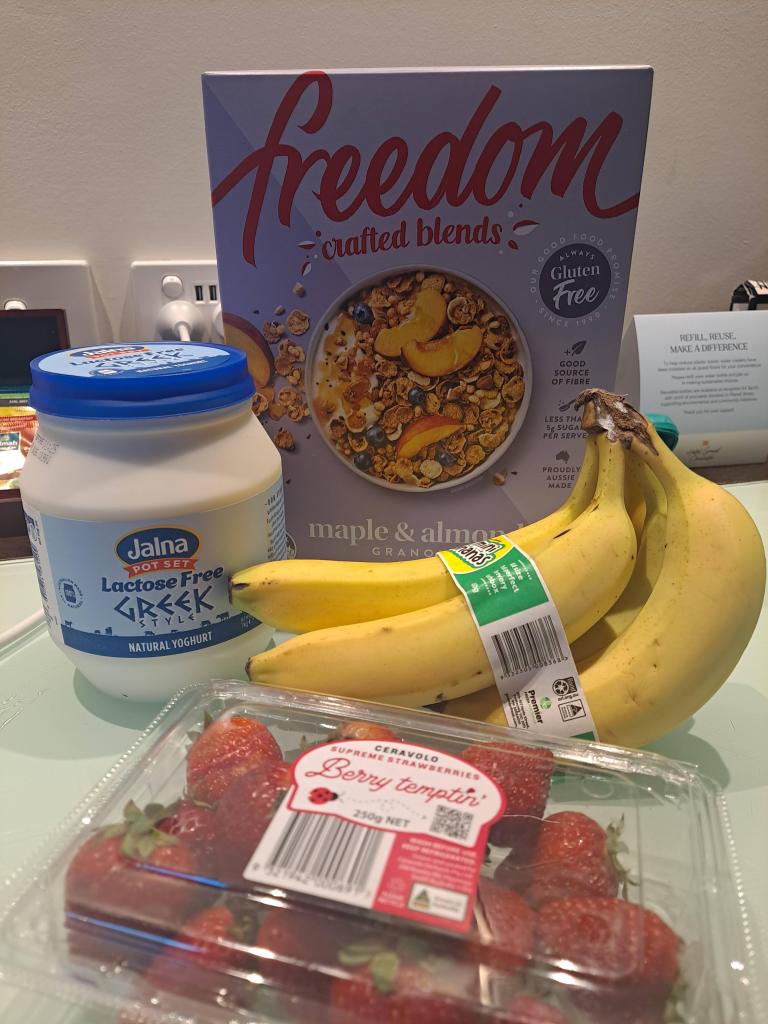
On a recent trip the ingredient list hadn’t made it on to the plane at all. The crew were brilliant though, they went through each meal option with me to check if anything might work for someone gluten and dairy free. The breakfast turned out to be scrambled eggs, so probably not safe, but rather than leaving me hungry they swapped it out for bananas and told me to come back after the meal service to see what snacks might suit me.
The point of the story? Advocate for yourself clearly and calmly, and more often than not the crew will go out of their way to help.
Managing the Risks around Flying with Food Allergies
Airline kitchens aren’t allergen-free environments, so cross-contamination is a possibility. This means you may need to check on the airline’s website or ask your travel agent if you can take your own food if this is a concern for you. For example on the Air New Zealand website they say you can bring your own food if the categories don’t fit and then they list some things to remember.
If you have a severe allergy, ask the airline if you can pre-board early so you have time to wipe down your seat, tray table, and seatbelt. It’s also worth asking whether they’ll make an announcement to nearby passengers, some airlines will, though it’s not guaranteed. If you’re travelling both with children and another adult, split up and send one person ahead to pre-board; they can wipe down the surfaces, put bags away and talk to the crew. It makes it easier when the rest of your group boards.
Finding options at the Airport
Use resources like our dining guide, Find Me Gluten Free or similar specific websites or local Facebook groups to locate airport restaurants and cafes offering suitable options but also bring snacks for the airport if your unsure.
What to do on the day of your flight
If your travelling internationally carry an allergy card, especially if it’s likely that the cabin crew wont be able to understand you. Have a card in the local language explaining your dietary restrictions to ensure clear communication.
Confirm your meal at check-in and again with cabin crew, they will usually walk the plane and confirm this upon boarding but if they don’t, mention it to the cabin crew so they know where you are sitting. This will help you ensure you get your meal.
If your special meal didn’t make it on board ask the cabin crew if they have any suitable snacks or parts of other meals. For example if your gluten free they may have fruit or yoghurt. If you are vegan or have a nut allergy there may be bread, cheese, noodles etc on board.
If you have multiple restrictions ask the crew to check the ingredients, they usually have a card with all the ingredients for all the meals so should be able to help you identify if something is safe.
What to Pack in Your Carry-On as a Backup
Always pack some non-perishable options items like nuts, gluten-free cereal bars, and dried fruits are good options. another great tip is a sandwich or backpacker style meal that you add boiling water to. But check security regulations, make sure that the snacks you bring comply with airline security regulations, especially concerning liquids and gels. Also know in advance what you need to declare when going through customs or biosecurity at the destination in some countries (Australia and New Zealand especially) bio-security is strict.
If you need anything like antihistamines, epinephrine, etc make sure you pack it in your carry on and if required have a doctor’s letter for it to help you get through security or customs.
Best Airlines for Gluten‑Free & Allergy‑Safe In‑Flight Meals
Some airlines are better than others, either in their special meal offerings or in the quality of the food served. If you have a choice of who you fly below are the airlines that people regularly rate for handling allergies and dietary restrictions. Click the links below to go through to specific special meal information for each airline.
Singapore Airlines: Known for excellent service, Singapore Airlines provides a variety of special meals including gluten free (GFML), lactose free (NLML), minimal allergen meal (MAMLA) and vegan (VGML) options. They have a reputation for accommodating dietary needs with care and precision.
Emirates: Offers a wide selection of special meals, including gluten free (GFML), vegetarian jain (VJML) and lactose free (NLML). They are recognized for their attention to detail and high-quality meal service.
Qatar Airways: Provides numerous special dietary options and is praised for catering to passengers with specific dietary requirements, including gluten free (GFML), lactose free (NLML) and kosher (KSML) needs.
Cathay Pacific: Cathay Pacific offer a range of special meal codes including low fat/low cholesterol (LFML) and gluten free (GFML), and are known for accommodating passengers with multiple restrictions (see the banana photo and story above).
Delta Air Lines: Offers gluten free (GFML) and vegan (VGML) options on many international flights. They are one of the U.S. airlines known for better catering to special dietary needs.
Air New Zealand: Offers a wide variety of special meals on long-haul flights, including vegetarian (VLML), vegan (VGML), gluten free (GFML),lactose free (NLML), and Diabetic (DBML) options, among others
China Southern: A popular choice from Australia and New Zealand for their competitive fares. Offers a range of options including vegetarian (VLML), lactose free (NLML), and religious meals such as kosher (KSML) and halal (MOML). Worth checking your specific route as meal quality and availability can vary.”
Qantas: Australia’s flagship carrier offers a comprehensive special meals offering on long-haul flights includes gluten free (GFML), lactose free (NLML), vegan (VGML) and diabetic (DBML) options among others. Their documentation is thorough and staff are generally well briefed on dietary requirements.
Lufthansa: Lufthansa has a well-regarded special meals offering covering gluten free (GFML), lactose free (NLML), vegan (VGML) and low sodium (LSML) options. Their allergen documentation is detailed and easy to find on their website, making pre-flight research straightforward.
British Airways: A major long-haul carrier with a thorough special meals offering includes gluten free (GFML), lactose free (NLML) and vegan (VGML) meals. British Airways are generally well regarded for dietary accommodation and their special meals page clearly outlines what’s available by route and fare class — worth checking before you book as availability can vary.
Additional Tips
Frequent Flyers: If you often fly with one airline, consider joining their frequent flyer program to facilitate meal preferences and get personalized service.
Advance Notification: While these airlines are reputed for their service, it’s crucial to notify them of your dietary restrictions at least 48 hours before your flight.
Check Specific Routes: Meal options can sometimes vary based on the route and duration of the flight, so it’s wise to double-check with the airline.
Final Tips Before You Fly
Flying with allergies or dietary restrictions can feel like a lot, especially multiple, but with the right prep, it becomes manageable, predictable, and even calm. A few last things to keep in mind:
Prep early, then let it go. Confirm your special meal, pack your safe snacks, and know your backup plan. After that, you’ve done your part.
Keep your tools handy. Your allergy card, key phrases, and snacks should be easy to grab when you need them.
Advocate for yourself. If something feels off, ask. You’re not being difficult — you’re keeping yourself safe.
Give yourself margin. Extra time, extra snacks, extra patience. Travel days are smoother when you’re not rushing.
Remember: you’re allowed to feel confident. You’ve prepared. You’ve got options. You can do this.
If you want everything in one place, from planning steps to communication tools to destination guides; our start here guide below, organises it all by level. It’s a great one to bookmark and come back to as you build confidence.
FAQ
How far in advance should I order a special meal?
At least 48 hours before departure to allow airlines to accommodate your needs. Then reconfirm at check-in.
What if airline meal doesn’t arrive on board
Ask the crew for safe alternatives, they usually have a card detailing the ingredients on all the meal so may be able to help you find a suitable alternative. Always pack snacks as a backup, just in case
What if I have multiple restrictions?
Most airlines can only accommodate one restriction, prioritise the one with the most serious consequences if accidentally consumed, when you are on the flight the crew usually have a card detailing the ingredients on all the meal so should be able to help you navigate this but if your restrictions have severe consequences, pack suitable snacks.
Which airlines are best for dietary restrictions
Singapore Airlines, Emirates, Qatar Airways and Cathay Pacific. But see our full rankings above for details.
Can I bring my own food on the plane?
Many airlines will let you take your own food on board, just check their website or call to confirm. For long haul flights I pack a small snack and a couple of backpacker meals that I can add water too. But see above for all the details.
Jo is the founder of Globally Sauced, a travel platform for dietary restricted travellers and is gluten and dairy free. When not outdoors or travelling, she loves to empower people with dietary restrictions so they can explore the world safely.
Globally Sauced offers verified restaurant recommendations, country-specific guides, food label / menu translations, and more downloadable resources for gluten-free, dairy-free, allergy-conscious and other dietary restricted travellers. Learn more at globallysauced.com
If you’re travelling to a new country and wondering how fluent you need to be, don’t stress. You probably don’t need as much as you might think, especially with the tools we have available, yes it all does help, but is it essential? It really depends, not only on how long you’re staying, but where your going, what you’ll be doing, and whether your trip involves specific needs (like allergies, medical issues, or solo travel).
But here’s the good news: you don’t need to be fluent to stay safe, polite, and confident. Locals really do appreciate the effort, even if your pronunciation is far from perfect. Think about the tourists you meet where you live and how much or little they seem to understand of your native tongue, a little really does go a long way.
So, how much do you really need?
Here’s a cheat sheet of how much you really should try an learn depending on your trip length, but as we mentioned initially it really depends on where, and how you’re travelling. Here’s some basic guidelines though:
Trip Type
Minimum Language Goal
Weekend city break
Polite phrases + allergy card
Two week holiday
Key phrases + food words
One month+ stay
Everyday language + local customs
Moving abroad
Ongoing learning & immersion
What about allergies or dietary restrictions?
If you’re like us, this means you can’t wing it. Knowing a few words or as a minimum a translated card saying what your food requirements are can literally be a lifesaver. You need to be able to explain your food needs clearly and often, in writing so the staff can go ask the chef. That’s where an allergy card in the local language can be a total lifesaver as well as having a good translation app to use as required.
Sometimes what you need may differ by country. For example if you’re travelling to Italy or Spain a well a well-pronounced phrase often does the job and you may not often pull out your allergy card.
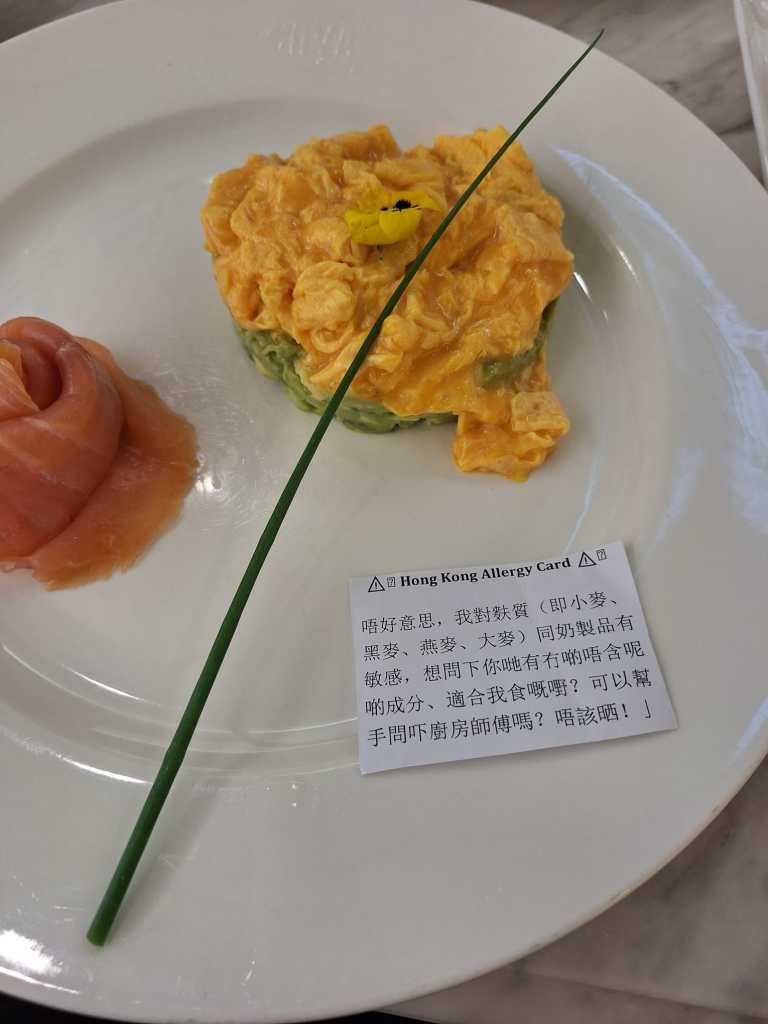
However travel to somewhere like Japan or China a written card is essential and something you use on a daily basis. I was in Japan and Hong Kong recently and my allergy card got used daily, often in conjunction with a translation app to clarify questions
A few well practised words can go a long way. Try to learn the following words.
Hello / Goodbye
Please / Thank you
Excuse me / Sorry
Yes / No
“Do you speak English?”
These cover most polite interactions and help you make a great impression. If you have the time or motivation learning a few more key phrases really can help but these are a fantastic foundation.
If you’re staying a bit longer or living abroad
If you’re away for more than a few days, knowing that little bit more really can help improve your experience, if this is you, it’s worth learning:
Numbers and basic directions
Common food phrases
Cultural etiquette (e.g., when to bow, when to tip, what not to say)
Apps like Duolingo, Memrise or our Travel Phrase Guide can help you pick up just enough to feel confident navigating menus, transport, and everyday interactions. Check out our recent blog post on How to Actually Learn a Language for Travel for advice on how to easily learn the basic phrases without paying for an app.
Final thoughts
You don’t need to speak perfectly. You just need the right words for your trip, and a bit of confidence. If you’re gluten-free, dairy-free, or navigating another restriction, your best first step is this: Create your free allergy card now
Because food shouldn’t be the hardest part of your trip.
Jo is the founder of Globally Sauced, a travel platform for dietary restricted travellers and is gluten and dairy free. When not outdoors or travelling, she loves to empower people with dietary restrictions so they can explore the world safely.
Globally Sauced offers verified restaurant recommendations, country-specific guides, food label / menu translations, and more downloadable resources for gluten-free, dairy-free, allergy-conscious and other dietary restricted travellers. Learn more at globallysauced.com
Ever found yourself jet-lagged, starving, and staring down a menu you can’t read? And worse, not a clue whether anything’s safe for you to eat? When you’ve got dietary restrictions, travel can be a bit of a minefield. But it doesn’t have to be. Learning how to advocate for yourself is a total game-changer, and just like any skill, it gets easier with practice.
Whether you’re gluten free, have food allergies, or follow a special diet, there’s one thing that can make or break your trip: confidence. The good news? You can start building it right now, from home. Grab a cuppa and have a read and don’t forget to review the practical examples later in the article.
Travelling should be about experiencing the world, not stressing over your next meal. But if you’re managing food allergies or intolerances, even a simple lunch abroad can feel overwhelming.
That’s why building advocacy skills at home is so powerful. The more you practise asking questions, checking ingredients, and speaking up, the easier it becomes to do it when it really counts — like at a tiny café in rural Italy or a market stall in Thailand.
This isn’t just about avoiding risk, it’s about reclaiming the joy of eating while you travel.
Practical Steps to Start Today
Practise with Your Travel Companions
Before your trip, go out to eat somewhere you know is safe. Use it as a rehearsal, ask your usual questions, double-check ingredients, and notice how your friends react. It’s a chance for them to see what dining out looks like from your perspective.
The more familiar they are with your process, the better they can support you on the road
Get Comfortable with Menus and Asking Questions
Pull up menus from restaurants on Google Maps or TripAdvisor, local and international — and practise reading them aloud. Rehearse how you’d ask about cross-contact or cooking methods.
You’re not aiming for perfection. You’re training your brain to stay calm, even when you’re hangry and jet-lagged in a foreign country.
Our menu review assistant can help you identify what might be suitable for you based on your restrictions, fantastic when ‘Gluten Free’ or ‘Vegan’ may not mean the same thing everywhere but remember it isn’t a replacement for asking questions.
Use positive, open-ended questions
The way you frame your questions matters. Instead of asking, “Do you have anything I can eat?” try:
“I’m gluten and dairy free — what would you recommend for me?”
This approach invites conversation, not a quick no. I asked this at a restaurant in Banff and ended up with a delicious off-menu lunch that even my gluten-loving family ordered. Win-win.
Roleplay Real Situations
Grab a mate and run through some mock scenarios, ordering, asking about allergens, using an allergy card. It feels awkward at first, but it builds fluency and reduces panic when you’re actually abroad. Later in this article we’ve got some examples to get you started.
Don’t forget to ask questions of your accommodation!
Food advocacy isn’t just for restaurants. If your hotel or Airbnb includes breakfast, reach out in advance and ask if they can accommodate your needs.
A brilliant example? A traveller staying at W New York – Union Square was told breakfast was just “coffee and pastries”. They asked about gluten free options — and the hotel sent an Uber to pick up warm cinnamon bun sticks from Modern Bread and Bagel. Magic.
Moral of the story: if you don’t ask, you don’t get.
Tools That Make Advocacy Easier
Food advocacy doesn’t mean doing it all in your head. Use your tech and tools:
Even a few words like “I have a food allergy” or “gluten free” can go a long way. Locals appreciate the effort, and it shows you take your needs seriously.
In many countries, restaurants are legally required to provide allergen info or accommodate requests. Don’t be afraid to be polite but assertive. And if something doesn’t feel right? You’re always allowed to walk away.
Your health isn’t negotiable.
Quick Tips to Improve Your Advocacy Skills
Watch videos or tutorials on communicating allergies at restaurants
Join online communities or follow people on Instagram to find out how other people handle ordering safely abroad
Keep a journal of your questions and responses, note what worked or didn’t
Celebrate small wins — each successful order abroad builds your confidence for next time!
With practice, advocacy becomes second nature, turning stressful meal moments into enjoyable experiences — wherever your adventures take you.
Practical Examples
We’ve included a few scenario’s to help you practice your advocacy skills, they get more challenging as you work your way through them.
Scenario 1: The Classic Order
You: “Hi, I’m gluten and dairy free. What dishes would you recommend for me?”
Staff: “We have the grilled chicken and a salad — no cheese or bread.”
You: “Thanks! Could you confirm the dressing doesn’t have dairy?”
Scenario 2: Allergy Card Power
You: Shows allergy card “Hi, this card explains my dietary needs. Could you please check with the chef?”
Staff: “Of course, let me check with the kitchen.”
Scenario 3: Cross-Contact Clarity
You: “Can you tell me if this dish is prepared separately to avoid gluten contamination?”
Staff: “Yes, we use separate utensils for gluten-free orders.”
You: “Great, thank you”
Scenario 4: When Staff Seem Uncertain
You: “Hi, I have a severe gluten and dairy allergy. Can someone confirm safe options?”
Staff: “I’m not sure, we don’t usually get these requests.”
You: “No worries, could you ask the chef or manager?”
Tip: Stay calm, polite, and emphasize the seriousness of your allergy. Offering to wait shows you respect their process but also signals it’s important.
Scenario 5: When the Fryers Are Shared
You: “Can you please tell me if the fries are cooked in a shared fryer with gluten-containing foods?”
Staff: “Yes, they are.”
You: “Thanks — is there another side that’s safe?”
Tip: If the risk is unavoidable, pivot quickly to alternatives rather than insisting on something risky. Being flexible while firm helps you stay safe and maintain good rapport.
Final Thoughts: It Gets Easier
Speaking up about your food needs can feel uncomfortable at first. But every time you practise, you build confidence, that travels with you. The goal isn’t just to stay safe — it’s to enjoy food again, even when you’re thousands of miles from home.
FAQ
What if I feel awkward asking questions at home, won’t it be easier when I’m on holiday?
Honestly? Probably not. If you’re not comfortable speaking up in your own language, it gets even harder with the pressure of travel, unfamiliar menus, or language barriers. Start small, one clear question at your local café can build confidence for the big stuff later.
I don’t want to be seen as “difficult” — how do I advocate without causing a fuss?
Advocating for yourself doesn’t mean being confrontational. It’s about being clear, calm, and kind — and setting boundaries around your health. Most staff want to help, especially when you approach them with confidence and respect.
What if the staff don’t understand me, or dismiss my needs?
That can happen, and it’s frustrating, but it’s not the end of the road. Use tools like allergy cards or translation apps to help clarify. If you’re still unsure, it’s okay to walk away. Your health matters more than being polite to someone who isn’t listening.
Do I really need to practise? I’ve got an allergy card — isn’t that enough?
Allergy cards are amazing, but they’re just one part of your toolkit. Being able to explain your needs, ask questions, and calmly redirect when needed will help you feel more confident, especially when things don’t go to plan.
What if I get emotional or freeze in the moment?
That’s totally normal — especially when food feels unsafe or you’re already hungry, tired, or overwhelmed. That’s why practice matters. Role-play at home. Write down what works. And give yourself grace. The more you do it, the easier it becomes.
Jo is the founder of Globally Sauced, a travel platform for dietary restricted travellers and is gluten and dairy free. When not outdoors or travelling, she loves to empower people with dietary restrictions so they can explore the world safely.
Globally Sauced offers verified restaurant recommendations, country-specific guides, food label / menu translations, and more downloadable resources for gluten-free, dairy-free, allergy-conscious and other dietary restricted travellers. Learn more at globallysauced.com
The short answer? Both. But they do different jobs, and knowing which to reach for in the moment makes all the difference between a confident meal and a stressful one.
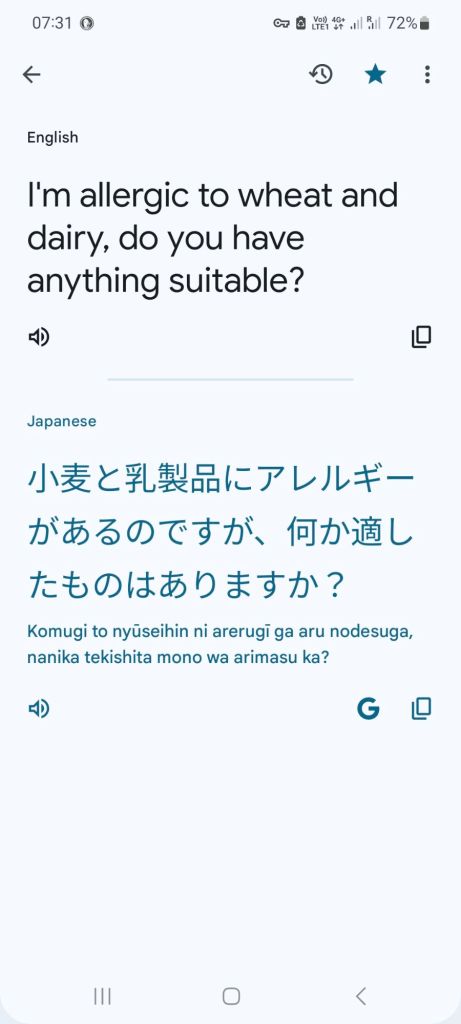
An allergy card is your sit-down restaurant tool — clear, physical, and impossible to misread in a noisy kitchen handoff. A translation app is your label scanner, your follow-up question, your backup when the card isn’t quite enough. Together they’re more effective than either one alone.
I carry both every trip. When I was in Japan I mainly used the translation app to show my allergies in conversation, with a phrase saved as a favourite so I could pull it up instantly — but having the card in my bag was a genuine confidence boost. In a busy restaurant when I needed to hand something to a chef, the card earned its place immediately.
Here’s how to decide which to use, when to use them together, and how to get the most out of both.
Why This Matters for Travelers with Dietary Restrictions
For many travelers with dietary restrictions, even simple meals can turn into high-stakes situations. Using the right tools helps reduce stress and make dining abroad less of a gamble and more of a joy. Whether you’re gluten-free, allergic to nuts, or avoiding pork for religious reasons, preparation leads to peace of mind. Here’s how to decide when to choose and when using both together is your best bet.
Benefits of Using an Allergy Card
Allergy cards are ideally physical and often laminated and written in the local language. They clearly stating your dietary restrictions, allergies, or intolerance’s.
We often include food commonly found locally that you can eat, very useful when your allergies aren’t common in that country. They’re best used when:
Ordering at a sit-down restaurant: Handing over a pre-written card is clear, polite, and gives staff time to read carefully. If they need to go away and ask the kitchen its more convenient than the staff walking off with your phone
You’re anxious or unsure of pronunciation: If you’re worried about mispronouncing ingredients (like “gluten” in Japanese), a well-written card avoids confusion.
Your allergy is severe or life-threatening: A translation app might miss nuance. A properly crafted allergy card helps eliminate ambiguity.
If using a machine translated card where possible verify it with a native speaker or a different tool to check it says what you’re expecting it to say.
Reading labels in store: Use the camera feature to scan food packaging for allergens.
Quick, informal interactions: When you just need to ask “Is this dairy-free?”
Aid communication: Translate what the person your talking to is saying.
Languages with widely available support: In places like Spain or Germany, translation apps tend to be more accurate and reliable.
Warning: Be cautious with voice or instant translation in fast-paced situations. Auto-translation can sometimes miss context, especially with allergy-specific terms
When to Use Both an Allergy Card and an App
In many situations, using both tools together is the safest and most effective approach and is similar to what many of us do at home:
Show your allergy card first to establish the seriousness of your restriction.
Then use your translation app for follow-up questions, confirming ingredients or preparation methods.
For example:
You try to ask the waitress at a a cafe in Barcelona if the fryer is separate and the breadcrumbs are gluten free but it doesn’t quite make sense
You show her your gluten allergy card. They nod but you’re still not confident the fryer is separate.
You then use a translation app to ask, “Is the fryer separate?” for extra clarity.
Whether you’re managing coeliac disease, food allergies, or religious dietary preferences, communication is key. Think of allergy cards as your reliable, go-to safety tool, and translation apps as your flexible, on-the-fly assistant. Together, they make an unbeatable team for safe and stress-free travel.
Summary Comparison Table
Feature
Allergy Card
Translation App
Offline use
Always works offline
Generally available offline but you need to download the language
Ease of use
Show and go
May take time to become comfortable with the app
Accuracy
Can be machine or professionally translated
Machine translation
Cultural fit
Restaurant-ready
Good for casual conversations
Cost
Free if you DIY or paid for a card
Mostly free
Navigating food restrictions abroad isn’t always easy, but with the right mix of tools, you can enjoy amazing food and stay safe. Try practicing with your allergy card before your trip, and make sure your translation app works offline. It’s a small investment in your health that can make a big difference on the road.
Yes, apps like Google Translate and Papago support offline downloads so are great if you wont have internet access
Are allergy translation cards accepted in restaurants
Yes, just make sure you get the right level of detail so that you can be reassured you are understood while not saying too much.
Do translation apps cost money
Most are free (but Google, Papago); professional-grade apps like DeepL Pro are paid
Which is the best translation app to use
Check out our review of some of the popular Translation Apps, but in all honesty, as long as you know how to use it confidently and can use it to access the information you need when you need it you’ll be fine. We recommend practicing before you go in the international foods aisle or anywhere food with a label in a foreign language is to be found.
Jo is the founder of Globally Sauced, a travel platform for dietary restricted travellers and is gluten and dairy free. When not outdoors or travelling, she loves to empower people with dietary restrictions so they can explore the world safely.
Globally Sauced offers verified restaurant recommendations, country-specific guides, food label / menu translations, and more downloadable resources for gluten-free, dairy-free, allergy-conscious and other dietary restricted travellers. Learn more at globallysauced.com
We use cookies to improve your experience on our site. By using our site, you consent to cookies.
This website uses cookies
Websites store cookies to enhance functionality and personalise your experience. You can manage your preferences, but blocking some cookies may impact site performance and services.
Essential cookies enable basic functions and are necessary for the proper function of the website.
Name
Description
Duration
Cookie Preferences
This cookie is used to store the user's cookie consent preferences.
30 days
These cookies are needed for adding comments on this website.
Name
Description
Duration
comment_author
Used to track the user across multiple sessions.
Session
comment_author_email
Used to track the user across multiple sessions.
Session
comment_author_url
Used to track the user across multiple sessions.
Session
Google reCAPTCHA helps protect websites from spam and abuse by verifying user interactions through challenges.
Name
Description
Duration
_GRECAPTCHA
Google reCAPTCHA sets a necessary cookie (_GRECAPTCHA) when executed for the purpose of providing its risk analysis.
179 days
Google Tag Manager simplifies the management of marketing tags on your website without code changes.
Name
Description
Duration
cookiePreferences
Registers cookie preferences of a user
2 years
td
Registers statistical data on users' behaviour on the website. Used for internal analytics by the website operator.
session
These cookies are used for managing login functionality on this website.
Name
Description
Duration
wordpress_logged_in
Used to store logged-in users.
Persistent
wordpress_sec
Used to track the user across multiple sessions.
15 days
wordpress_test_cookie
Used to determine if cookies are enabled.
Session
WP Consent API is a plugin that standardizes the communication of accepted consent categories between plugins.
Name
Description
Duration
wp_consent_statistics-anonymous
4 weeks
wp_consent_statistics
4 weeks
wp_consent_preferences
4 weeks
wp_consent_marketing
4 weeks
wp_consent_functional
It records whether you have allowed or denied the use of functional cookies (e.g., remembering login, language, or shopping cart items).
4 weeks
hidecta
It stores whether a user has accepted or rejected the website's cookie policy, allowing the site to remember this preference so it does not have to ask again on every page load. This cookie is crucial for "cookie control" or ensuring the site complies with data privacy laws by remembering user choices regarding tracking and analytics.
Session
wp_consent_{category}
Stores your consent preference for a specific cookie category (e.g., functional, marketing). It ensures consistent consent management across WordPress plugins supporting the WP Consent API.
30 days
Statistics cookies collect information anonymously. This information helps us understand how visitors use our website.
Google Analytics is a powerful tool that tracks and analyzes website traffic for informed marketing decisions.
Used to determine whether a user is included in an A / B or Multivariate test.
18 months
_ga
ID used to identify users
2 years
_gali
Used by Google Analytics to determine which links on a page are being clicked
30 seconds
_ga_
ID used to identify users
2 years
_gid
ID used to identify users for 24 hours after last activity
24 hours
_gat
Used to monitor number of Google Analytics server requests when using Google Tag Manager
1 minute
_gac_
Contains information related to marketing campaigns of the user. These are shared with Google AdWords / Google Ads when the Google Ads and Google Analytics accounts are linked together.
90 days
__utma
ID used to identify users and sessions
2 years after last activity
__utmt
Used to monitor number of Google Analytics server requests
10 minutes
__utmb
Used to distinguish new sessions and visits. This cookie is set when the GA.js javascript library is loaded and there is no existing __utmb cookie. The cookie is updated every time data is sent to the Google Analytics server.
30 minutes after last activity
__utmc
Used only with old Urchin versions of Google Analytics and not with GA.js. Was used to distinguish between new sessions and visits at the end of a session.
End of session (browser)
__utmz
Contains information about the traffic source or campaign that directed user to the website. The cookie is set when the GA.js javascript is loaded and updated when data is sent to the Google Anaytics server
6 months after last activity
__utmv
Contains custom information set by the web developer via the _setCustomVar method in Google Analytics. This cookie is updated every time new data is sent to the Google Analytics server.
2 years after last activity
Marketing cookies are used to follow visitors to websites. The intention is to show ads that are relevant and engaging to the individual user.
Facebook Pixel is a web analytics service that tracks and reports website traffic.