

If you’re travelling to a new country and wondering how fluent you need to be, don’t stress. You probably don’t need as much as you might think, especially with the tools we have available, yes it all does help, but is it essential? It really depends, not only on how long you’re staying, but where your going, what you’ll be doing, and whether your trip involves specific needs (like allergies, medical issues, or solo travel).
But here’s the good news: you don’t need to be fluent to stay safe, polite, and confident. Locals really do appreciate the effort, even if your pronunciation is far from perfect. Think about the tourists you meet where you live and how much or little they seem to understand of your native tongue, a little really does go a long way.
So, how much do you really need?
Here’s a cheat sheet of how much you really should try an learn depending on your trip length, but as we mentioned initially it really depends on where, and how you’re travelling. Here’s some basic guidelines though:
| Trip Type | Minimum Language Goal |
|---|---|
| Weekend city break | Polite phrases + allergy card |
| Two week holiday | Key phrases + food words |
| One month+ stay | Everyday language + local customs |
| Moving abroad | Ongoing learning & immersion |
What about allergies or dietary restrictions?
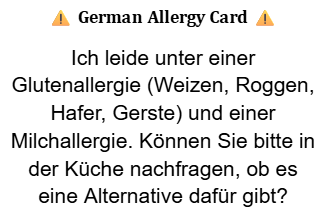
If you’re like us, this means you can’t wing it. Knowing a few words or as a minimum a translated card saying what your food requirements are can literally be a lifesaver. You need to be able to explain your food needs clearly and often, in writing so the staff can go ask the chef. That’s where an allergy card in the local language can be a total lifesaver as well as having a good translation app to use as required.

Sometimes what you need may differ by country. For example if you’re travelling to Italy or Spain a well a well-pronounced phrase often does the job and you may not often pull out your allergy card.
However travel to somewhere like Japan or China a written card is essential and something you use on a daily basis. I was in Japan and Hong Kong recently and my allergy card got used daily, often in conjunction with a translation app to clarify questions
And yes, we’ve made that part easy, create your Free Allergy Card customised to your restrictions, read up on translation apps and learn when its best to use each.
If you’re on a short trip…
A few well practised words can go a long way. Try to learn the following words.
- Hello / Goodbye
- Please / Thank you
- Excuse me / Sorry
- Yes / No
- “Do you speak English?”
These cover most polite interactions and help you make a great impression. If you have the time or motivation learning a few more key phrases really can help but these are a fantastic foundation.
If you’re staying a bit longer or living abroad
If you’re away for more than a few days, knowing that little bit more really can help improve your experience, if this is you, it’s worth learning:
- Numbers and basic directions
- Common food phrases
- Cultural etiquette (e.g., when to bow, when to tip, what not to say)
- Apps like Duolingo, Memrise or our Travel Phrase Guide can help you pick up just enough to feel confident navigating menus, transport, and everyday interactions. Check out our recent blog post on How to Actually Learn a Language for Travel for advice on how to easily learn the basic phrases without paying for an app.
Final thoughts
You don’t need to speak perfectly. You just need the right words for your trip, and a bit of confidence. If you’re gluten-free, dairy-free, or navigating another restriction, your best first step is this: Create your free allergy card now
Because food shouldn’t be the hardest part of your trip.

Jo is the founder of Globally Sauced, a travel platform for dietary restricted travellers and is gluten and dairy free. When not outdoors or travelling, she loves to empower people with dietary restrictions so they can explore the world safely.
Globally Sauced offers verified restaurant recommendations, country-specific guides, food label / menu translations, and more downloadable resources for gluten-free, dairy-free, allergy-conscious and other dietary restricted travellers. Learn more at globallysauced.com