

When you travel, understanding local food norms is always useful. What do people actually eat here? What’s considered off-limits? Are restaurants open to modifications, or is the menu the menu? These questions matter for any traveller. But if you’re navigating dietary restrictions, they matter a lot more.
One layer that often gets overlooked is religion. The dominant faith in a country or region shapes what’s served, how food is prepared, and which ingredients are considered everyday staples versus the things nobody touches. That’s not just cultural context, it’s practical information you can use, it shapes entire food industries, from street food vendors to your local Indian restaurant or international fast food chains.
I see this come up online all the time. Someone asks whether Japan is safe for vegans, someone says yes, and then the conversation unravels as more people comment because fish sauce and dashi (a stock made from dried fish) are foundational to Japanese cooking, and many Japanese Buddhists who don’t eat meat still consider fish entirely acceptable. Two people using the word “vegan” can mean completely different things depending on where in the world they are and what shaped that food culture.
That’s what this post is about. Not telling you which religion is “best” for your restrictions, but helping you understand how local religious food customs intersect with what you can and can’t eat, so you can plan more intelligently, ask better questions, and occasionally discover that the food culture you’re stepping into works surprisingly well in your favour.
A few things to note before we get into it. Religious practice varies enormously within any faith, across regions, generations, and individuals. What’s standard in one community may not apply in the next town over. This is a starting point for understanding, not a rulebook. And as with everything, you still need to advocate for yourself and ask questions, use your allergy card, so you can be sure the food you’re being served is suitable for you.
Islam and Halal Food Culture
Islam prohibits pork and alcohol, and requires that meat be slaughtered in a specific way to be considered halal. In Muslim-majority countries and communities, these rules shape menus at every level, from street food stalls to restaurants.
Where this helps you
If you avoid pork, travelling through Muslim-majority countries like Indonesia, Malaysia, Morocco, Turkey, or much of the Middle East removes a lot of the guesswork. Pork simply isn’t on most menus, and you’re unlikely to encounter it as a hidden ingredient in the way you might in, say, Germany or parts of East Asia. Lard, which can sneak into pastries and cooking fats in other parts of the world, is also largely absent.
Gelatine is another hidden ingredient worth knowing about. Most conventional gelatine is pork-derived and appears in unexpected places like sweets, marshmallows, and some medications. In halal food environments, gelatine is either absent or derived from beef or fish, which matters for anyone avoiding pork-derived products.

Alcohol restrictions mean that dishes cooked in wine or beer, which can catch gluten-free travellers off guard in European cuisines, are rarely a concern.
Vegetarian and plant-based dishes are common, particularly in street food and home-style cooking, so if you’re avoiding meat for any reason, you’ll generally find options.
Middle Eastern and halal food is pleasantly keto-friendly. Meat is central while dairy features in some regions, bread however is present but not always dominant. So if you are following a keto diet you might be pleasantly surprised.
Where it gets more complicated:
Halal certification covers meat preparation, but it doesn’t speak to cross-contamination with gluten, dairy, or other allergens. A halal kitchen isn’t automatically a safe kitchen for someone with coeliac disease or a nut allergy. Wheat is used extensively across Middle Eastern, South Asian, and North African cuisines, often in ways that aren’t obvious: in sauces, as a thickener, in spice blends. Dairy is also widespread, with yoghurt, cream, and butter appearing regularly.
If you’re gluten-free and dairy-free in a halal-dominant food culture, both foods feature heavily so you will need to ask questions and do your research. Our post on Gluten Free in the Middle East and Africa is a great starting point.
Sesame is a frequent fixture in Middle Eastern cooking, tahini and halva are staples. So cross contamination could be a concern as Halal environments don’t remove sesame.
Judaism and Kosher Food Culture
Kosher dietary laws are detailed and specific. Pork and shellfish are prohibited. Meat and dairy cannot be mixed or eaten at the same meal, and separate utensils and preparation surfaces are required for each. Meat must be slaughtered and prepared in a specific way to be considered kosher.
I came across this unexpectedly while searching for gluten-free options in Singapore. One of the results that kept coming up was Aniba, a kosher restaurant. I wasn’t looking for kosher, I was looking for somewhere my mum could eat safely, but the meat and dairy separation meant it was solving the problem without me even realising it. That’s exactly the kind of overlap this post is about.
Where this helps you
The meat and dairy separation is the most interesting angle for travellers with dietary restrictions, particularly those who are dairy-free. In a strictly kosher restaurant, a meat meal will contain no dairy at all, by law rather than by preference. That means no butter in sauces, no cream in soups, no cheese on top. For dairy-free travellers, a certified kosher restaurant can be one of the safest places to eat in cities with a significant Jewish community, precisely because the rules are structural rather than dependent on a chef’s memory.
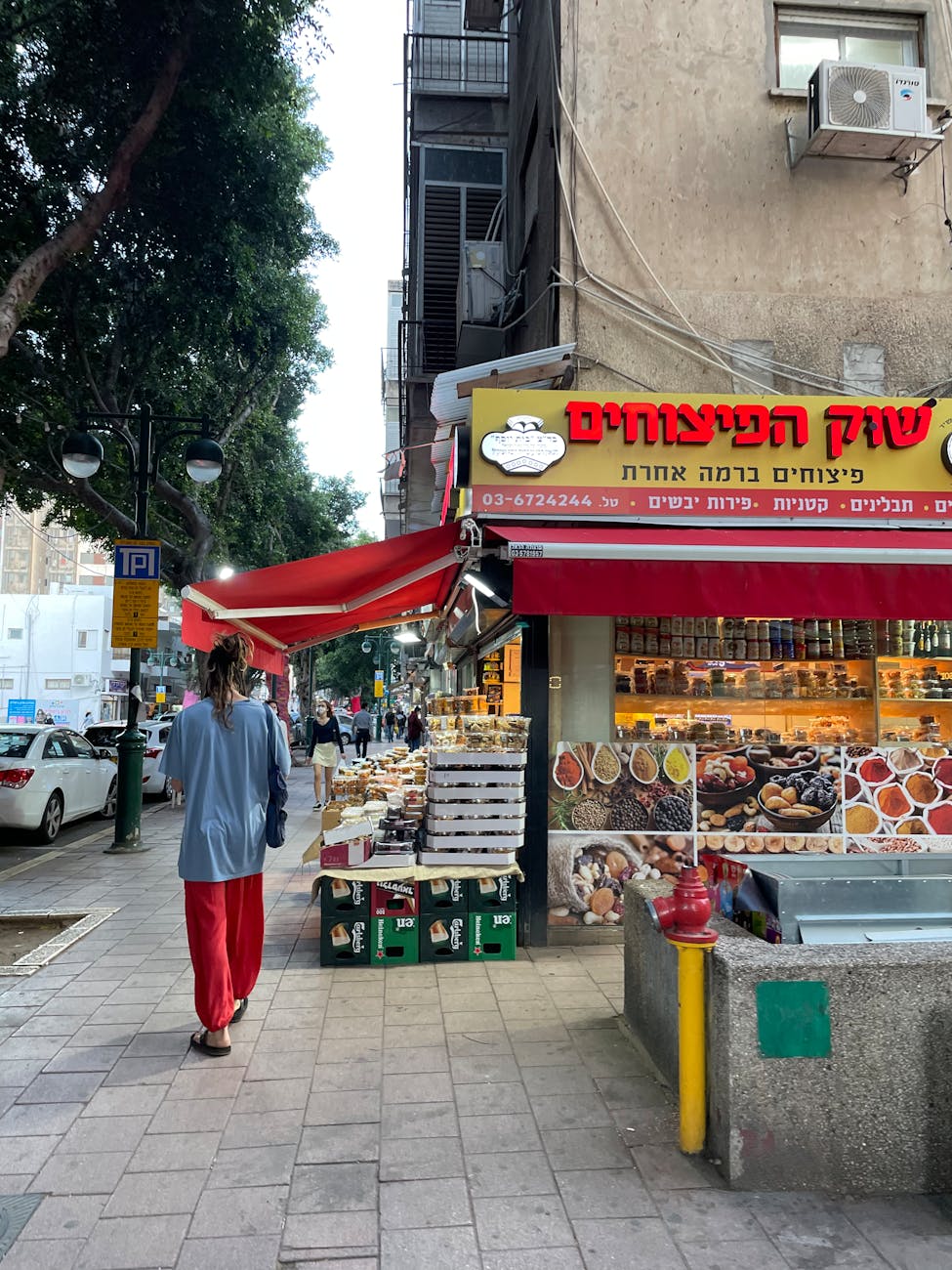
Israel has notably strong allergen labelling culture, partly influenced by the requirements of kosher certification and partly due to broader food regulation. Gluten-free options are widely available, and ingredient transparency tends to be higher than in many other countries.
In cities like New York, Paris, Buenos Aires, and Melbourne, kosher-certified restaurants and delis can be worth knowing about if you’re navigating multiple restrictions, especially a dairy-free and gluten-free combination.
Where it gets more complicated
A dairy meal in a kosher restaurant is the flip side. Dairy-only menus can be heavy on cheese, cream, and butter, so if you’re dairy-free, you need to ask which type of menu you’re looking at before assuming it’s safe.
Kosher certification also doesn’t cover gluten or other common allergens beyond the meat and dairy separation. Wheat is a staple in Jewish baking and cooking traditions, so if you’re gluten-free you will need to ask questions.
Traditional Jewish cooking, particularly in Sephardic and Middle Eastern Jewish communities, features nuts prominently in both savoury dishes and sweets. Halva, nut-based pastries, and almond-heavy desserts are common, so if you’re managing a nut allergy, kosher restaurants and Jewish delis aren’t the straightforward option they might be for dairy-free travellers.
Sesame is extremely common in Jewish cooking. Tahini and halva appears constantly. Kosher environments don’t remove sesame at all and may also be harder to avoid.
Hinduism and Vegetarian Food Culture
Hinduism doesn’t have a single unified dietary code, but a significant proportion of Hindus are vegetarian, and beef is avoided across the faith due to the sacred status of cows. In practice, this shapes food culture across India, Nepal, Bali, and parts of Sri Lanka in ways that are immediately useful for certain travellers.
I learned the flip side of this without leaving home. My Indian colleagues regularly share their lunches, and the food looks and smells incredible. But it also almost always contains ghee or butter, it’s so embedded in the cuisine that it doesn’t always register as a dairy ingredient the way butter or cream does. That holds true whether you’re eating at a colleague’s desk, at an Indian restaurant down the road, or travelling through India itself. Understanding this before you arrive, or before you accept that very generous lunch offer, saves a lot of awkward moments.
Where this helps you
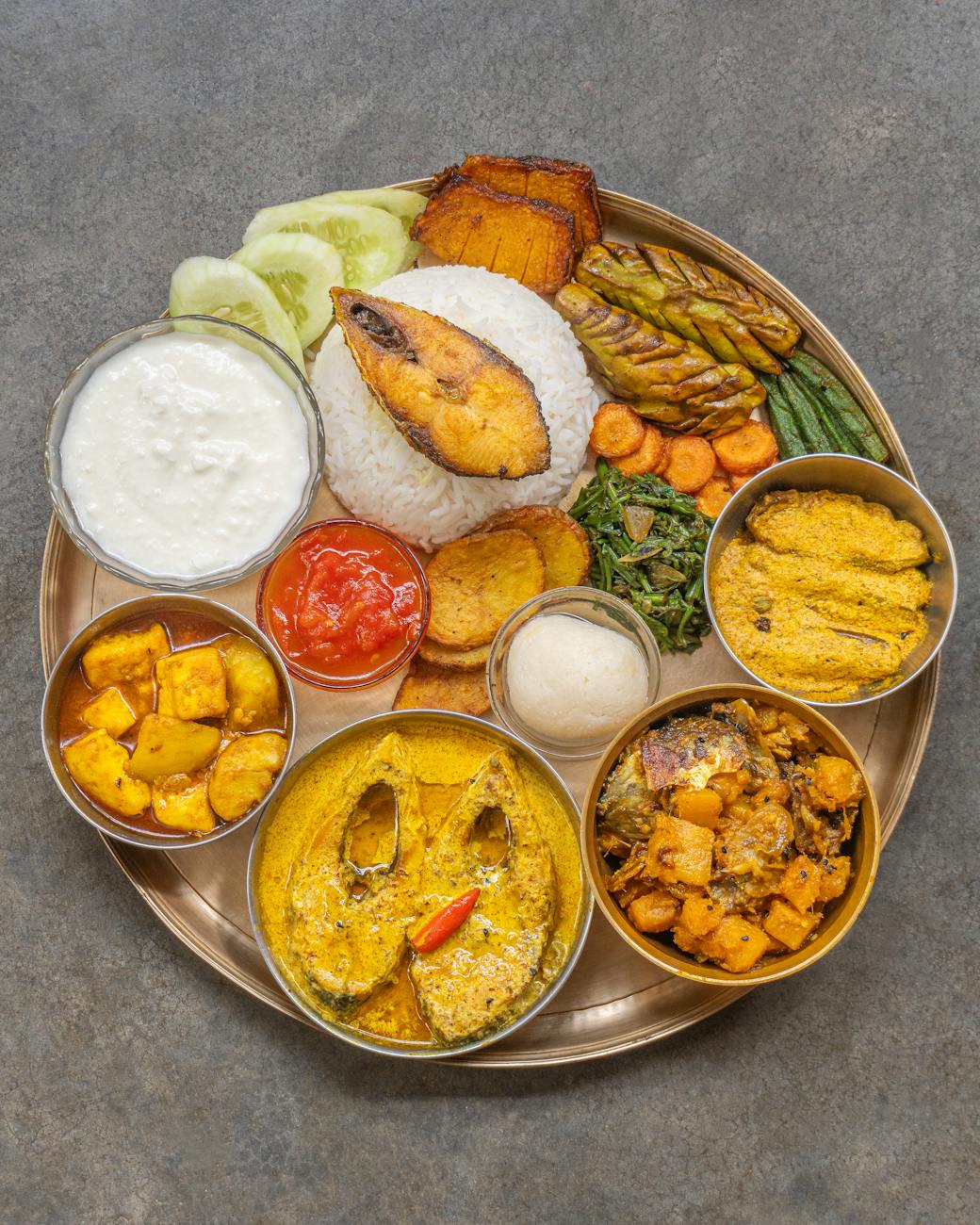
India has one of the most developed vegetarian food cultures in the world. Meat-free options aren’t an afterthought, they’re often the main event. In many regions, entire restaurants are fully vegetarian, and the variety is extraordinary. If you’re vegetarian, plant-based, or avoiding meat for any reason, India is one of the more straightforward destinations in the world for finding food that works.
Jain communities, which follow an even stricter form of vegetarianism rooted in non-violence (more on this below), have influenced restaurant culture in cities like Mumbai and Ahmedabad to the point where you’ll often see “Jain option available” on menus. These kitchens tend to be extremely careful about cross-contact with meat.
Where it gets more complicated
“Vegetarian” in India almost always includes dairy, and lots of it. Ghee (clarified butter) is used extensively in cooking, often invisibly. It goes into dal, rice dishes, rotis, and curries that don’t look dairy-heavy on the surface. Paneer (a fresh cheese) appears throughout the menu. Yoghurt is used as a marinade, a sauce base, and a condiment. If you’re dairy-free, vegetarian-heavy food cultures can actually be more challenging than they first appear, because dairy is so embedded in the cooking that it’s not always flagged or even noticed.
Eggs are another nuance. “Vegetarian” in India often excludes eggs, but this isn’t universal, and it can vary by region and restaurant. If you avoid eggs, don’t assume they’re excluded just because the menu is labelled vegetarian.
For gluten-free travellers, wheat is everywhere in Indian cooking: in roti, naan, paratha, and many snack foods. Rice-based dishes are safer ground, but sauces and spice blends can contain wheat flour as a thickener.
Buddhism and Vegetarian Food Culture
Buddhist dietary practice varies significantly by tradition and country. In many East and Southeast Asian Buddhist traditions, monks and devout practitioners follow a vegetarian or vegan diet. Some traditions also avoid pungent vegetables, particularly garlic, onion, leeks, chives, and spring onion, which are believed to stimulate the senses in ways considered incompatible with meditation.
If you’re heading to Japan check out Why Japan Handles Food Allergies Differently to the West, it explains Japanese food culture, labelling and more.
Where this helps you
In countries with strong Buddhist food traditions, like Taiwan, South Korea, and parts of China, you’ll find dedicated Buddhist vegetarian restaurants that serve food free from meat, eggs, and often dairy. These can be genuinely useful for people navigating multiple restrictions, because the kitchens are set up around plant-based cooking rather than adapting meat-based dishes on request.
Temple food in Japan, known as shojin ryori, is a beautifully developed vegetarian cuisine with no meat, no fish, and no pungent vegetables. It’s not widely available outside temples and specialist restaurants, but it exists, and it’s worth knowing about. For this same reason people following a low-FODMAP diet may be in luck with temple food, although its still worth checking in advance before booking the stay.
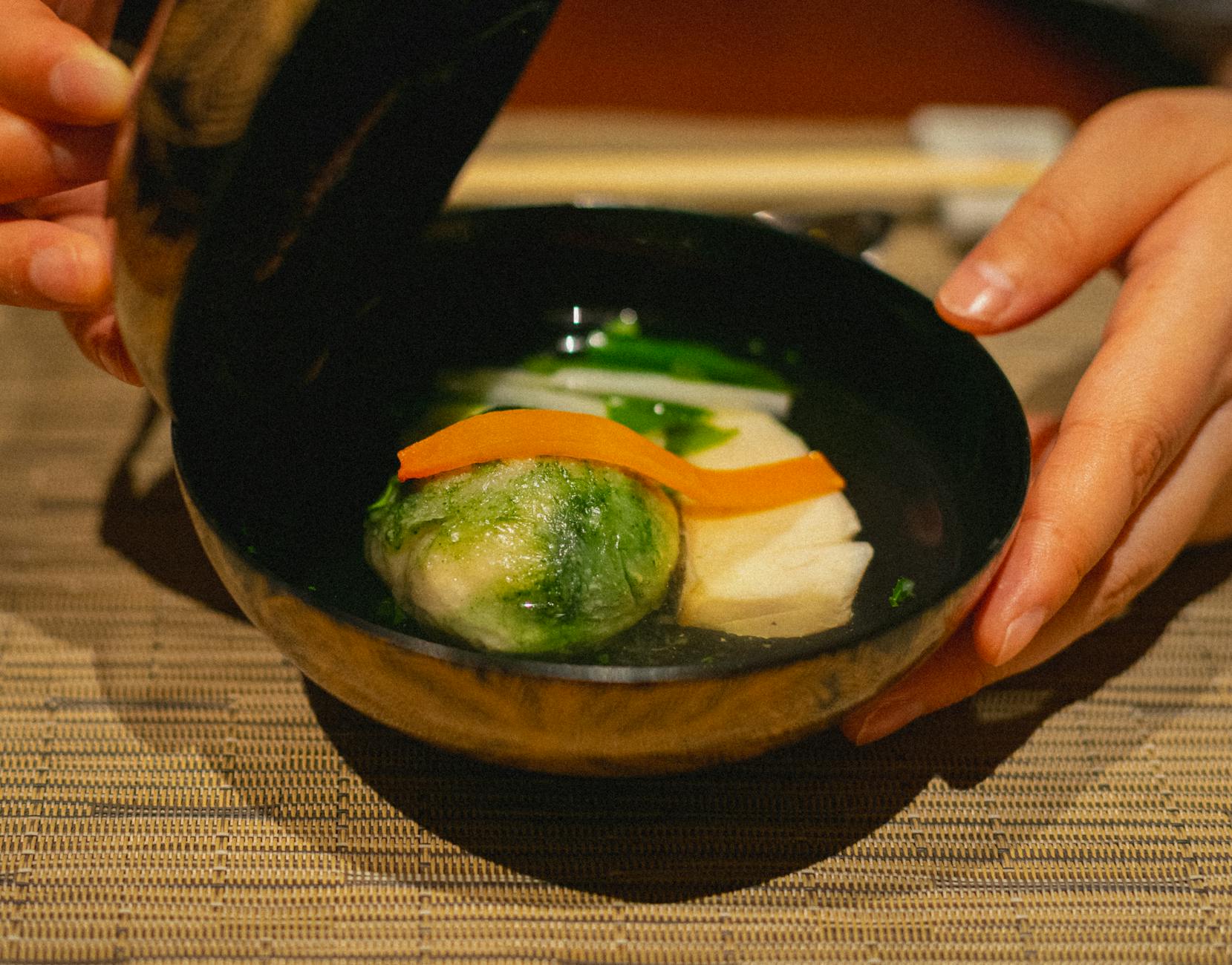
Some Buddhist vegetarian restaurants, particularly in Taiwan and South Korea, also exclude eggs as well as meat and dairy, making them worth investigating if you’re managing an egg allergy or intolerance. However this isn’t universal across Buddhist practice, so it needs confirming rather than assuming.
Where it gets more complicated
This is where the Japan vegan question I mentioned at the start becomes real. Japanese Buddhism doesn’t uniformly exclude fish. Dashi, the stock that forms the base of enormous amounts of Japanese cooking, is typically made from kombu (seaweed) and katsuobushi (dried bonito, which is fish). Miso soup, many sauces, and seemingly simple dishes often contain dashi. A Japanese cook who considers themselves Buddhist and doesn’t eat meat may still use fish-based stock without a second thought, because that’s how Japanese food works.
The same applies across Southeast Asia. Fish sauce is foundational to Thai, Vietnamese, and Cambodian cooking. Oyster sauce is common in Chinese-influenced cuisines. A restaurant that describes itself as vegetarian in Bangkok may use fish sauce as a base flavour and simply not consider it “meat.” If you’re avoiding fish and seafood, Buddhist food culture requires careful clarification, not assumption.
For gluten-free travellers, soy sauce (which typically contains wheat) appears constantly in East and Southeast Asian cooking. Tamari is the gluten-free alternative, but it’s not the default, and you need to ask specifically, if not bring your own. And if you’re looking for a gluten free temple stay they do exist but it’s not the default. An interesting complication a recent traveller to Vietnam mentioned was that she found chicken stock containing gluten to be much more common than she expected. The hidden ingredients are often the ones we need to ask about.
For travellers with a sesame allergy sesame oil and gomashio appear frequently and it’s either harder to avoid or you need to be aware that cross contamination is a possibility.
Meanwhile if you have a soy allergy, soy sauce, tofu, miso, and edamame are foundational ingredients and makes Buddhism a riskier choice.
Jainism and Strict Vegetarianism
Jainism is a minority religion practised primarily in India, with the largest communities in Gujarat, Rajasthan, and Mumbai. Its dietary rules are among the strictest of any faith tradition. Jains avoid all meat, fish, eggs, and root vegetables (because harvesting them kills the whole plant), including potatoes, onions, garlic, carrots, and beetroot. Many Jains also avoid eating after sunset.
Where this helps you
For people who are vegan or strictly plant-based, Jain restaurants and Jain-influenced kitchens are worth knowing about. The prohibition on meat is absolute and deeply held, which means cross-contact with meat is taken seriously in a way that goes beyond a simple menu preference.
Jain food culture has also pushed Indian restaurant culture toward more transparent ingredient communication in areas where Jain communities are large. The “Jain option” you’ll see on menus in Mumbai or Ahmedabad typically means no onion, no garlic, and no root vegetables, and it’s prepared separately.
Eggs are also excluded from Jain practice, on the basis that they represent potential life. For people managing an egg allergy, that’s a significant practical benefit. Egg tends to hide in batters, sauces, and baked goods in ways that are hard to spot, and most kitchens use it without thinking. A Jain kitchen doesn’t use it at all, which removes a layer of guesswork that egg-allergy travellers deal with constantly.
One less obvious group who benefit from Jain kitchens: people following a low-FODMAP diet. Onion, garlic, and spring onion are often the most common FODMAP triggers and the hardest to avoid when eating out, because they’re invisible in sauces and bases. In a Jain kitchen they’re simply not there, structurally rather than on request. It’s not a complete low-FODMAP solution, other triggers may still be present, but it’s a useful overlap worth being aware of.
Where it gets more complicated
Dairy is not excluded from Jain practice, and in fact features prominently, for the same reasons mentioned above in the Hinduism and Vegetarian Food Culture section. Ghee, milk, and yoghurt are all acceptable, so dairy-free travellers can’t assume a Jain kitchen is safe without asking.
The exclusion of root vegetables also means that some dishes adapted for Jain practice lose the aromatics that other versions rely on. That’s not a safety issue, but it can mean the food tastes quite different from what you might expect.
Christianity and Western Food Culture
Most Christian traditions don’t maintain strict ongoing dietary laws. Some observe Lent (the period before Easter), during which certain Christians avoid meat on Fridays, and some fast on specific days. Beyond that, food is largely unrestricted by faith.
What this means in practice
In countries where Christianity is the dominant religion, food culture is shaped by geography, history, and local agriculture more than by religious dietary rules. European food cultures vary enormously: some are dairy-heavy, some are wheat-heavy, some centre around pork. There’s no overarching Christian food framework that helps or hinders travellers with dietary restrictions.
Where it does occasionally matter: Christian countries may have some or all restaurants closed on Christmas Day or Easter Sunday, which is worth knowing for practical planning rather than dietary reasons.
Using This Knowledge Practically
Understanding the religious food culture of a destination isn’t about finding a loophole or assuming a place is automatically safe because of the dominant faith. It’s about going in with better context so you can ask smarter questions and know what to look for. A few things worth keeping in mind;
- Religious restaurants can be unexpected allies. A certified kosher restaurant is structurally dairy-free. A Jain restaurant won’t have meat cross-contact. A Buddhist vegetarian restaurant in Taiwan is often set up for plant-based eating in a way that a regular restaurant adapting to your request simply isn’t. These aren’t perfect solutions for every restriction combination, but they’re worth knowing exist.
- “Safe” within a religious framework and “safe” for your restriction are different things. Halal food isn’t gluten-free. Vegetarian food isn’t dairy-free. Kosher food isn’t allergen-free beyond the meat and dairy separation. Religious food standards answer specific questions, not yours, unless yours happen to overlap.
- Ask about the base, not just the main ingredient. Fish sauce, dashi, ghee, and lard are the invisible ingredients that catch people out. Understanding which fats and stocks are typical in a food culture helps you know what to ask about, even when the menu doesn’t mention them.
- Your allergy card still matters. Religious food culture gives you context and helps you narrow down where to eat, but clear, specific communication about your restrictions remains essential. A card that goes beyond “I’m vegan” or “I’m gluten-free” to explain what you actually can’t eat and why cross-contact matters is still your most reliable tool in any food culture, religious or otherwise. Get your card here
- This works at home too, not just on the road. Choosing a cuisine for dinner out, picking a takeaway, navigating a work lunch, or figuring out which restaurants are worth attempting on a Friday night, all of this becomes easier when you understand which food cultures are more naturally aligned with your restrictions. A dairy-free person who knows that halal restaurants are largely butter and cream-free has more options at a casual work lunch than they might think. A vegetarian who understands that Indian restaurants in their city will almost certainly have extensive meat-free menus can stop defaulting to the same three places. The knowledge travels with you, literally and otherwise.
As someone who is gluten and dairy free many gluten free recommendations don’t work, because of the inclusion of dairy. Recently I was in Kanazawa, Japan. I was craving something sweet and there is a crepe shop everyone recommends but guess what it was gluten free sure, but not dairy free. So for me personally the knowledge that jewish food is often naturally dairy free opens doors and eliminates the need to have as many backup dining options when travelling. For the same reason knowing many Indian options contain butter or ghee means if that is the safe option in a location, such as in Tokyo recently I need backup options.
Food shouldn’t be the hardest part of your trip, and we all want to arrive somewhere, whether that’s a new country or a new restaurant, informed rather than blindly optimistic or unnecessarily anxious. Religious food culture is one more layer of understanding that helps you make better decisions, find better options, and eat with more confidence, whatever your combination of restrictions.
FAQ
Is halal food safe for people with a gluten intolerance or coeliac disease?
Not necessarily, you need to ask questions. Not only is wheat based bread common but wheat is commonly found in Middle Eastern, South Asian, and North African cuisines, often as more hidden sauces sauces, as a thickener, in spice blends.
Can I eat at a kosher restaurant if I’m not Jewish
Yes, just be aware that meat and dairy are never mixed in the same meal, so you will not find cheeseburgers or a steak with butter but you will find loads of delicious choices. You may find that they are closed on a Friday evening and Saturday to observe Shabbat.
Is Indian food safe for vegans?
It depends. It can be but due to the presence of ghee and butter you will need to ask questions, often about those ingredients specifically.
What is shojin ryori?
Shojin ryori is a traditional Japanese Buddhist vegetarian cuisine mainly found in temples in temples and focuses on mindfulness, seasonal ingredients, and ethical eating. It is vegan and often avoids strong flavors like garlic or onion.

Jo is the founder of Globally Sauced, a travel platform for dietary restricted travellers and is gluten and dairy free. When not outdoors or travelling, she loves to empower people with dietary restrictions so they can explore the world safely.
Globally Sauced offers verified restaurant recommendations, country-specific guides, food label / menu translations, and more downloadable resources for gluten-free, dairy-free, allergy-conscious and other dietary restricted travellers. Learn more at globallysauced.com