

Most dietary restriction travel advice is written for people staying in big cities. Book a dedicated gluten-free restaurant. Use a translation app. Check the menu online. Done.
That advice is fine, until you decide you actually want to go somewhere. A ski village in the mountains. A thatched-roof post town on a scenic railway. A powder-hunting resort an hour from the nearest supermarket. Or even that dream beach holiday somewhere warm. That’s where the standard advice falls apart, and where a bit of extra planning pays off properly.
I’ve been working through the itinerary for my next Japan trip, a twenty-five day northbound snowboarding and sightseeing route through Tohoku and Hokkaido, hitting places like Zao Onsen, the Morioka ski resorts, and Aomori — and the food planning for somewhere like Geto Kogen (a remote powder resort with, frankly, no reliable GF/DF options on mountain) is a completely different conversation to Sapporo, where I’ll be able to eat kaisendon for breakfast and have gluten free ramen and tempura for dinner.
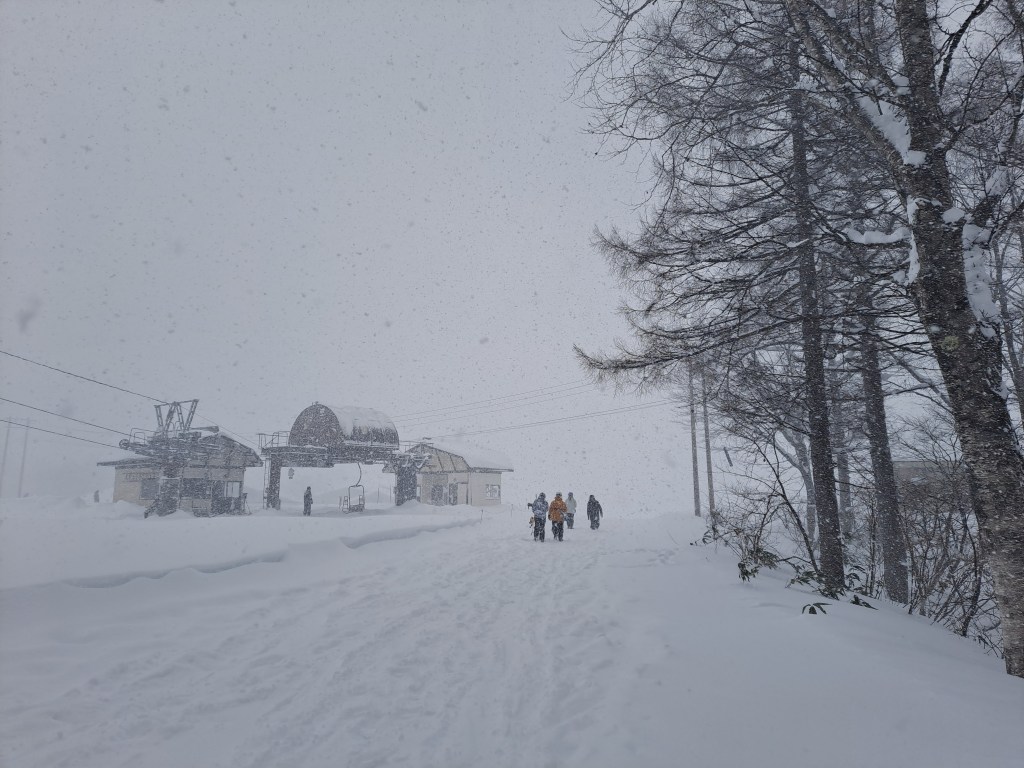
I didn’t want to share an abstract list with you, here’s what actually works, in places where lists don’t exist and Google Maps has three options. Heads up, the examples through here are related to my upcoming and previous trips, but they work just as well whether your going on an idyllic beach holiday, a surf trip, or just want to base yourself in some smaller towns for a while. And if you’re reading this and thinking that trip sounds like me, contact me on social media, I’m happy to share the full plan.
Your accommodation is your safety net, choose it accordingly
In a city, a bad restaurant is a ten-minute walk from a better one, and yes, even with dietary restrictions there is likely to be more than one option. In a ski village, your accommodation might be the only safe meal going.
The self-catering baseline is lower than you might think. Most hotel rooms anywhere in the world have a fridge. Microwaves are increasingly standard in many places, often in a shared lobby space. A kettle is almost universal. That’s all you need, enough to store food from a supermarket run, heat a backup meal, or rehydrate something you’ve brought. You don’t need a full kitchen. Just pack a bowl and some camping cutlery so you’re not looking for something when you’re hangry.
Contact hotels through the booking platform before you commit. If they offer breakfast or dinner, send a message through the secure messaging system asking whether they can accommodate your restrictions. I did this for every accommodation when I was planning a ski trip to Nagano & Niigata last year, most replied, and the ones that didn’t got moved off the list.
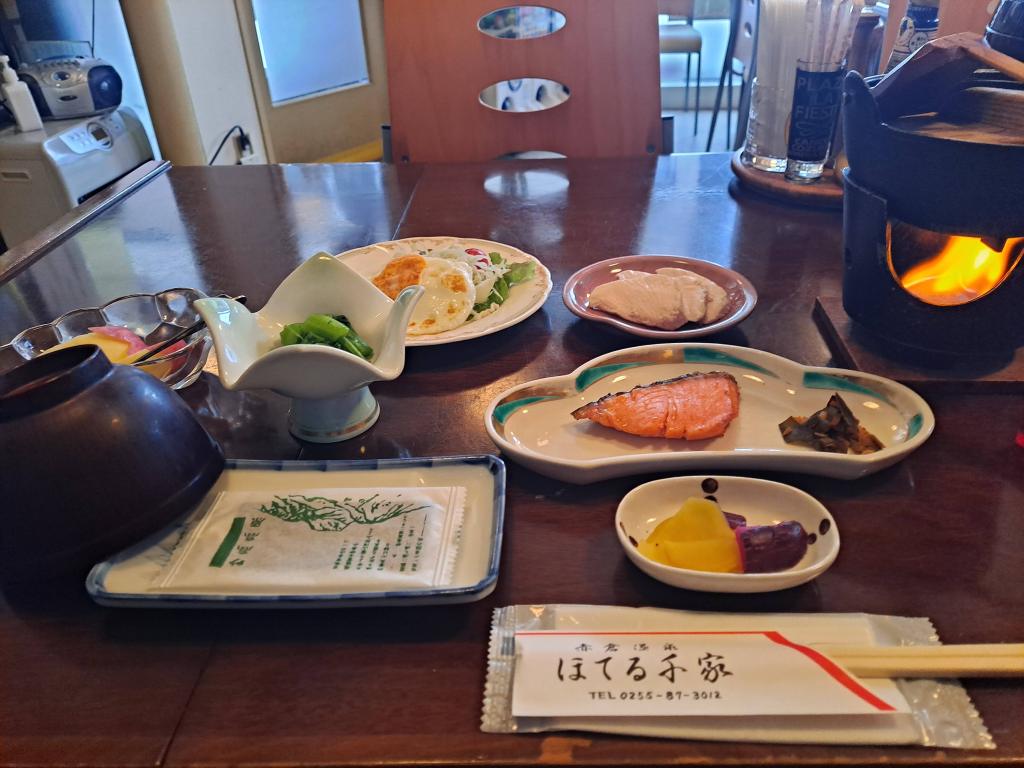
Hotel Senke in Akakura Onsen was one that came through; a lot of places did to be honest but knowing that they could do breakfast, and had an option for dinner was a real lifesaver. A reply telling you they can help is useful information. No reply is also useful information.
Book flexible cancellation where you can. If research tells you there’s genuinely nothing safe within range of a particular lodge, you want the option to move your base. Remote resort areas don’t improve once you’re there.
Learn the food landscape before you arrive
Every destination has its own logic, and understanding it in advance means you can make confident calls in the moment rather than stressing at the menu.
What’s naturally safe, and where
In places with strong regional food cultures, and Japan is full of them — some dishes are naturally low-risk for your restrictions if you can ask the right questions.
For gluten-free and dairy-free travel in Japan:
- Sashimi-focused izakayas are usually your best anchor
- Yakitori ordered shio (salt, not tare) is a reliable option
- 100% buckwheat soba (十割そば, jūwari) where you can find it
- Onigiri with simple fillings — avoid anything with mayo or soy-seasoned fillings
- Yakiniku with plain meats and salt
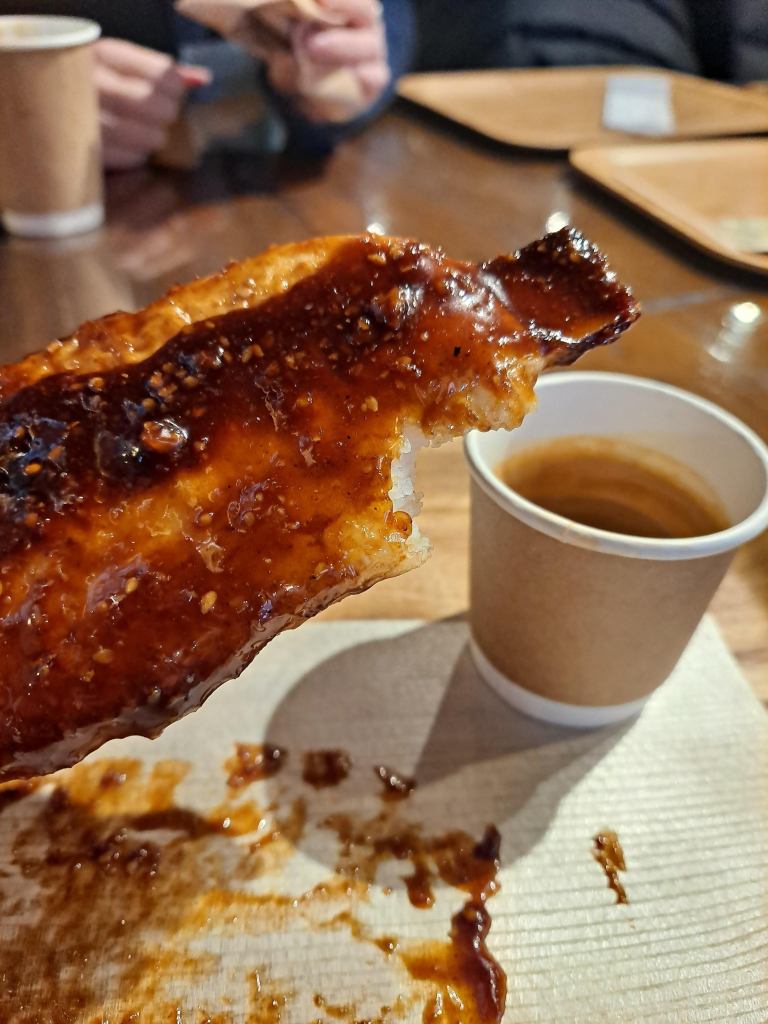
In regional areas, local specialities are often worth researching. Ouchi-juku, a beautifully preserved Edo-period post town on the Yagan Railway, has negi-soba (a regional buckwheat noodle dish) at places serving jūwari soba, plus grilled char on a stick (salted, roasted over charcoal) and tochi-mochi (horse chestnut rice cakes), which are naturally gluten and dairy free, just check the topping. None of these would turn up on a typical GF Japan guide. Finding these was tricky. I ended up looking for jūwari soba (十割そば) on the menu then putting the menu through Google Translate to check.
Hidden ingredients
In Japan, dashi (usually bonito-based fish stock) and soy sauce (which nearly always contains wheat) are the two things that catch people out the most. Both are foundational to Japanese cooking in a way that’s easy to underestimate, they turn up in broths, sauces, marinades, dressings, and things that look like plain vegetables. A dish that reads as naturally simple often isn’t.
Many countries have ingredients that feature heavily in the cuisine, this isn’t isolated to Japan, but knowing this in advance means you know what to ask about, not just what to avoid.
What is the service culture like?
Japan’s service culture is one of the most careful I’ve encountered. Restaurants will often say no if they can’t guarantee safety, which is actually a good thing, even when it’s inconvenient. Two places said no on a night in Kanazawa, and the third, where they said yes, I trusted completely. You learn to read a careful no as more useful than a breezy yes. If you’re headed to Japan read up on Why Japan Handles Food Allergies Differently to the West.
Meanwhile other countries will go out of their way to help, if like me cross contamination is a concern this isn’t ideal if they don’t understand the steps needed to minimise the risk of cross contamination.
That said, remote areas do have fewer options, so “knowing which battles to pick” matters more when you only have a handful of restaurants within reach.
Use the right tools
Translation
For Japan specifically, Papago handles food terminology and cultural nuance better than most general-purpose translators like Google Translate, but something will be better than nothing. It’s worth downloading and learing to use before you go, not after.
They are essential to ask follow up questions to confirm cooking practises or cross contamination risks as well as scanning ingredient labels at convenience stores and supermarkets. Which let’s face it you will be doing when you can’t speak the language fluently, both Papago and Google Translate’s image scanner are great at this.
Learn to use the image scan mode, download the languages you need and create and save some key phrases, before you travel not when you’re standing in a 7-Eleven in a ski village trying to work out if the onigiri has soy in the seasoning. I’ve been known to practise in my local asian grocery store much to the amusement of staff. I do into this more in this post: The Best Translation Apps for Dietary Restrictions and How to use Them.
A physical allergy card
This is non-negotiable for sit-down restaurants, and more so in areas where English is limited. A card you can hand to staff, which they can take to the kitchen, is more reliable than a phone screen in a busy environment and more accurate than spoken communication when nuance matters.

The key things your card needs to cover:
- Your specific restrictions (all of them, don’t just list one)
- Cross-contamination, not just ingredients
- Both what to avoid and what you can eat
If you’re using an AI-generated card, which you can generate here: Free Allergy Card, review it before you travel, I recommended translating it into a third unrelated language, then back into your native language (Thanks for the tip Harry). A native speaker is ideal but often there’s not one of those handy. AI translation is good and getting better, but treating it as a draft to verify rather than a finished product is the right approach.
Structure your itinerary to give yourself easy wins
One of the most useful things you can do when planning a trip that includes genuinely remote areas is to sandwich them between cities where eating is easier.
On a Tohoku run, Sendai and Sapporo are both excellent food cities with plenty of safe options. Sendai in particular earns its place: winter is oyster season at Matsushima, and fresh grilled oysters (seasoned with seawater, nothing added) are naturally GF and DF. Sapporo in January means kaisendon at Nijo Market, soup curry (check the base, but often safe), and Hokkaido crab.
These easy stretches matter because they reduce the cumulative stress of the harder ones. If you know Sapporo is coming up and you trust it, the days at Geto Kogen where you’re living off onigiri feels more manageable rather than grim.
Build in a reliable chain backup. In Japan, CoCo Ichibanya (Japanese curry restaurant) often has allergen-specific menus and is worth knowing the location of in each city. I also do a quick check to see what supermarkets and convenience stores are handy, in small ski towns there may only be one if any. It’s not exciting, but it’s useful to have in your back pocket.
For more detail on planning a trip with dietary restrictions check out the Step-by-Step Travel Planning Guide
Prepare for travel days and mountain days specifically
Mountain days and travel days are the ones that catch people out. You’re moving, food timing is unpredictable, and remote resorts especially can have very limited safe options at the cafeteria.
Pack a day bag for mountain days. For a remote resort like Geto Kogen, I’m planning onigiri from the night before in Morioka, plus backup snacks. Appi Kogen, the most food-equipped of the Morioka-area resorts has a Nepali-Indian restaurant in the base lodge, and Indian curries with rice are often a genuinely safe GF/DF option. Not every resort will have that.
Backup food for the trip overall. Commercially packaged dehydrated meals or safe snacks travel well, and they’re there for the moments where timing doesn’t work out. This is especially true for ryokan or hotel dinners where you’ve pre-arranged something but the onsen village itself has nothing else. If you’re bringing food from home into Japan, check customs requirements, you’ll need to declare it.
Convenience stores are more useful than they look. Japanese convenience stores, think 7-Eleven, FamilyMart, Lawson all stock boiled eggs, plain onigiri (shio is the safest filling to look for but salmon or adzuki bean is also usually safe), and plain nuts in most locations. They’re not glamorous, but they’re usually there even in small towns, and knowing how to read the labels (or scan them) means you can use them confidently.

The honest version
Off the beaten path travel with dietary restrictions is not seamless. Some places will have one safe option and it’ll be fine. Some places will have no reliable options and you’ll be glad you packed backup food. Some ryokan will go genuinely out of their way for you when you ask in advance and the dinner will be one of the best of the trip.
The framework above doesn’t make it perfectly smooth. It makes it manageable and worth doing, which is the point.
The places worth going to aren’t always the places with the longest lists of safe restaurants. Sometimes the thatched-roof post town with one soba shop that happens to do jūwari noodles is exactly right.

Jo is the founder of Globally Sauced, a travel platform for dietary restricted travellers and is gluten and dairy free. When not outdoors or travelling, she loves to empower people with dietary restrictions so they can explore the world safely.
Globally Sauced offers verified restaurant recommendations, country-specific guides, food label / menu translations, and more downloadable resources for gluten-free, dairy-free, allergy-conscious and other dietary restricted travellers. Learn more at globallysauced.com