

Avoid gluten, not adventure. Spain is a dream travel destination. With a fascinating blend of history, art, incredible scenery, and a relaxed culture that celebrates life, it has something for everyone. Yes, that includes us coeliac’s and gluten-free travellers. Whether you’re strolling through tapas bars in Barcelona or enjoying paella by the sea in Valencia, eating safely and deliciously is absolutely possible.
Like so many places Spain has become more aware of gluten intolerance and coeliac disease in recent years, especially in major cities.
You’ll find gluten-free products in supermarkets, and more restaurants are aware of gluten-free needs and label allergens clearly. The language barrier (read our post on Allergy Cards vs. Translation Apps), cross-contamination risks (especially in smaller eateries), and regional dishes can still pose challenges.

This guide blends experience from my travels with the foundations from our Essentials Travel Pack, Dining Guide and recommendations from recent travellers to give you what you need in minutes, not hours of late night searching. If you’re visiting Spain as part of a bigger European adventure? Check out How to Read Gluten & Dairy Ingredients in 9 European Languages (+ Label Rules You Need to Know) for more great advice.
- What You’ll Learn in This Guide
- Gluten Free, Dairy Free Labelling and Menu Information
- Essential Gluten Free Words & Phrases
- Must-Try Dishes with Gluten Free Tips
- Delicious Gluten-Free Dining Options
- Gluten‑Free Beer in Spain
- Travelling Spain With Multiple Restrictions
- Gluten-Free Groceries
- Must-Have Websites
- Packing Tips for Gluten-Free Travelers
- Final Tips from a Gluten Free, Dairy Free Traveller
What You’ll Learn in This Guide
-
Safe gluten-free dishes (and what to avoid)
-
Tips for travellers with multiple restrictions
-
Spanish phrases to help you order safely
-
Some mouth watering dining options in a few of the tourist hot spots
-
Supermarkets, websites and tips for gluten free travellers
Gluten Free, Dairy Free Labelling and Menu Information
Spain enforces some of the strictest allergen labelling laws in Europe, governed by EU Regulation 1169/2011 and national Royal Decree 126/2015. The EU regulation requires that 14 major substances causing food allergies or hypersensitivities must be labelled if they, or ingredients made from them, are present in prepacked foods (including alcoholic drinks) or non-prepacked foods. These 14 labeled allergens include; cereals containing gluten, crustaceans, eggs, fish, mollusks, nuts, peanuts, soybeans, milk, celery, mustard, sesame, lupin and sulphur dioxide or sulphites exceeding 10 mg/kg or 10 mg/liter, expressed as SO2.
The law is implemented in the EU, but each member state had the option to choose how allergen information is provided. The Spanish Royal Decree establishes that in restaurants and bars this information can be given either in writing (sign at the food, in the menu, on a board, in a folder or form) or verbally. If allergen information is provided verbally, written documentation must be easily accessible on request.
For Gluten Free and allergy travellers this practically means that packaged goods must clearly identify the 14 major allergens, and all restaurants and bars are legally required to provide comprehensive, written allergen disclosure upon request. For more information see this article by La Federación de Asociaciones de Celiacos de España (FACE) as well as the AESAN – Agencia española de seguridad alimentaria y nutrición. In practise this means that;
- Any product labelled gluten-free must contain less than 20 parts per million gluten
- You can buy gluten-free products in practically all spanish supermarket chains
- Restaurants and bars are required by law to provide allergen information, and if it is verbal they must have written infromation easily accessible, handy if langauge is a barrier.
The Spanish Coeliac Association App (FACE)
Spain’s coeliac association, FACE, offers a paid app that many travellers swear by. It includes:
- A database of certified gluten‑free restaurants
- A barcode scanner for supermarket products
- Verified GF brands and packaged foods
- Regional recommendations
- Cross‑contamination notes
It’s especially helpful if you’re travelling outside major cities or juggling multiple restrictions, the verified product list alone can save you a lot of label‑reading time. Heads up, it is in Spanish, but its definitely worth a look.
Essential Gluten Free Words & Phrases
Essential Spanish Words
- “Sin gluten” (gluten-free)
- “Contiene gluten” (contains gluten)
- “Trigo” (wheat)
- “Cebada” (barley)
- “Centeno” (rye)
Essential Spanish Phrases
- “¿Puedo ver los ingredientes?” – Can I see the ingredients?
- “¿Esto contiene gluten?” – Does this contain gluten?
- “Soy celíaco/a. ¿Tiene opciones sin gluten?” – I have celiac disease. Do you have gluten-free options?
- “¿Está cocinado en aceite separado?” – Is this cooked in separate oil?
Allergy Card
This is the actual card we recommend for Spain if you don’t need as must detail around cross contamination or safe foods. You can get your own custom version in either the Essentials Travel Pack or the Free Allergy Card Creator.
- English: I have coeliac disease and cannot eat gluten (wheat, barley, rye, oats). Please avoid cross-contamination and could you check with the kitchen which dishes are safe for me? Thank you.
- Spanish: Soy celiaco/a y no puedo comer gluten (trigo, cebada, centeno, avena). Por favor, evite la contaminación cruzada y ¿podría consultar con cocina qué platos son seguros para mí? Gracias.
Must-Try Dishes with Gluten Free Tips
If you’ve read a few of my posts you’ll know I love dishes and drinks that are naturally gluten free, ideally with minimal adjustments (just check for cross contamination). The below options are great for that. Alongside the options I’ve listed my top things to clarify.
The key watch outs for many tapas bar staples such as these is to look out for breadcrumbs (“pan rallado”), flour thickened sauces, and shared fryers. Remember to ask questions to confirm cross contamination or if wheat especially is an ingredient. I recommend showing your allergy card to establish the severity and then backing it up with questions you have favourited in your translation app if you’re not fluent in Spanish. You can read more about this here Allergy Card vs Translation Apps when to switch.

Safe Staples
- Tortilla Española – egg, potato, onion. Always check they haven’t added flour.
- Pulpo a la Gallega – Galician-style octopus with paprika and olive oil.
- Paella – Often gluten-free, but double check stock and seasoning.
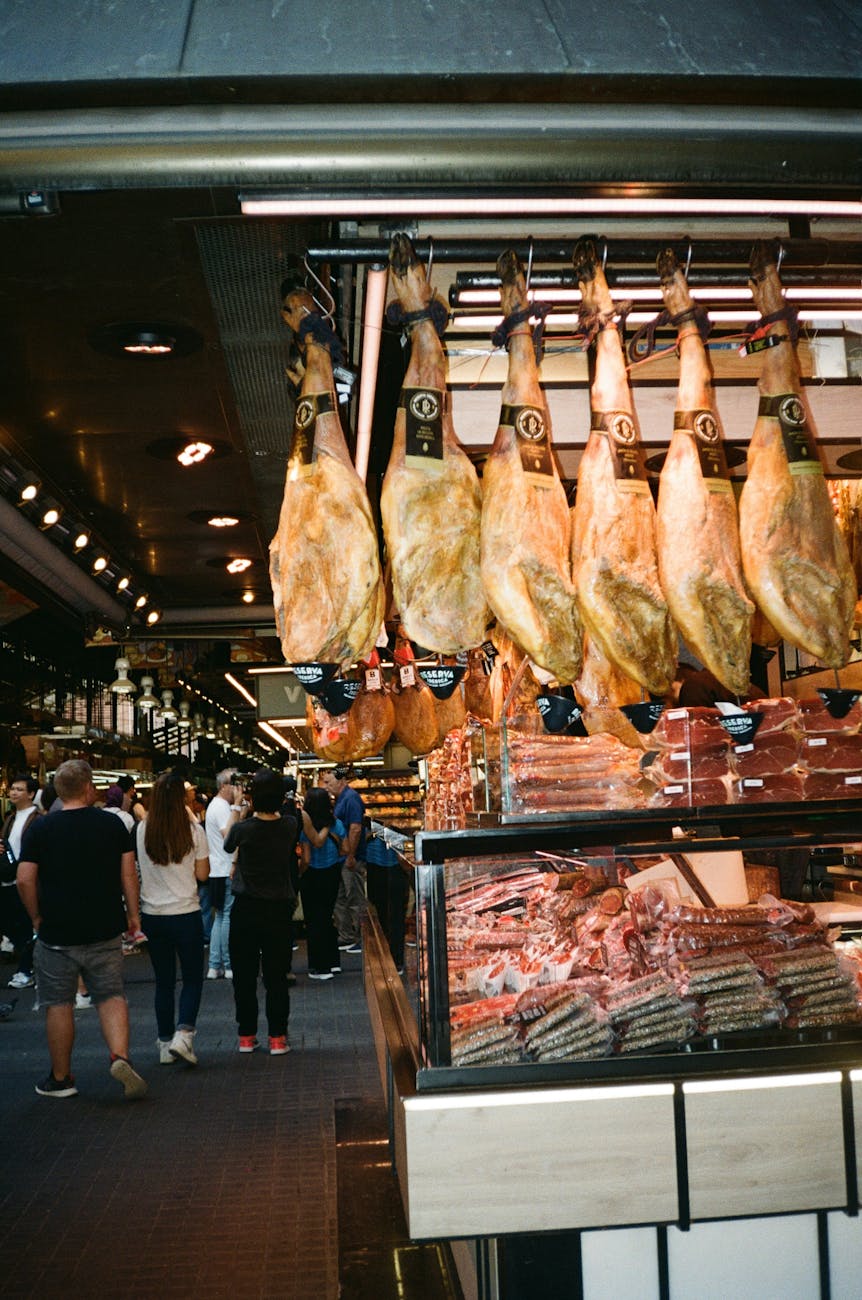
- Jamón Ibérico – Cured ham, 100% gluten-free.
- Pimientos de Padrón – Fried green peppers, simple and delicious.
- Patatas Bravas – Safe, but verify sauce ingredients for flour
What to Avoid (or Ask About)
- Croquetas – Usually made with wheat flour and deep-fried.
- Calamares Fritos (Fried squid) – Typically battered.
- Pan con tomate – Tasty, but served on gluten bread.
- Churros – Traditional and tempting, but not safe unless specially made GF.
- Gazpacho or Salmorejo – Some recipes thicken with bread.
Delicious Gluten-Free Dining Options
Barcelona
Tons of gluten-free bakeries, certified restaurants, and a strong health food culture. Check out these recommendations;
- Jansana Gluten Free Bakery – A 100% gluten-free bakery that is highly praised for its delicious pastries and sweets
- Cøliaki – Known for a wide variety of gluten-free options and dedicated gluten-free kitchen
- Messie Sin Gluten Muntaner – Popular for gluten-free pizzas and pasta with a dedicated gluten-free menu
- Restaurante En Ville – Offers a separate gluten-free menu with Catalan cuisine in a charming setting.
Valencia
Great for paella and local fare. Some must try spots include;
- El Miracle – Completely gluten-free menu with fantastic service and gluten-free beer options
- LaLola – Known for safe gluten-free options and knowledgeable staff about coeliac disease
- La Pappardella – Offers Italian cuisine with a dedicated gluten-free menu
- Mey Chen – Chinese cuisine with gluten-free options
Madrid
Spain’s capital has many certified coeliac-safe eateries. Try:
- Celicioso – A trendy bakery that is 100% gluten-free, offering a wide range of cakes, pastries, and savory dishes
- Taberna LA CONCHA – A cozy tavern known for its gluten-free tapas and friendly atmosphere
- LaLina Bravas y Tapas Restaurante La Latina – Gluten-free options abound at this arty, industrial-chic tapas bar popular for its bravas.
- As de Bastos – A 100% gluten-free restaurant offering traditional Spanish dishes, highly recommended for celiacs.
Gluten‑Free Fast Food Options
Sometimes you just want something quick, predictable, and safe, especially after a long travel day. Spain actually does pretty well here. Let’s face it for many of us, these options may not be available at home, so if that’s the case dig in.
McDonald’s Spain
McDonald’s Spain is one of the most coeliac‑friendly in Europe. Here you’ll find: Gluten‑free buns (individually wrapped and heated separately), dedicated preparation protocols and clearly labelled allergen charts. The gluten free menu is available on their website Gluten Free Menu. Here’s how to order at the kiosk:
- Select the burger you want (such as a Cheeseburger or Big Mac)
- Click Personalize/Modify and go to More options
- Remove the standard bun and select + Pan Sin Gluten (GF bun)
- Your burger is prepared in a separate part of the kitchen and is served in a sealed, GF-labeled box to prevent cross-contamination
Burger King Spain
Thanks to a partnership with the Spanish Celiac Association (FACE), they offer specific gluten-free buns, burgers (including the Whopper), and safely prepared fries. The gluten free menu is available on their website Gluten Free Menu and they also list the gluten free restaurants on their website Gluten Free Restaurants. Here’s how to order:
- Use the Self-Service Kiosk: At the digital kiosk look for the dedicated “Sin Gluten” (Gluten-Free) category.
- At the Counter: Tell the cashier you need the “menú sin gluten” and they will take your order directly.Packaging:
- Your gluten-free burger will come in a clearly marked wrapper, and for extra safety, items are usually flagged with a gluten-free sticker on your takeout bag.
Gluten‑Free Beer in Spain
Spain has embraced gluten‑free beer in a big way, you’ll find options in supermarkets, bars, and even some tapas spots. During my research I found the following the most commonly available in local bars:
- Estrella Galicia Gluten‑Free (EGGF) — the most widely available
- Ambar Sin Gluten — popular and easy to find
- Daura Damm — labelled GF, though some coeliacs prefer to avoid it due to production method
- Mahou Sin Gluten — increasingly common in Madrid
Look for these at: Mercadona, Carrefour, El Corte Inglés or at bars (just ask for “cerveza sin gluten”). If you’re dairy‑free or have other restrictions, these beers are typically safe, but always check labels, Spain uses clear allergen icons.
Travelling Spain With Multiple Restrictions
Spain is fantastic for gluten‑free travellers, but if you’re juggling two or more restrictions, things get a little more… interesting. Think of it like tapas: one dish is easy, but managing the whole table takes strategy.
If you’re gluten‑free + dairy‑free, for example, you’ll find that:
- Many gluten‑free bakeries still lean heavily on butter, cream, or milk powders.
- Tapas bars often use cheese as a garnish or thicken sauces with dairy.
- “Sin gluten” menus don’t always list other allergens clearly.
If you’re gluten‑free + vegetarian/vegan, expect:
- Fewer naturally GF plant‑based tapas (lots of croquettes, breaded items, or shared fryers).
- Some veggie restaurants use seitan or oat‑based products, both unsafe.
If you’re gluten‑free + halal, note:
- Spain labels allergens well, but halal certification is less common.
- Many safe GF dishes (like jamón) won’t be suitable, so you’ll rely more on seafood and veg dishes.
The good news: Spain’s awareness of coeliac disease is high, and with the right phrases, tools, and prep, you can navigate multiple restrictions confidently. This is exactly where Globally Sauced shines, our Essentials Travel Pack cross‑check all your restrictions against local dishes, restaurants, and supermarket products so you’re not guessing at every meal.
Gluten-Free Groceries
- Mercadona – The king of affordable GF goods (labelled “sin gluten”)
- El Corte Inglés – Gourmet options, especially in big cities
- Carrefour – Dedicated gluten-free aisle
- Herbolarios (Health stores) – Organic + allergy-friendly items
Pro tip: Look for the Espiga Barrada (crossed grain symbol), the Spanish coeliac association’s gluten-free seal.
Must-Have Websites
- Find Me Gluten Free – Reviews + restaurant tips
- Google Maps + Keywords – Search “sin gluten” and “celíaco”
- El Tenedor (The Fork) – Reserve safe restaurants ahead
- Gluten-Free Roads (FACE) – From the Spanish Celiac Association (FACE)
Packing Tips for Gluten-Free Travelers
- Bring a few protein bars, snacks or backpacker meals for the initial travel days and emergencies
- A few sandwich or snack sized zip lock bags if you need to decant snacks
- Create and print allergy cards and have your favourite translation app, read our article on allergy cards vs. translation apps to know what to use and when
- Any medications you might need either day to day or if you accidentally eat or drink the wrong thing
- Some wet wipes, a pocket package or two of tissues and a mask
- Have a small travel bag or zip lock bag to put the above in
Final Tips from a Gluten Free, Dairy Free Traveller
- Don’t be afraid to ask, Spaniards are helpful
- Always check sauces and shared fryers
- Look for naturally gluten free options
- Use reviews from other gluten free or coeliac traveller, they’re gold
- Relax and enjoy, it’s possible to eat well and stay safe in Spain

Spain’s rich food culture doesn’t have to be off-limits. With a little prep and the right tools, you can enjoy paella, pintxos, and pastries without panic.
If you want everything in one place, your dietary restrictions listed in the local language, an allergy card to show restaurant staff, key phrases for when your allergy card isn’t enough plus local foods to try and any watch outs, the Essentials Travel Pack builds it all for your exact combination. It gives you what you need in minutes, not hours.

Jo is the founder of Globally Sauced, a travel platform for dietary restricted travellers and is gluten and dairy free. When not outdoors or travelling, she loves to empower people with dietary restrictions so they can explore the world safely.
Globally Sauced offers verified restaurant recommendations, country-specific guides, food label / menu translations, and more downloadable resources for gluten-free, dairy-free, allergy-conscious and other dietary restricted travellers. Learn more at globallysauced.com