
Ever found yourself jet-lagged, starving, and staring down a menu you can’t read? And worse, not a clue whether anything’s safe for you to eat? When you’ve got dietary restrictions, travel can be a bit of a minefield. But it doesn’t have to be. Learning how to advocate for yourself is a total game-changer, and just like any skill, it gets easier with practice.
Whether you’re gluten free, have food allergies, or follow a special diet, there’s one thing that can make or break your trip: confidence. The good news? You can start building it right now, from home. Grab a cuppa and have a read and don’t forget to review the practical examples later in the article.
- Why Food Advocacy Matters When Travelling
- Practical Steps to Start Today
- Don’t forget to ask questions of your accommodation!
- Tools That Make Advocacy Easier
- Learn key phrases in the local language
- Know Your Rights
- Quick Tips to Improve Your Advocacy Skills
- Practical Examples
- Final Thoughts: It Gets Easier
- FAQ
Why Food Advocacy Matters When Travelling
Travelling should be about experiencing the world, not stressing over your next meal. But if you’re managing food allergies or intolerances, even a simple lunch abroad can feel overwhelming.
That’s why building advocacy skills at home is so powerful. The more you practise asking questions, checking ingredients, and speaking up, the easier it becomes to do it when it really counts — like at a tiny café in rural Italy or a market stall in Thailand.
This isn’t just about avoiding risk, it’s about reclaiming the joy of eating while you travel.
Practical Steps to Start Today
Practise with Your Travel Companions
Before your trip, go out to eat somewhere you know is safe. Use it as a rehearsal, ask your usual questions, double-check ingredients, and notice how your friends react. It’s a chance for them to see what dining out looks like from your perspective.
The more familiar they are with your process, the better they can support you on the road
Get Comfortable with Menus and Asking Questions

Pull up menus from restaurants on Google Maps or TripAdvisor, local and international — and practise reading them aloud. Rehearse how you’d ask about cross-contact or cooking methods.
You’re not aiming for perfection. You’re training your brain to stay calm, even when you’re hangry and jet-lagged in a foreign country.
Our menu review assistant can help you identify what might be suitable for you based on your restrictions, fantastic when ‘Gluten Free’ or ‘Vegan’ may not mean the same thing everywhere but remember it isn’t a replacement for asking questions.
Use positive, open-ended questions
The way you frame your questions matters. Instead of asking, “Do you have anything I can eat?” try:
“I’m gluten and dairy free — what would you recommend for me?”
This approach invites conversation, not a quick no. I asked this at a restaurant in Banff and ended up with a delicious off-menu lunch that even my gluten-loving family ordered. Win-win.
Roleplay Real Situations
Grab a mate and run through some mock scenarios, ordering, asking about allergens, using an allergy card. It feels awkward at first, but it builds fluency and reduces panic when you’re actually abroad. Later in this article we’ve got some examples to get you started.
Don’t forget to ask questions of your accommodation!
Food advocacy isn’t just for restaurants. If your hotel or Airbnb includes breakfast, reach out in advance and ask if they can accommodate your needs.
A brilliant example? A traveller staying at W New York – Union Square was told breakfast was just “coffee and pastries”. They asked about gluten free options — and the hotel sent an Uber to pick up warm cinnamon bun sticks from Modern Bread and Bagel. Magic.
Moral of the story: if you don’t ask, you don’t get.
Tools That Make Advocacy Easier
Food advocacy doesn’t mean doing it all in your head. Use your tech and tools:
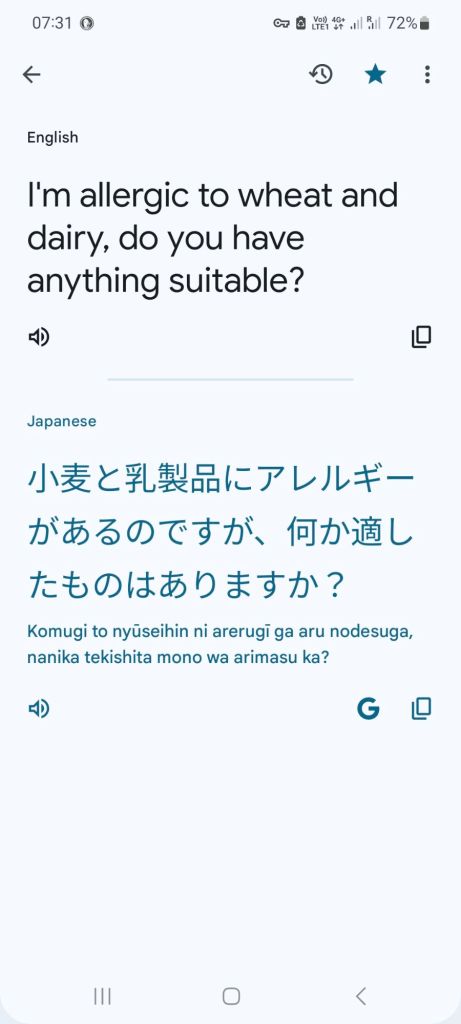
- Translation apps for menus or explaining allergens
- Customised allergy cards in the local languages
- Pre-written notes with knowledge gained from your research or our Essentials Travel Pack saved in your phone (especially handy in noisy spots)
- Custom Google Maps lists with saved safe places
Need help deciding between a card or app? Check out our guide: Allergy Cards vs Translation Apps.

Learn key phrases in the local language
Even a few words like “I have a food allergy” or “gluten free” can go a long way. Locals appreciate the effort, and it shows you take your needs seriously.
How much of a language do you need to know? It depends on the trip. Our Travel Phrase Guide creates a personalised list based on your destination and dietary needs. You can even turn them into digital flashcards with Anki — here’s how you can create it for your next trip.
Know Your Rights
In many countries, restaurants are legally required to provide allergen info or accommodate requests. Don’t be afraid to be polite but assertive. And if something doesn’t feel right? You’re always allowed to walk away.
Your health isn’t negotiable.
Quick Tips to Improve Your Advocacy Skills
- Watch videos or tutorials on communicating allergies at restaurants
- Join online communities or follow people on Instagram to find out how other people handle ordering safely abroad
- Keep a journal of your questions and responses, note what worked or didn’t
- Celebrate small wins — each successful order abroad builds your confidence for next time!
With practice, advocacy becomes second nature, turning stressful meal moments into enjoyable experiences — wherever your adventures take you.
Practical Examples
We’ve included a few scenario’s to help you practice your advocacy skills, they get more challenging as you work your way through them.
Scenario 1: The Classic Order
- You: “Hi, I’m gluten and dairy free. What dishes would you recommend for me?”
- Staff: “We have the grilled chicken and a salad — no cheese or bread.”
- You: “Thanks! Could you confirm the dressing doesn’t have dairy?”
Scenario 2: Allergy Card Power
- You: Shows allergy card “Hi, this card explains my dietary needs. Could you please check with the chef?”
- Staff: “Of course, let me check with the kitchen.”
Scenario 3: Cross-Contact Clarity
- You: “Can you tell me if this dish is prepared separately to avoid gluten contamination?”
- Staff: “Yes, we use separate utensils for gluten-free orders.”
- You: “Great, thank you”
Scenario 4: When Staff Seem Uncertain
- You: “Hi, I have a severe gluten and dairy allergy. Can someone confirm safe options?”
- Staff: “I’m not sure, we don’t usually get these requests.”
- You: “No worries, could you ask the chef or manager?”
Tip: Stay calm, polite, and emphasize the seriousness of your allergy. Offering to wait shows you respect their process but also signals it’s important.
Scenario 5: When the Fryers Are Shared
- You: “Can you please tell me if the fries are cooked in a shared fryer with gluten-containing foods?”
- Staff: “Yes, they are.”
- You: “Thanks — is there another side that’s safe?”
Tip: If the risk is unavoidable, pivot quickly to alternatives rather than insisting on something risky. Being flexible while firm helps you stay safe and maintain good rapport.
Final Thoughts: It Gets Easier
Speaking up about your food needs can feel uncomfortable at first. But every time you practise, you build confidence, that travels with you. The goal isn’t just to stay safe — it’s to enjoy food again, even when you’re thousands of miles from home.
FAQ
What if I feel awkward asking questions at home, won’t it be easier when I’m on holiday?
Honestly? Probably not. If you’re not comfortable speaking up in your own language, it gets even harder with the pressure of travel, unfamiliar menus, or language barriers. Start small, one clear question at your local café can build confidence for the big stuff later.
I don’t want to be seen as “difficult” — how do I advocate without causing a fuss?
Advocating for yourself doesn’t mean being confrontational. It’s about being clear, calm, and kind — and setting boundaries around your health. Most staff want to help, especially when you approach them with confidence and respect.
What if the staff don’t understand me, or dismiss my needs?
That can happen, and it’s frustrating, but it’s not the end of the road. Use tools like allergy cards or translation apps to help clarify. If you’re still unsure, it’s okay to walk away. Your health matters more than being polite to someone who isn’t listening.
Do I really need to practise? I’ve got an allergy card — isn’t that enough?
Allergy cards are amazing, but they’re just one part of your toolkit. Being able to explain your needs, ask questions, and calmly redirect when needed will help you feel more confident, especially when things don’t go to plan.
What if I get emotional or freeze in the moment?
That’s totally normal — especially when food feels unsafe or you’re already hungry, tired, or overwhelmed. That’s why practice matters. Role-play at home. Write down what works. And give yourself grace. The more you do it, the easier it becomes.

Jo is the founder of Globally Sauced, a travel platform for dietary restricted travellers and is gluten and dairy free. When not outdoors or travelling, she loves to empower people with dietary restrictions so they can explore the world safely.
Globally Sauced offers verified restaurant recommendations, country-specific guides, food label / menu translations, and more downloadable resources for gluten-free, dairy-free, allergy-conscious and other dietary restricted travellers. Learn more at globallysauced.com