
Iceland is one of those destinations that feels almost impossibly manageable when you arrive. English is everywhere, food labelling follows EU standards, and the locals are genuinely helpful. But if you travel with a tree nut allergy, there’s one thing that can quietly catch you out: the category itself.
“Tree nuts” is a medical term. It’s useful shorthand, but in a busy kitchen it leaves a lot of room for interpretation. This isn’t an Iceland problem, most kitchen staff anywhere in the world know their ingredients. But naming your specific allergens; cashews, hazelnuts, pistachios, almonds, whatever your combination, is simply clearer communication wherever you are. Concrete is always better than category.
Here’s how to do that confidently in Iceland, from ordering at restaurants to reading labels at the supermarket.
If you want a free Iceland nut allergy card ready before you land, you can generate one for your specific restrictions further down, but it’s worth understanding a bit of context first.
Name Your Nuts (Specifically)
A chef might know their kitchen inside out but not immediately connect “tree nuts” to every nut on the shelf. When you name them individually; cashews, hazelnuts, pistachios, almonds, walnuts, you’re giving the kitchen something concrete to cross-check against.
It’s a small shift in how you communicate your allergy, and it makes a real difference in how clearly the message lands. Don’t drop the category entirely, saying “tree nut allergy” still sets important context, but follow it immediately with the specifics.

Carry a Written Allergy Card
Most Icelanders speak excellent English, but during a busy dinner service, a written allergy card is clearer and harder to mishear than a verbal explanation. It also lists your specific allergens in both English and Icelandic, so there’s no ambiguity about what you’re asking.
Generate your free allergy card here – choose your specific restrictions, yes even multiple and we’ll build it for you
One extra step worth doing before you leave: save your allergy card as an image in your translation app. That way, if you’re somewhere the staff speak better German or Polish than English, you can translate it on the spot rather than relying on the Icelandic alone.
Tip: Knowing when to use your allergy card versus your translation app is worth thinking about before you travel. Allergy Cards vs. Translation Apps
Learn to Read Icelandic Labels
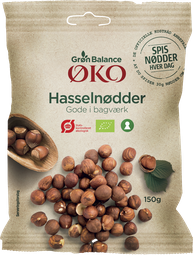
Icelandic supermarkets are well-stocked and labelling follows EU allergen rules, so your allergens should be clearly marked.
The challenge is that Icelandic is a declined language, words change their endings depending on how they’re used. This means the same ingredient can look different on a packet versus a menu.
You don’t need to memorise every form. The trick is learning the root word and scanning for it. For hazelnuts, that’s heslihnet-. Spot that core, and you’ve spotted the ingredient, whatever ending is attached.
Tip: Download your translation app and any offline language packs before you travel. Practising with it at home means you’re not figuring it out for the first time in a supermarket aisle. The best translation app and how to use it
For official guidance on Icelandic food labelling, the Reykjavik Public Health site has clear information.
Why Icelandic Ingredients Look Different on Labels vs. Menus
On packaging you’ll usually see the plural form, the label is listing what’s inside. On menus or allergen warnings, it might shift to a singular or dative form. It’s the same ingredient; it just looks different depending on context.
Hazelnuts is a good example: the packaging might say heslihnetur, but a menu warning could read heslihnetu or heslihnetum. The core word (heslihnet-) stays the same. That’s what to look for.
Note: The Icelandic translations in this table were machine-translated. If you spot an error, please let us know, we’d rather be corrected than have anyone rely on a mistake.
| English | Icelandic (common on packaging – plural) | Also might appear as… (incl. singular/base form) |
|---|---|---|
| Allergy | ofnæmi | ofnæmis |
| Nut allergy | Hnetuofnæmi | hnetuofnæmis, ofnæmi fyrir hnetum |
| Nuts | hnetur | hnetum, hneta |
| Tree nuts | trjáhnetur | trjáhnetum, trjáhneta |
| Walnut | valhnetur | valhneta, valhnetu, valhnetum |
| Almond | möndlur | möndla, möndlu, möndlum |
| Cashew | kasjúhnetur | kasjúhneta, kasjúhnetu, kasjúhnetum |
| Hazelnut | heslihnetur | heslihneta, heslihnetu, heslihnetum |
| Pecan | pekahnetur | pekahneta, pekahnetu, pekahnetum |
| Pistachio | pistasíuhnetur | pistasíuhneta, pistasíuhnetu, pistasíuhnetum |
| Brazil nut | parahnetur | parahneta, parahnetu, parahnetum |
Before You Go
Iceland is genuinely one of the more manageable destinations for food allergies, clear labelling, high English fluency, and a straightforward food culture. But manageable doesn’t mean effortless, especially when you’re working with a combination of restrictions.
If you want everything in one place, your specific allergens listed in Icelandic, an allergy card to show restaurant staff, key phrases for when your allergy card isn’t enough plus local foods to try and any watch outs, the Essentials Travel Pack builds it all for your exact combination.

Jo is the founder of Globally Sauced, a travel platform for dietary restricted travellers and is gluten and dairy free. When not outdoors or travelling, she loves to empower people with dietary restrictions so they can explore the world safely.
Globally Sauced offers verified restaurant recommendations, country-specific guides, food label / menu translations, and more downloadable resources for gluten-free, dairy-free, allergy-conscious and other dietary restricted travellers. Learn more at globallysauced.com